Pipette Types: How to Choose the Right Pipette for Every Lab Application
Pipette Types: How to Choose the Right Pipette for Every Lab Application
By Sarah Zhan · 19 July 2026
A pipette looks simple. In fact, it is one of the most error-prone tools on any bench.
The wrong pick can quietly wreck months of work. This guide covers the main types, how to match each one to a sample, and the habits that keep test results solid.
Why the Right Pipette Matters
Labs use these tools to move set amounts of liquid. They are a top cause of bad results, and the cause is rarely a bad batch from the factory.
Three things decide if your data holds up:
- Pick the right design for the liquid you move, such as: - Air-cushion for water-based samples. - Positive-displacement for thick or harsh ones.
- Keep the tool inside its test window.
- Train every user to work the same way.
Skip any one step, and the other two cannot make up for it.
Air-Displacement vs. Positive-Displacement Pipettes
The two main families suit different kinds of liquid. The choice rests on what you move, not on the test or the protocol.
Air-Displacement Pipettes
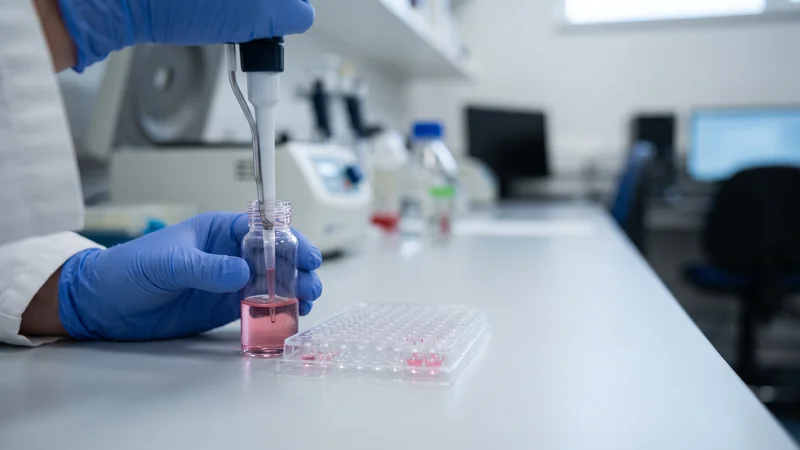
This design uses a piston set apart from the sample by a small cushion of air. It works well for water-based liquids at room temperature, and it is the shape most people picture when they hear the word "pipette."
Because air sits between the piston and the liquid, this design loses accuracy as a sample moves away from water-like traits. Thick, harsh, or dense liquids all add error to the amount it delivers.
Positive-Displacement Pipettes
This design uses a throw-away piston that touches the liquid direct. This drops the air cushion as a cause of error, which makes it the right pick for thick, harsh, or dense samples.
Reach for this design when you handle:
- Glycerol stock or thick protein mixes.
- Harsh solvents, such as: - Acetonitrile and methanol. - Chloroform and like fluids.
- Hot or heat-shy samples.
- Thick polymer or plant fluids.
Tips for this format combine the piston and tube in one part, so each tip costs more. Most labs keep a small set on hand for these jobs, and use air-cushion units for daily water-based work.
Manual, Multichannel, and Electronic Formats
Beyond the air-cushion choice, these tools also differ in how a user controls each draw and each release.
Manual Single-Channel Pipettes
This is the workhorse in most labs. It spans 0.1 microliters to 10 milliliters and costs the least, though results can shift between users.
Multichannel Pipettes
These often come in 8 or 12 tips, sized to match a well plate. They cut hands-on time for plate work such as ELISA and PCR setup, though each tip needs a regular check.
Electronic Pipettes
This format adds a set draw and release speed that a user can program. That helps keep each mix, dilute, and multi-step task the same, run after run.
The catch is two new upkeep tasks:
- Battery life needs a set check.
- Firmware updates need care too.
Labs with many repeat tasks often see these units pay for themselves through less hand strain and steadier work.
Specialty Pipettes for Focused Jobs
A few designs solve narrow but common tasks outside plain bench work.
Serological Pipettes
These sit at the high end, often 1 to 50 milliliters, and are the go-to tool for cell work and bulk moves. Precision drops at small volumes, so they cannot replace a micropipette there.
Repeater Pipettes
This format draws once and gives out the same fixed amount many times. It suits reagent adds across many wells in ELISA or PCR setup, where speed counts more than volume choice.
Pasteur and Transfer Pipettes
These handle plain, rough moves, such as adding or pulling a small bit of fluid where exact volume is not the goal.
Quick compare of common types:
| Type | Best For | Volume Range | Key Limit |
|---|---|---|---|
| Manual air-cushion, single-tip | Water-based work, bench tasks | 0.1 µL to 10 mL | Shifts by user |
| Manual air-cushion, multi-tip | Plate tasks, ELISA, PCR | 0.5 µL to 1,200 µL | Tip-to-tip drift |
| Electronic air-cushion | High-volume, repeat runs | 0.1 µL to 10 mL | Needs battery and firmware care |
| Positive-displacement | Thick, harsh, dense, or hot fluids | 0.1 µL to 10 mL | Costs more per tip |
| Repeater | One fixed amount, many draws | 1 µL to 50 mL | One volume per run |
| Serological | Bulk moves, cell work | 1 mL to 50 mL | Weak at small volumes |
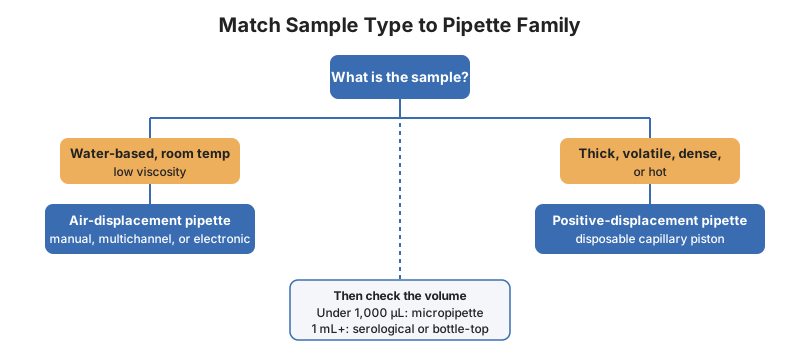
Match the Right Pipette to Sample and Volume
Two questions guide the pick: how much fluid moves, and what is it made of?
Matching by Volume Range
Small, low-volume work calls for a micropipette built for that range.
Use this size guide as a start:
- Under 1 µL to 10 µL: a fine-tip micropipette.
- 10 µL to 1,000 µL: a standard single or multi-tip pipette.
- 1 mL and up: - Serological pipette for cell work. - Bottle-top unit for bulk reagent moves.
Every design loses grip near the low end of its range.
Matching by Sample Chemistry
Water-like fluids suit air-cushion models well.
Use this quick rule for fluid type:
- Water-based buffers and thin reagents: plain air-cushion pipette.
- Cell mixes and thick fluids: reverse-draw method, either design.
- Harsh solvents: positive-displacement or a firm pre-wet step.
- Plate work at scale: multi-tip or set-speed units.
- Bulk cell moves: serological, not a micropipette.
Calibration and the ISO 8655 Standard
Even the right pipette gives bad data once it drifts off spec. ISO 8655 is the main test standard for piston-run volume tools, and it sets the bar every lab should check against.
What ISO 8655 Requires
The rule calls for tests at three points: 10 percent, 50 percent, and full volume, each with at least 10 draws and one tip swap. Staff then check the mean and spread against fixed limits.
Max error at full volume (single-tip, air-cushion):
| Nominal Volume | Max Off-Target Error | Max Spread Error |
|---|---|---|
| 10 µL | ±0.12 µL | 0.08 µL |
| 100 µL | ±0.8 µL | 0.3 µL |
| 200 µL | ±1.6 µL | 0.6 µL |
| 1,000 µL | ±8.0 µL | 3.0 µL |
| 5,000 µL | ±40 µL | 15 µL |
Multi-tip units get double these limits. A true test also needs a steady room. Aim for 17 to 23 degrees, 45 to 80 percent damp, no draft, and next to no shake.
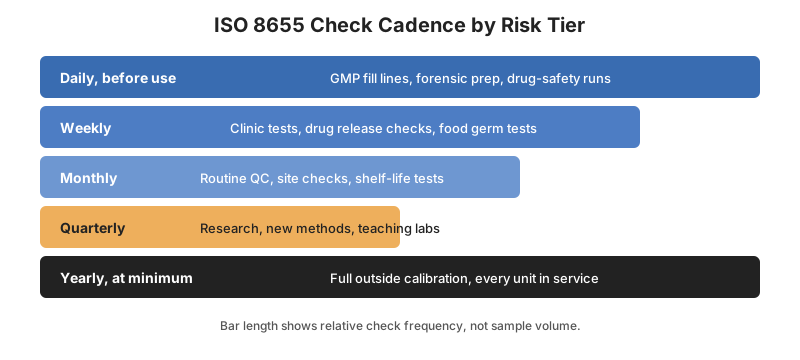
How Often to Check Each Unit
Most labs run a full outside check once or twice a year, then check each unit in-house every one to three months. The gap should track usage and risk, not just a fixed date.
Set your check plan by risk:
- Each day, before use: strict drug fill lines, forensic prep, and drug-safety runs.
- Each week: clinic tests, drug release checks, food germ tests.
- Each month: routine QC, site checks, shelf-life tests.
- Each quarter: broad research, new methods, teaching labs.
- Each year, at least: a full outside check for every unit in use.
Grip and When to Pull a Unit from Service
Poor grip and form often cost more than a slightly worn tool, most of all at small volumes.
The habits that matter most:
- Wet the tip once before the real draw.
- Hold the pipette straight up.
- Dip the tip 2 to 3 mm into the fluid.
- Draw at a slow, steady pace.
Reverse-draw suits thick fluids, foamy liquids, and bubble-prone samples. Press to the second stop while you draw, pull a bit extra, then release only to the first stop.
Pull a pipette from service right away if it has:
- Been dropped or hit hard.
- Touched a solvent outside its safe range.
- Run past its stated heat range.
- Visible damage, such as: - A crack in the tip cone. - A stuck or sticky plunger.
- Failed a set check at any test volume.
Frequently Asked Questions
How does an air-cushion pipette differ from a positive-displacement one? An air-cushion model uses a pocket of air between the piston and the sample. A positive-displacement model touches the liquid direct through a throw-away piston, which suits thick or harsh samples better.
What is the gap between accuracy and precision here? Accuracy means the mean draw sits close to the target. Precision means each draw lands close to the last. A unit can be steady yet still off if it always gives the wrong amount.
How often should a pipette get checked? Most labs run an outside check once a year and check each unit every one to three months in between. High-risk work, such as drug or clinic tests, often needs weekly or monthly checks.
Why does grip matter as much as the check itself? Poor form often costs more than tool drift, most of all at small volumes.
When should a unit be pulled from service? Pull it right after a drop, a bad solvent hit, or a failed check, and keep it out of use until a fresh check shows it meets spec again.
Why does wetting the tip first matter? Wetting the tip fills the air inside with sample vapor first. That cuts vapor loss and sharpens the draw. It matters most for harsh liquids and small volumes.
Conclusion
Pipette choice sets the accuracy ceiling for almost every volume moved on a bench. No single design covers every sample well.
Match air-cushion or positive-displacement design to the sample. Pick manual, multi-tip, or set-speed formats to fit your workload, and hold every unit to the ISO 8655 test window. These habits, kept together, are what keep pipette data safe under audit.
A logged check plan and steady grip protect that spend for the life of each lab pipetter, from the pipette tips it uses each day to the volumetric and serological pipettes that back it up for bulk jobs.
Related Posts
Flashlight Guide: How to Choose the Right Type for Every Job