Brake Pad Replacement: How to Read the Markings Before You Buy
By Jackie Guo · 24 August 2026
A brake pad is the cheapest safety part on any vehicle, and it is the one most often bought on price. The carton in front of you carries the proof you need, printed in codes most buyers never read.
Two of those marks decide whether the pad is legal to fit and how well it will stop the vehicle.
What Actually Wears Out on a Brake Pad
The Friction Material Is a Consumable
Every brake pad is meant to be used up, turning the speed of the vehicle into heat and losing a little material each time. That is why a brake pad wears out sooner than anything else in the brake system.
The steel backing plate lasts far longer than the friction on it, so the whole pad is swapped rather than relined.
The Warning Signs That Come First
Wear creeps up rather than arrives, so braking falls off in small steps. Drivers adjust to the longer stopping distance without noticing. By the time the fault is obvious, the pads and discs have worn far enough to stretch that distance again.
- Squealing or grinding — the clearest early sign that a brake pad is done.
- Vibrating pedal — often comes with a dead pedal or a pull to one side.
- Soft or spongy pedal — usually air or damp in the lines rather than the brake pad.
What Makes a Brake Pad Wear Faster
City routes, stop-start traffic and heavy loads all cut brake pad life. A van on short town runs will never match a car on motorways.
- Check on a schedule — before a long trip, and after any change in how the vehicle stops.
- Watch the dash light — it flags a fault somewhere in the brake system.
The R90 Approval Mark and What It Guarantees
Which Parts the Rule Covers
UNECE Regulation 90 covers replacement brake linings fitted to vehicles that already hold type approval under the main brake rules. It also covers drum linings, brake drums and brake discs. Parts fitted when the vehicle was built sit outside it.
So the mark you want is on the aftermarket brake pad, not the one it replaces.
Reading the Approval Code
An approved part carries a code and a number, and the code has four groups of characters. A published example reads E2-90R02C0359/7248, where the first group names the country that granted it.
- Country code — names the approving country, so E2 is France in that example. - The letter A means a replacement brake lining assembly. - The letter B means a replacement drum brake lining.
- Trailing digits — tie the part to one type and variant number.
The Bench Tests Behind the Mark
The mark is not paperwork alone. Behind it sit a real vehicle or rig test and a set of bench checks with published pass marks.
| Requirement | Test standard | Pad assemblies | Shoe assemblies |
|---|---|---|---|
| Shear strength | ISO 6312 | Minimum 250 N/cm² | Minimum 100 N/cm² |
| Compressibility, cold | ISO 6310 | Maximum 2 per cent | Maximum 2 per cent |
| Compressibility, hot | ISO 6310 | Maximum 5 per cent at 400 °C | Maximum 4 per cent at 200 °C |
| Asbestos content | Regulation 90 | Not allowed | Not allowed |
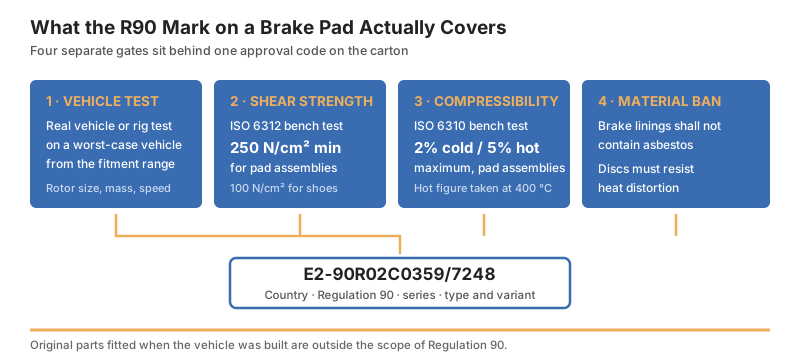
The rule also asks the new part to brake as well as the one the vehicle was approved with.
The Edge Code on the Brake Pad Itself
Two Letters for Two Temperatures
SAE Standard J866 grades friction as a two-letter code stamped on the pad edge or the backing plate. The first letter covers cold braking and the second covers hot braking.
Letters later in the alphabet mean more grip than earlier ones.
What the Letter Order Tells You
A first letter below the second means the brake pad works better hot and needs a warm-up. A second letter below the first warns that the pad may fade as it heats up.
For everyday fleet work, a matched pair of letters is the safer bet.
The Rest of the Marking Line
Those two letters are only part of the full pad number. The sequence carries three groups, with later additions tacked on the end.
| Element of the marking | What it tells you |
|---|---|
| First group | Maker of the friction material |
| Second group | Formulation of the compound |
| Two letters | Cold and hot friction grade |
| Final three digits | Heavy-metal code and year made |
- Not every brake pad is marked this way — race compounds can run outside the graded range.
- Some makers use their own scheme — colour coding or in-house numbers instead of letters.
Choosing a Friction Material for the Duty Cycle
Aggressive Compounds Cost You Discs
A higher grip figure gives more stopping power for the same pedal effort, so hot compounds look good on a spec sheet. The trade is disc wear, because harder-biting compounds eat rotors faster.
Grip is not fixed either, shifting with heat, damp, wear and age.
Matching the Brake Pad to the Vehicle
Fleet work rewards steadiness over peak grip. A brake pad that holds a steady grip across a wide heat range beats one that peaks high and fades. That is why the two edge-code letters matter more than the name on the box.
- Light town duty — favour low noise and clean wear over outright grip.
- Loaded or towing duty — favour hot grip and heat tolerance.
- Mixed fleet — settle on one approved brake pad spec per vehicle type.
Replacing a Brake Pad Properly
Discs, Shims and Hardware
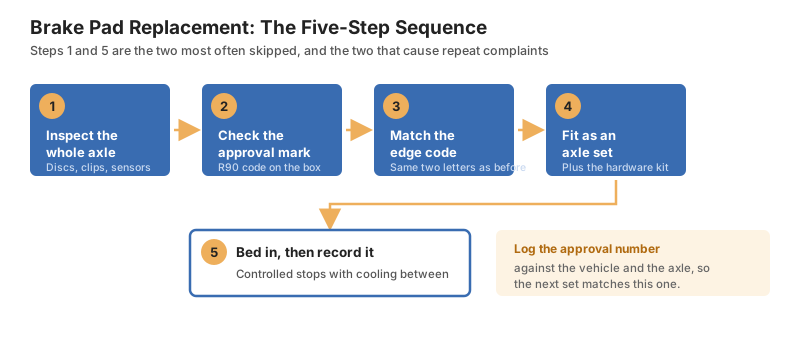
A brake pad is replaced as an axle set, never as a single corner. Discs, shims, clips and wear sensors get checked at the same time, because a new brake pad on a scored disc will not bed evenly.
- New discs carry their own mark — the same rule covers discs and drums.
- Fit the hardware kit — worn clips cause noise that the new pad gets blamed for.
Bedding In the New Brake Pad
New friction material needs a bedding-in run before it gives its rated grip. Skipping that step is the usual reason a fresh brake pad feels worse than the one it replaced.
- Bed in before the vehicle goes back to work — a run of controlled stops, not one hard one. - Let the brakes cool between stops so the surface beds evenly.
- Re-check the pedal afterwards — a soft pedal points at the fluid, not the pad.
Buying Brake Pads for a Fleet
One Specification per Axle
Mixing brake pad brands across an axle makes braking uneven and pulls the vehicle under load. One spec per axle removes a whole class of workshop complaints.
Record the approval number against the vehicle so the next set matches.
Paperwork That Survives an Audit
Regulation 90 asks the packaging to state the quantity, the make and type, and the vehicles, axles and brakes it is approved for. Keep the carton label, or a photo of it, with the job card.
- Approval number — record it against the vehicle and the axle. - Photograph the label before the packaging is thrown out.
- Friction code — note the two letters so the next brake pad matches.
Frequently Asked Questions
How do I know a brake pad is approved for road use?
Look for the Regulation 90 mark on the pad or the box. Without it the part is not approved as a replacement lining for a type-approved vehicle.
What does FF mean on a brake pad?
It is the SAE J866 friction code, with the first letter for cold braking and the second for hot. Two matching letters mean grip that stays steady across the tested range.
Do brake pads and discs have to be replaced together?
Not always, though discs should be measured every time the brake pad is changed. A new pad on a worn or scored disc will never make full contact.
Can I mix brake pad brands on one vehicle?
Never across an axle, because different grip levels make the vehicle pull under braking. Front and rear axles can run different specs.
Conclusion
A brake pad is a regulated safety part, and the two marks on it tell you more than any price can. The approval mark says the part is cleared for the vehicle, and the edge code says how it behaves once it is hot.
Check both before the carton is opened, then browse the full range of vehicle replacement parts, compare what you need for brake service, and see what hydraulic brake maintenance asks for alongside the pads.
Related Posts
HEPA Filter Guide: What the Grades Mean and Where One Belongs
Handrail Height: How to Get the Number Right in Every Code