Call +(254) 703 030 000 / 751 483 999 / 721 704 777

Showing 0 products
Frequently Asked Questions
What is the difference between a voltage detector and a voltage tester?
A voltage detector and a voltage tester are both tools used to identify the presence of electrical voltage, but they differ in functionality, design, and application.
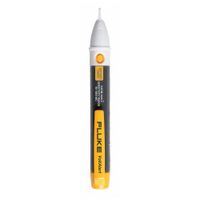
A voltage detector, often referred to as a non-contact voltage tester, is a pen-like device that detects the presence of voltage without making direct contact with the conductor. It works by sensing the electric field generated by AC voltage. When the detector is brought near a live wire or outlet, it typically emits a light or sound to indicate the presence of voltage. Voltage detectors are primarily used for quick checks to ensure that a circuit is live or de-energized, offering a safe way to identify live wires without direct contact.
On the other hand, a voltage tester, sometimes called a multimeter or voltmeter, is a more versatile tool that requires direct contact with the electrical circuit. It can measure the actual voltage level, providing a numerical reading of the voltage present in a circuit. Voltage testers can measure both AC and DC voltage and often include additional functions such as measuring resistance, current, and continuity. They are used for more detailed diagnostics and troubleshooting in electrical systems.
In summary, the main differences are:
- **Contact**: Voltage detectors are non-contact, while voltage testers require direct contact.
- **Functionality**: Detectors indicate the presence of voltage; testers measure the actual voltage level.
- **Application**: Detectors are used for quick safety checks; testers are used for detailed analysis and troubleshooting.
How do non-contact voltage detectors work?
Non-contact voltage detectors work by sensing the electric field generated by an AC voltage in a conductor. These devices are designed to detect the presence of voltage without making direct contact with the electrical conductor, providing a safe way to check for live wires.
The core component of a non-contact voltage detector is a sensor, typically a capacitive sensor, which can detect changes in the electric field around a conductor. When an AC voltage is present, it creates an oscillating electric field. The detector's sensor, usually located at the tip of the device, picks up this field.
Inside the detector, the sensor is connected to an electronic circuit that processes the signal. The circuit often includes an amplifier to boost the weak signal detected by the sensor. The amplified signal is then analyzed to determine if it corresponds to a typical AC voltage frequency, usually 50 or 60 Hz, depending on the region.
Once the presence of an AC voltage is confirmed, the detector provides feedback to the user, typically through visual indicators like LED lights, audible alarms, or both. Some advanced models may also include vibration alerts.
Non-contact voltage detectors are designed to be sensitive enough to detect voltage through insulation, making them useful for checking wires, outlets, switches, and other electrical components without direct exposure to live parts. However, they are generally not suitable for detecting DC voltage or for precise voltage measurements. They are primarily used as a quick safety check to ensure that a circuit is de-energized before performing electrical work.
Are voltage detectors safe to use?
Voltage detectors are generally safe to use when handled correctly and according to the manufacturer's instructions. They are designed to detect the presence of voltage in electrical circuits without making direct contact with live wires, which minimizes the risk of electric shock. However, their safety depends on several factors:
1. **Quality and Certification**: High-quality voltage detectors that meet industry standards and certifications (such as UL, CE) are more reliable and safer. Poor-quality devices may give false readings or fail to detect voltage, leading to potential hazards.
2. **Correct Usage**: Users must follow the manufacturer's guidelines for safe operation. This includes understanding the voltage range the detector is designed for and ensuring it is suitable for the specific application.
3. **Condition of the Device**: Regular inspection and maintenance are crucial. A damaged or malfunctioning detector can provide inaccurate readings, posing a safety risk.
4. **Environment**: Voltage detectors should be used in appropriate environments. Extreme temperatures, moisture, or dust can affect their performance and safety.
5. **User Competence**: Users should have a basic understanding of electrical systems and the limitations of voltage detectors. Training or experience in handling electrical equipment enhances safety.
6. **Limitations**: Voltage detectors are not foolproof. They may not detect voltage in certain conditions, such as through thick insulation or shielded cables. They should be used as part of a broader safety protocol, not as the sole method of ensuring a circuit is de-energized.
In summary, while voltage detectors are safe when used properly, they require careful handling, regular maintenance, and should be part of a comprehensive safety strategy. Users must remain aware of their limitations and ensure they are using a reliable, certified device.
Can a voltage detector detect low voltage?
Yes, a voltage detector can detect low voltage, but it depends on the specific type and model of the voltage detector. Voltage detectors are designed to identify the presence of electrical voltage in a circuit or a conductor. They come in various forms, such as non-contact voltage testers, multimeters, and voltage pens, each with different sensitivity levels and voltage detection ranges.
Non-contact voltage testers are commonly used for detecting the presence of AC voltage without making direct contact with the conductor. These devices typically have a threshold voltage level, often around 50 volts, below which they may not reliably detect voltage. Therefore, they might not be suitable for detecting very low voltages.
Multimeters, on the other hand, are more versatile and can measure both AC and DC voltages across a wide range, from millivolts to several hundred volts, depending on the model. They are suitable for detecting low voltages, especially if they have a high sensitivity setting.
Some specialized voltage detectors are designed specifically for low-voltage applications, such as those used in electronics or telecommunications. These detectors can identify voltages in the range of a few volts or even millivolts.
In summary, while not all voltage detectors can detect low voltage, there are specific types and models that are capable of doing so. It is important to choose the right tool based on the voltage range you need to detect.
What are the best brands for voltage detectors?
Some of the best brands for voltage detectors include:
1. **Fluke**: Known for its reliability and precision, Fluke offers a range of voltage detectors that are favored by professionals for their durability and accuracy.
2. **Klein Tools**: This brand is popular among electricians for its high-quality tools, including voltage detectors that are easy to use and provide reliable readings.
3. **Southwire**: Southwire provides a variety of voltage detectors that are both affordable and effective, making them a good choice for both professionals and DIY enthusiasts.
4. **Amprobe**: Amprobe is recognized for its innovative designs and dependable performance, offering a range of voltage detectors suitable for various applications.
5. **Extech**: Known for producing a wide array of testing equipment, Extech offers voltage detectors that are user-friendly and provide accurate results.
6. **Greenlee**: Greenlee is a trusted name in the electrical industry, offering durable and efficient voltage detectors that are designed for professional use.
7. **Gardner Bender**: This brand offers cost-effective voltage detectors that are suitable for both home and professional use, known for their ease of use and reliability.
8. **Sperry Instruments**: Sperry provides a range of voltage detectors that are known for their simplicity and effectiveness, making them a popular choice for basic electrical testing.
These brands are recognized for their quality, reliability, and innovation in the field of electrical testing equipment.
How do you test a voltage detector for accuracy?
To test a voltage detector for accuracy, follow these steps:
1. **Visual Inspection**: Check the device for any physical damage or wear. Ensure that the probes and leads are intact and the battery is fully charged or replaced if necessary.
2. **Calibration Check**: Refer to the manufacturer's manual for calibration instructions. Some detectors have a built-in self-test feature or require periodic professional calibration.
3. **Known Voltage Source**: Use a known voltage source, such as a calibrated multimeter or a voltage standard, to test the detector. This source should match the voltage range the detector is designed to measure.
4. **Testing Procedure**:
- **AC Voltage Test**: Connect the detector to an AC voltage source. Ensure the detector reads within the specified accuracy range. Compare the reading with the known voltage.
- **DC Voltage Test**: Repeat the process with a DC voltage source if the detector is capable of measuring DC voltage.
5. **Cross-Verification**: Use a second, reliable voltage detector or multimeter to cross-verify the readings. This helps confirm the accuracy of the first detector.
6. **Functional Test**: Test the detector on a live circuit to ensure it responds correctly. This includes checking for audible or visual indicators that signal voltage presence.
7. **Environmental Conditions**: Conduct tests in various environmental conditions (temperature, humidity) to ensure consistent performance.
8. **Documentation**: Record the results of the tests, noting any discrepancies or deviations from expected values. This documentation helps in future troubleshooting and maintenance.
9. **Professional Calibration**: If discrepancies are found, consider professional calibration or servicing to restore accuracy.
10. **Regular Testing**: Implement a regular testing schedule to ensure ongoing accuracy and reliability of the voltage detector.
What is the range of a typical non-contact voltage detector?
The range of a typical non-contact voltage detector is generally between 50 volts to 1000 volts AC.
What are the best voltage detectors for electricians?
Some of the best voltage detectors for electricians include:
1. **Fluke 1AC II VoltAlert**: Known for its reliability and durability, this non-contact voltage detector is highly sensitive and can detect voltage from 90V to 1000V AC. It features a continuous self-test to ensure proper functioning and has a bright LED indicator.
2. **Klein Tools NCVT-2**: This dual-range non-contact voltage tester can detect low voltage (12V to 48V AC) and standard voltage (48V to 1000V AC). It has a bright green LED to indicate the tester is operational and a red LED with an audible warning for voltage detection.
3. **Southwire 40150N**: This non-contact voltage detector is designed for both residential and commercial use, detecting voltage from 100V to 1000V AC. It features a built-in flashlight and a loud beeper for clear indication.
4. **Tacklife VT02**: This budget-friendly option offers a wide detection range from 12V to 1000V AC. It includes a sensitivity adjustment feature, a flashlight, and a sound and light alarm for voltage presence.
5. **Amprobe VP-440**: Known for its rugged design, this non-contact voltage tester can detect voltage from 50V to 1000V AC. It has a built-in flashlight and provides both visual and audible alerts.
6. **Gardner Bender GTK-2**: This kit includes a non-contact voltage tester and a GFCI outlet tester. The voltage tester detects from 50V to 600V AC and offers a simple, reliable design with a bright LED indicator.
These voltage detectors are favored for their accuracy, ease of use, and safety features, making them ideal for professional electricians.
What is the range of voltages that a typical voltage detector can detect?
A typical voltage detector can detect a range of voltages depending on its design and intended application. Generally, voltage detectors are categorized into two main types: non-contact and contact voltage detectors.
1. **Non-Contact Voltage Detectors**: These are designed to detect the presence of AC voltage without making direct contact with the conductor. They are commonly used for safety checks and troubleshooting in electrical systems. The typical voltage detection range for non-contact voltage detectors is from about 50 volts AC to 1000 volts AC. Some advanced models can detect voltages as low as 12 volts AC and as high as 69,000 volts AC, making them suitable for both residential and industrial applications.
2. **Contact Voltage Detectors**: These require direct contact with the electrical conductor to measure voltage. They are often used in multimeters and other testing equipment. The range for contact voltage detectors can vary widely, from as low as a few millivolts (mV) to several kilovolts (kV), depending on the specific device and its intended use. For general-purpose multimeters, the range is typically from 200 mV to 600 volts AC/DC. High-voltage contact detectors used in industrial settings can measure up to 1000 volts AC/DC or more.
In summary, the range of voltages that a typical voltage detector can detect varies based on the type and application of the detector. Non-contact detectors generally cover a range from 50 volts AC to 1000 volts AC, while contact detectors can measure from a few millivolts to several kilovolts, depending on the device's specifications.