Call +(254) 703 030 000 / 751 483 999 / 721 704 777

Showing 0 products
Frequently Asked Questions
What are the different types of hollow sections used in construction?
The different types of hollow sections used in construction include:
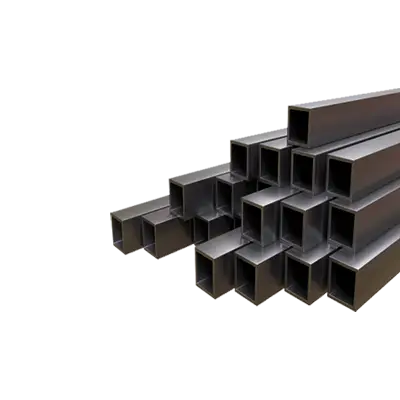
1. **Rectangular Hollow Sections (RHS):** These have a rectangular cross-section and are widely used in construction due to their high strength-to-weight ratio. They are ideal for load-bearing applications and are commonly used in frames, columns, and beams.
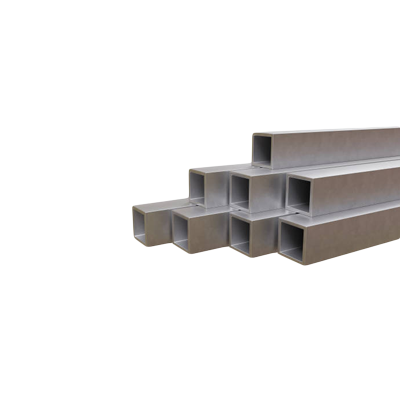
2. **Square Hollow Sections (SHS):** With a square cross-section, SHS are similar to RHS but offer uniform strength in all directions. They are often used in architectural applications, fencing, and as structural elements in buildings.
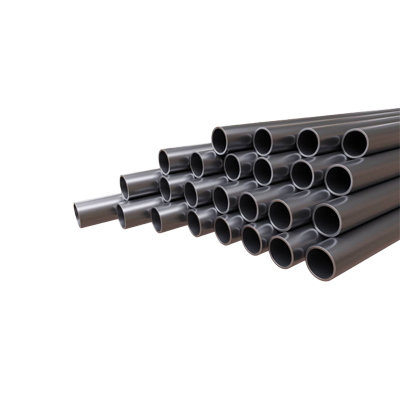
3. **Circular Hollow Sections (CHS):** These have a circular cross-section and are known for their aesthetic appeal and uniform strength distribution. CHS are often used in columns, trusses, and as structural supports in various architectural designs.
4. **Elliptical Hollow Sections:** These sections have an elliptical cross-section and are used for aesthetic purposes in architectural designs. They provide a unique appearance while maintaining structural integrity.
5. **Oval Hollow Sections:** Similar to elliptical sections, oval hollow sections offer a distinct look and are used in architectural applications where design and aesthetics are important.
6. **Tapered Hollow Sections:** These sections have a varying cross-section along their length, providing strength where needed while reducing material usage. They are used in applications like poles and masts.
7. **Custom Hollow Sections:** These are specially designed sections tailored to specific project requirements, offering unique shapes and sizes for specialized applications.
Each type of hollow section offers distinct advantages in terms of strength, weight, and aesthetic appeal, making them versatile components in modern construction.
What are the advantages of using hollow sections in structural applications?
Hollow sections offer several advantages in structural applications:
1. **Strength-to-Weight Ratio**: Hollow sections provide a high strength-to-weight ratio, making them ideal for structures requiring strength without excessive weight, such as bridges and towers.
2. **Torsional Resistance**: Their closed shape offers excellent resistance to torsional forces, making them suitable for applications where twisting is a concern.
3. **Aesthetic Appeal**: The clean lines and smooth surfaces of hollow sections contribute to modern and aesthetically pleasing designs, often used in architectural applications.
4. **Efficient Load Distribution**: The uniform geometry of hollow sections allows for efficient load distribution, reducing stress concentrations and enhancing structural integrity.
5. **Versatility**: Available in various shapes (circular, square, rectangular), hollow sections can be used in diverse applications, from simple frames to complex trusses.
6. **Ease of Fabrication and Assembly**: Hollow sections are easy to cut, weld, and join, facilitating quick and efficient construction processes.
7. **Corrosion Resistance**: When made from materials like stainless steel or coated with protective layers, hollow sections offer good resistance to corrosion, extending the lifespan of structures.
8. **Reduced Material Usage**: The efficient design of hollow sections often requires less material than solid sections, leading to cost savings and reduced environmental impact.
9. **Fire Resistance**: Hollow sections can be filled with fire-resistant materials, enhancing their performance in fire-prone environments.
10. **Energy Absorption**: Their ability to absorb energy makes hollow sections suitable for applications requiring impact resistance, such as crash barriers and protective structures.
These advantages make hollow sections a preferred choice in many structural engineering applications, balancing performance, aesthetics, and cost-effectiveness.
How do you calculate the load-bearing capacity of hollow sections?
To calculate the load-bearing capacity of hollow sections, follow these steps:
1. **Determine Material Properties**: Identify the material's yield strength (Fy) and ultimate tensile strength (Fu).
2. **Section Properties**: Calculate the cross-sectional area (A), moment of inertia (I), and section modulus (Z) of the hollow section. Use standard formulas for circular or rectangular hollow sections.
3. **Axial Load Capacity**:
- For compression, use Euler's critical load formula: \( P_{cr} = \frac{\pi^2 \cdot E \cdot I}{(K \cdot L)^2} \), where E is the modulus of elasticity, K is the effective length factor, and L is the unsupported length.
- For tension, use: \( P_t = A \cdot Fy \).
4. **Bending Capacity**: Calculate the bending moment capacity using: \( M_b = Z \cdot Fy \).
5. **Combined Loading**: If the section is subject to combined axial and bending loads, use interaction formulas like: \( \frac{P}{P_c} + \frac{M}{M_b} \leq 1 \).
6. **Local Buckling**: Check for local buckling, especially in thin-walled sections, using width-to-thickness ratios and compare with code limits.
7. **Shear Capacity**: Calculate shear capacity using: \( V = 0.6 \cdot A \cdot Fy \).
8. **Code Compliance**: Ensure calculations comply with relevant design codes (e.g., AISC, Eurocode).
9. **Safety Factors**: Apply appropriate safety factors as per design standards.
10. **Software Tools**: Use structural analysis software for complex geometries or loading conditions.
This approach ensures a comprehensive assessment of the load-bearing capacity of hollow sections under various loading scenarios.
What are the standard sizes and dimensions of hollow sections?
Hollow sections, commonly used in construction and structural applications, come in various standard sizes and dimensions. These sections are typically categorized into three main types: rectangular hollow sections (RHS), square hollow sections (SHS), and circular hollow sections (CHS).
1. **Rectangular Hollow Sections (RHS):**
- Width x Height: Common sizes range from 50x25 mm to 400x300 mm.
- Wall Thickness: Typically varies from 2 mm to 16 mm.
- Length: Standard lengths are usually 6 meters or 12 meters, but custom lengths can be ordered.
2. **Square Hollow Sections (SHS):**
- Side Length: Common sizes range from 20x20 mm to 400x400 mm.
- Wall Thickness: Typically varies from 2 mm to 16 mm.
- Length: Standard lengths are usually 6 meters or 12 meters, with custom lengths available.
3. **Circular Hollow Sections (CHS):**
- Diameter: Common sizes range from 21.3 mm to 508 mm.
- Wall Thickness: Typically varies from 2 mm to 20 mm.
- Length: Standard lengths are usually 6 meters or 12 meters, but custom lengths can be ordered.
These dimensions can vary slightly based on regional standards and manufacturers. The sizes are often specified according to standards such as the European Standard EN 10210, the American Standard ASTM A500, or the British Standard BS EN 10219. The choice of size and thickness depends on the specific application, load requirements, and design considerations.
How do hollow sections compare to other structural steel profiles in terms of strength and weight?
Hollow sections, such as rectangular, square, and circular hollow sections (RHS, SHS, and CHS), offer distinct advantages in terms of strength-to-weight ratio compared to other structural steel profiles like I-beams, H-beams, and channels.
1. **Strength-to-Weight Ratio**: Hollow sections provide a high strength-to-weight ratio due to their geometric configuration. The enclosed shape allows for efficient distribution of material around the axis, providing high resistance to torsion and bending. This makes them ideal for applications where weight reduction is crucial without compromising strength.
2. **Torsional Resistance**: The closed shape of hollow sections offers superior torsional resistance compared to open sections like I-beams and channels. This makes them suitable for structures subjected to twisting forces, such as bridges and towers.
3. **Bending Resistance**: While I-beams and H-beams excel in bending resistance due to their flanges, hollow sections can be more effective in multi-directional bending scenarios. Their uniform geometry allows for consistent performance regardless of the direction of the applied load.
4. **Buckling Resistance**: Hollow sections exhibit excellent buckling resistance due to their closed shape, which provides uniform stiffness and strength. This is particularly beneficial in columns and compression members.
5. **Weight Efficiency**: The efficient use of material in hollow sections often results in lighter structures compared to traditional profiles, reducing material costs and easing transportation and installation.
6. **Aesthetic and Functional Design**: Hollow sections offer a sleek, modern appearance and can be used in architectural applications where aesthetics are important. Their enclosed shape also allows for easy integration of services like wiring and plumbing.
In summary, hollow sections provide a balanced combination of strength, weight efficiency, and versatility, making them a preferred choice in many structural applications.
What are the common applications of hollow sections in construction projects?
Hollow sections are widely used in construction projects due to their structural efficiency and aesthetic appeal. Common applications include:
1. **Structural Frameworks**: Hollow sections are often used in the construction of steel frameworks for buildings, bridges, and towers. Their high strength-to-weight ratio makes them ideal for supporting loads while minimizing material usage.
2. **Columns and Beams**: They serve as columns and beams in both residential and commercial buildings, providing support and stability. Their uniform geometry allows for easy connection and integration with other structural elements.
3. **Trusses and Space Frames**: Hollow sections are used in trusses and space frames for roofs and large-span structures. Their ability to handle tension and compression makes them suitable for these applications.
4. **Facade and Cladding Systems**: In architectural applications, hollow sections are used in facade and cladding systems, offering a sleek and modern appearance while providing structural support.
5. **Railings and Balustrades**: They are commonly used in railings and balustrades for staircases, balconies, and terraces due to their aesthetic appeal and ease of fabrication.
6. **Piping and Ductwork**: Hollow sections are used in piping and ductwork systems for HVAC and plumbing, providing a lightweight and durable solution.
7. **Signage and Lighting Poles**: They are used in the construction of poles for signage and lighting, offering strength and resistance to environmental factors.
8. **Temporary Structures**: Hollow sections are used in temporary structures like scaffolding and formwork due to their ease of assembly and disassembly.
9. **Transportation Infrastructure**: In bridges and flyovers, hollow sections are used for girders and supports, providing the necessary strength and durability.
10. **Industrial Applications**: They are used in the construction of industrial facilities, including warehouses and factories, due to their ability to support heavy loads and resist corrosion.
How are hollow sections manufactured and what materials are typically used?
Hollow sections are manufactured using several methods, primarily through the processes of forming and welding. The most common methods include:
1. **Electric Resistance Welding (ERW):** In this process, flat steel strips are passed through forming rolls to shape them into a circular or rectangular tube. The edges are then welded together using electric resistance, creating a seam along the length of the tube.
2. **Seamless Tube Manufacturing:** This involves heating a solid billet and then piercing it with a mandrel to create a hollow tube. The tube is then elongated and shaped through a series of rolling and stretching processes.
3. **Cold Forming:** Steel sheets are cold-formed into a tubular shape and then welded. This method is often used for producing square and rectangular hollow sections.
4. **Hot Finished Process:** Similar to seamless tube manufacturing, this involves heating and forming the tube, but the final shaping is done at high temperatures, which can improve the mechanical properties of the hollow section.
Materials typically used for manufacturing hollow sections include:
- **Carbon Steel:** The most common material due to its strength, versatility, and cost-effectiveness. It is used in construction, automotive, and general engineering applications.
- **Stainless Steel:** Used for applications requiring corrosion resistance, such as in the chemical, food processing, and marine industries.
- **Aluminum:** Chosen for its lightweight and corrosion-resistant properties, often used in aerospace and transportation.
- **Alloy Steel:** Used for applications requiring enhanced mechanical properties, such as high strength and toughness.
These materials are selected based on the required mechanical properties, environmental conditions, and specific application needs.