Call +(254) 703 030 000 / 751 483 999 / 721 704 777

Showing 0 products
Frequently Asked Questions
What are the different types of steel beams used in construction?
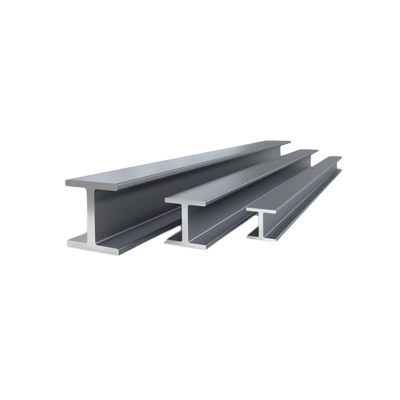
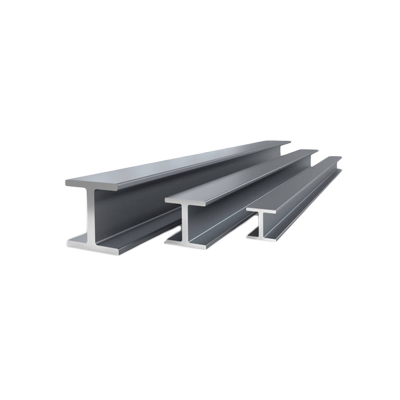
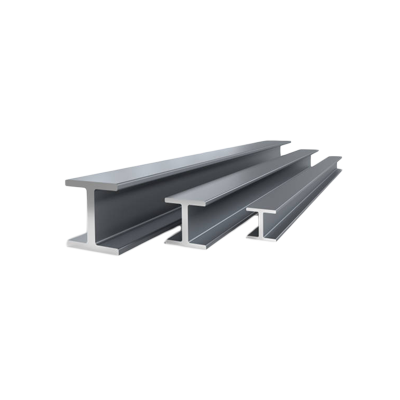
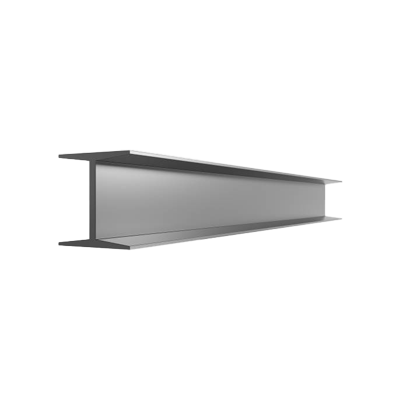
1. **I-Beams (W-Beams):** Also known as wide flange beams, they have a shape resembling the letter "I" and are used for their high strength-to-weight ratio. They are commonly used in building frames and bridges.
2. **H-Beams:** Similar to I-beams but with wider flanges, providing greater surface area for load distribution. They are used in large-scale construction projects.
3. **T-Beams:** Shaped like the letter "T," these beams are used in reinforced concrete construction, often as part of a floor system.
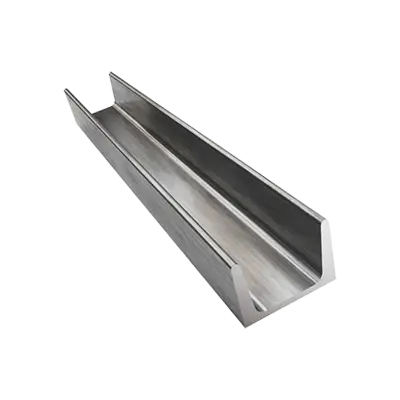
4. **C-Channels (C-Beams):** Shaped like the letter "C," these beams are used for structural support in walls and floors, often in smaller-scale projects.
5. **L-Angles:** Shaped like the letter "L," these beams are used for bracing and framing, providing support at corners and edges.
6. **Box Beams (Hollow Structural Sections):** These are hollow, rectangular or square beams used for their aesthetic appeal and strength, often in architectural applications.
7. **Tapered Beams:** These beams have a varying cross-section, providing strength where needed while reducing weight. They are used in long-span structures.
8. **Plate Girders:** Made by welding plates together, these beams are used for long spans and heavy loads, such as in bridges and industrial buildings.
9. **Composite Beams:** These beams combine steel with other materials, like concrete, to enhance strength and reduce weight, often used in modern construction.
10. **Z-Beams:** Shaped like the letter "Z," these beams are used in roofing and cladding applications for their ability to overlap and provide continuous support.
11. **Tee Beams:** Derived from I-beams by cutting them in half, they are used in floor systems and as secondary support beams.
How do I-beams and H-beams differ in terms of design and application?
I-beams and H-beams differ primarily in their design and applications.
Design:
1. **I-Beams**:
- Shape: Resemble the letter "I" with a narrow flange and a tapered edge.
- Flange: Narrower and thinner compared to H-beams.
- Web: Thinner, which makes them lighter.
- Dimensions: Typically have a higher web-to-flange ratio.
2. **H-Beams**:
- Shape: Resemble the letter "H" with wider and parallel flanges.
- Flange: Wider and thicker, providing more surface area.
- Web: Thicker, contributing to a heavier structure.
- Dimensions: Flanges and web are often of equal thickness.
Applications:
1. **I-Beams**:
- Used in projects requiring lighter weight and less load-bearing capacity.
- Common in residential construction, small buildings, and frameworks.
- Suitable for spans where bending is a primary concern.
2. **H-Beams**:
- Used in projects requiring higher load-bearing capacity and strength.
- Common in large-scale construction like bridges, skyscrapers, and industrial structures.
- Suitable for longer spans and heavy load applications due to their robust design.
In summary, I-beams are preferred for lighter, less demanding applications, while H-beams are chosen for their strength and ability to support larger loads in more demanding structural applications.
What factors should be considered when selecting a steel beam for a project?
1. **Load Requirements**: Determine the type and magnitude of loads (dead, live, wind, seismic) the beam will support.
2. **Span Length**: Consider the distance the beam needs to span without intermediate support.
3. **Material Properties**: Evaluate the grade of steel, including yield strength, tensile strength, and ductility.
4. **Beam Size and Shape**: Choose the appropriate cross-sectional shape (I-beam, H-beam, T-beam) and size based on structural requirements.
5. **Deflection Criteria**: Ensure the beam meets deflection limits to prevent excessive bending under load.
6. **Connection Details**: Consider how the beam will connect to other structural elements, including bolting and welding requirements.
7. **Environmental Conditions**: Assess exposure to corrosive environments, temperature variations, and other environmental factors.
8. **Cost**: Evaluate the cost of materials, fabrication, and installation, balancing budget constraints with performance needs.
9. **Construction Constraints**: Consider site access, available equipment, and construction sequence.
10. **Building Codes and Standards**: Ensure compliance with relevant codes and standards (e.g., AISC, Eurocode).
11. **Aesthetic Considerations**: If exposed, consider the visual impact and architectural requirements.
12. **Fire Resistance**: Evaluate the need for fireproofing or fire-resistant materials.
13. **Vibration and Acoustic Performance**: Consider the beam's performance in terms of vibration control and sound transmission.
14. **Sustainability**: Consider the environmental impact, including the potential for recycling and the carbon footprint of the steel.
15. **Future Modifications**: Plan for potential future changes or expansions in the structure.
How is the load capacity of a steel beam calculated?
The load capacity of a steel beam is calculated using the following steps:
1. **Determine the Beam's Material Properties**: Identify the yield strength (Fy) and the modulus of elasticity (E) of the steel.
2. **Select the Beam's Cross-Section**: Choose the appropriate cross-sectional shape (e.g., I-beam, H-beam) and size based on design requirements.
3. **Calculate the Section Modulus (S)**: For the chosen cross-section, determine the section modulus, which is a geometric property that indicates the beam's ability to resist bending. It is calculated as S = I/c, where I is the moment of inertia and c is the distance from the neutral axis to the outermost fiber.
4. **Determine the Maximum Bending Moment (M)**: Calculate the maximum bending moment the beam will experience under the applied loads. This can be done using static equilibrium equations and considering the beam's support conditions and load distribution.
5. **Calculate the Bending Stress (σ)**: Use the formula σ = M/S to find the bending stress in the beam. Ensure that this stress does not exceed the yield strength of the material (σ ≤ Fy).
6. **Check for Shear Capacity**: Calculate the shear force (V) and compare it to the shear capacity of the beam. The shear capacity can be determined using the formula Vc = 0.6 * Fy * Aweb, where Aweb is the area of the web of the beam.
7. **Deflection Check**: Ensure that the deflection of the beam under load does not exceed allowable limits. Use the formula δ = (5/384) * (wL^4) / (EI) for a uniformly loaded simply supported beam, where w is the load per unit length, L is the span, and I is the moment of inertia.
8. **Safety Factors**: Apply appropriate safety factors as per design codes to ensure the beam's reliability under unexpected conditions.
By following these steps, the load capacity of a steel beam can be accurately determined.
What are the advantages of using steel beams over other materials?
Steel beams offer several advantages over other materials:
1. **Strength and Durability**: Steel has a high strength-to-weight ratio, making it ideal for supporting heavy loads without requiring excessive material. It is also highly durable, resisting wear and tear over time.
2. **Flexibility and Versatility**: Steel can be molded into various shapes and sizes, allowing for innovative architectural designs. It can be used in a wide range of applications, from residential buildings to large industrial structures.
3. **Consistency and Uniformity**: Steel is manufactured under controlled conditions, ensuring consistent quality and uniformity in its properties, which is crucial for structural integrity.
4. **Speed of Construction**: Steel components can be prefabricated off-site and quickly assembled on-site, reducing construction time and labor costs.
5. **Recyclability**: Steel is 100% recyclable, making it an environmentally friendly option. It can be reused without losing its properties, contributing to sustainable construction practices.
6. **Fire Resistance**: Steel is non-combustible and can maintain its structural integrity at high temperatures, providing better fire resistance compared to materials like wood.
7. **Cost-Effectiveness**: Although the initial cost may be higher than some materials, steel's durability and low maintenance requirements can lead to cost savings over the building's lifespan.
8. **Resistance to Pests and Rot**: Unlike wood, steel is impervious to pests such as termites and does not rot, reducing the need for chemical treatments and repairs.
9. **Seismic Performance**: Steel's ductility allows it to absorb and dissipate energy during seismic events, making it a preferred choice in earthquake-prone areas.
10. **Aesthetic Appeal**: Steel can be used to create sleek, modern designs, offering aesthetic flexibility for architects and designers.
How are steel beams installed in a construction project?
Steel beams are installed in a construction project through a series of coordinated steps:
1. **Planning and Design**: Engineers and architects design the structure, specifying the size, type, and placement of steel beams. Detailed drawings and plans are created.
2. **Fabrication**: Steel beams are fabricated off-site in a controlled environment. They are cut, shaped, and sometimes pre-drilled according to the design specifications.
3. **Transportation**: The fabricated beams are transported to the construction site using trucks or trailers. Care is taken to prevent damage during transit.
4. **Site Preparation**: The construction site is prepared, ensuring foundations are ready to support the steel structure. This includes setting anchor bolts in concrete footings or piers.
5. **Cranes and Lifting Equipment**: Cranes or other lifting equipment are brought to the site to hoist the beams into place. The type of crane depends on the beam size and site conditions.
6. **Positioning and Alignment**: Beams are lifted and positioned according to the design plans. Workers use guide ropes and alignment tools to ensure precise placement.
7. **Connection and Fastening**: Beams are connected to columns and other structural elements using bolts, welds, or a combination of both. Bolted connections are often used for ease and speed, while welding provides additional strength.
8. **Bracing and Stabilization**: Temporary bracing is used to stabilize the structure during installation. Permanent bracing is added as the structure is completed.
9. **Inspection and Quality Control**: Inspectors check the installation for compliance with design specifications and safety standards. Any necessary adjustments are made.
10. **Final Adjustments**: Once all beams are in place, final adjustments ensure alignment and stability. The structure is then ready for further construction activities.
What are common issues or challenges associated with steel beam construction?
Common issues and challenges associated with steel beam construction include:
1. **Corrosion**: Steel is susceptible to rust when exposed to moisture and oxygen, necessitating protective coatings or treatments to prevent deterioration.
2. **Fire Resistance**: Steel loses strength at high temperatures, requiring fireproofing measures such as intumescent coatings or encasement in fire-resistant materials.
3. **Cost**: The price of steel can fluctuate significantly, impacting project budgets. Additionally, fabrication and transportation add to overall costs.
4. **Thermal Expansion**: Steel expands and contracts with temperature changes, which can lead to structural issues if not properly accounted for in design.
5. **Complex Connections**: The need for precise welding and bolting can complicate construction, requiring skilled labor and careful quality control.
6. **Weight**: While strong, steel beams are heavy, necessitating robust support structures and heavy machinery for installation.
7. **Vibration and Noise**: Steel structures can transmit vibrations and noise, which may require additional damping solutions.
8. **Design Limitations**: Long spans or unique architectural designs may require custom fabrication, increasing complexity and cost.
9. **Environmental Impact**: Steel production is energy-intensive and contributes to carbon emissions, raising sustainability concerns.
10. **Erection Challenges**: Weather conditions, site accessibility, and safety risks during installation can pose significant challenges.
11. **Maintenance**: Regular inspections and maintenance are necessary to ensure structural integrity over time.
12. **Compatibility with Other Materials**: Ensuring proper integration with concrete, wood, or other materials can be challenging, requiring careful planning and execution.