Call +(254) 703 030 000 / 751 483 999 / 721 704 777

Showing 0 products
Frequently Asked Questions
What are the different types of structural steel angles?
Structural steel angles are categorized based on their shape, size, and application. The primary types include:
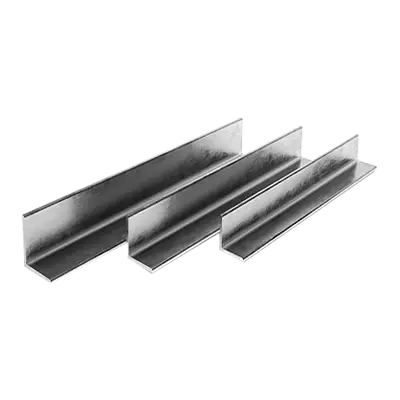
1. **Equal Angle**: Both legs of the angle are of equal length. Commonly used in framing, bridges, and various construction applications due to its symmetrical shape, which provides uniform strength.
2. **Unequal Angle**: The legs are of different lengths. This type is used when there is a need for unequal load distribution or when space constraints require a specific configuration.
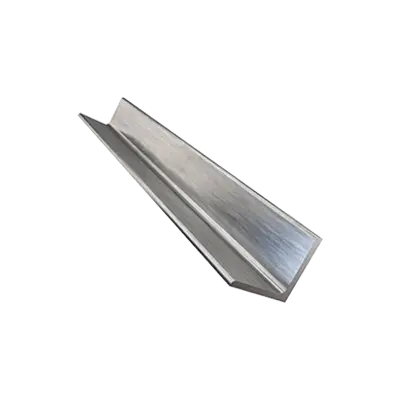
3. **L-Shaped Angle**: A basic form of angle with a 90-degree bend, used in various structural applications for support and reinforcement.
4. **Tapered Angle**: Features a gradual reduction in thickness or width along its length. Used in specialized applications where varying load distribution is required.
5. **V-Shaped Angle**: Similar to the L-shaped but with a wider angle, often used in applications requiring a broader base for stability.
6. **Custom Angles**: Fabricated to meet specific design requirements, these can vary in size, thickness, and angle to suit unique structural needs.
Each type of angle is selected based on factors such as load-bearing requirements, environmental conditions, and specific design criteria.
How are structural steel angles measured?
Structural steel angles are measured by their leg lengths and thickness. Typically, an angle is described by the length of its two legs and the thickness of the material. For example, an angle might be specified as L4x3x1/2, where "L" denotes an angle, "4" and "3" are the lengths of the legs in inches, and "1/2" is the thickness of the steel in inches.
The legs of the angle can be equal or unequal. In equal angles, both legs have the same length, while in unequal angles, the legs differ in length. Measurements are usually taken from the outside of the angle, and the thickness is measured perpendicular to the surface of the leg.
Angles can also be specified in metric units, where the dimensions are given in millimeters. For instance, an angle might be described as L100x75x6, indicating leg lengths of 100 mm and 75 mm, with a thickness of 6 mm.
In addition to the basic dimensions, angles may also be specified by their weight per unit length, which is often given in pounds per foot or kilograms per meter. This information is crucial for structural calculations and material ordering.
Angles are typically produced in standard lengths, such as 20 or 40 feet, but can be cut to specific lengths as required for a project. The surface finish, such as galvanized or painted, may also be specified depending on the application and environmental conditions.
What are the common applications of steel angles in construction?
Steel angles are commonly used in construction for their strength, versatility, and ease of installation. They serve various structural and architectural purposes, including:
1. **Structural Support**: Steel angles are often used as support beams in frameworks, providing stability and strength to structures like bridges, buildings, and towers.
2. **Reinforcement**: They reinforce concrete structures, such as columns and beams, enhancing load-bearing capacity and resistance to tension and compression.
3. **Framing**: In construction, steel angles are used to frame walls, roofs, and floors, offering a sturdy skeleton for buildings.
4. **Bracing**: They provide lateral support and stability to structures, preventing buckling and maintaining alignment under load.
5. **Trusses**: Steel angles are integral in the construction of trusses, which are used in roofs and bridges to distribute weight and provide support.
6. **Lintels**: Used above doors and windows, steel angles act as lintels, supporting the weight of the wall above these openings.
7. **Edge Protection**: They protect the edges of concrete slabs and other materials from damage and wear.
8. **Shelving and Racking**: Steel angles are used in the construction of industrial shelving and racking systems due to their strength and durability.
9. **Staircases and Railings**: They form the framework for staircases and railings, providing both structural support and aesthetic appeal.
10. **Fabrication**: Steel angles are used in the fabrication of various components and structures, including machinery, vehicles, and equipment.
11. **Bridges**: In bridge construction, steel angles are used in the framework and as connectors, ensuring stability and load distribution.
12. **Utility Towers**: They are used in the construction of utility towers and transmission lines, providing a robust framework to withstand environmental forces.
These applications highlight the importance of steel angles in ensuring the safety, durability, and functionality of construction projects.
How do you determine the load capacity of a steel angle?
To determine the load capacity of a steel angle, follow these steps:
1. **Identify Material Properties**: Obtain the yield strength and tensile strength of the steel from material specifications or standards.
2. **Determine Cross-Sectional Properties**: Calculate the area, moment of inertia, and section modulus of the angle. These can be found in steel design manuals or calculated based on the angle's dimensions.
3. **Load Type and Conditions**: Identify the type of load (axial, bending, shear, or combined) and the conditions (simply supported, fixed, etc.).
4. **Calculate Axial Load Capacity**: Use the formula \( P = A \times F_y \), where \( P \) is the axial load capacity, \( A \) is the cross-sectional area, and \( F_y \) is the yield strength.
5. **Calculate Bending Capacity**: Use the formula \( M = S \times F_y \), where \( M \) is the bending moment capacity, \( S \) is the section modulus, and \( F_y \) is the yield strength.
6. **Check for Buckling**: For slender angles, calculate the critical buckling load using Euler's formula \( P_{cr} = \frac{\pi^2 \times E \times I}{(K \times L)^2} \), where \( E \) is the modulus of elasticity, \( I \) is the moment of inertia, \( K \) is the effective length factor, and \( L \) is the unsupported length.
7. **Shear Capacity**: Calculate using \( V = 0.6 \times A \times F_y \).
8. **Factor of Safety**: Apply a factor of safety as per design codes to ensure reliability.
9. **Code Compliance**: Ensure calculations comply with relevant design codes (e.g., AISC, Eurocode).
10. **Consider Connections**: Evaluate the capacity of connections, as they can be the limiting factor.
11. **Deflection Check**: Ensure deflection limits are within acceptable ranges for serviceability.
By following these steps, you can determine the load capacity of a steel angle for various loading conditions.
What materials are used to make structural steel angles?
Structural steel angles are primarily made from carbon steel, which is an alloy of iron and carbon. The carbon content typically ranges from 0.05% to 0.25%, providing a balance between strength and ductility. In addition to carbon, structural steel may contain other elements to enhance its properties:
1. **Manganese**: Improves strength and toughness, and helps in deoxidizing the steel during production.
2. **Silicon**: Acts as a deoxidizer and can improve strength.
3. **Phosphorus**: Generally kept to a minimum as it can make steel brittle, but small amounts can improve strength.
4. **Sulfur**: Also minimized due to its tendency to cause brittleness, though it can improve machinability.
5. **Alloying Elements**: Elements like chromium, nickel, molybdenum, and vanadium may be added to enhance specific properties such as corrosion resistance, toughness, and strength.
6. **Copper**: Sometimes added to improve corrosion resistance.
The production process involves melting these materials in a furnace, followed by casting, rolling, and forming into the desired angle shape. The steel is then cooled and may undergo further treatments like galvanization for corrosion resistance or heat treatments to enhance mechanical properties.
The specific composition and treatment depend on the intended application, with standards set by organizations like ASTM International or the American Institute of Steel Construction (AISC) to ensure consistency and performance.
How do you connect steel angles in construction projects?
Steel angles in construction projects are typically connected using the following methods:
1. **Bolting**:
- **Preparation**: Drill holes in the steel angles and the connecting members.
- **Alignment**: Align the holes of the steel angles with those of the connecting members.
- **Fastening**: Insert bolts through the aligned holes and secure them with nuts. Use washers to distribute the load and prevent damage to the steel surface.
- **Tightening**: Use a torque wrench to tighten the bolts to the specified torque to ensure a secure connection.
2. **Welding**:
- **Preparation**: Clean the surfaces to be welded to remove rust, paint, or any contaminants.
- **Positioning**: Position the steel angles in the desired configuration.
- **Welding Process**: Use appropriate welding techniques such as MIG, TIG, or stick welding to join the angles. Ensure the welds are continuous and meet the required specifications.
- **Inspection**: Inspect the welds for defects such as cracks or incomplete fusion.
3. **Riveting**:
- **Preparation**: Drill holes in the steel angles and the connecting members.
- **Insertion**: Insert rivets through the holes.
- **Forming**: Use a rivet gun or hammer to deform the rivet, creating a head on the opposite side to secure the connection.
4. **Using Connectors or Plates**:
- **Preparation**: Use gusset plates or other connectors to join multiple angles.
- **Fastening**: Connect the angles to the plates using bolts or welds.
5. **Bracing**:
- **Installation**: Use bracing to provide additional support and stability to the connected angles.
Each method requires adherence to engineering specifications and safety standards to ensure structural integrity and safety.
What are the advantages of using steel angles in structural engineering?
Steel angles offer several advantages in structural engineering:
1. **Strength and Durability**: Steel angles provide high strength-to-weight ratios, making them ideal for supporting heavy loads. Their durability ensures long-lasting performance in various environmental conditions.
2. **Versatility**: They can be used in a wide range of applications, including framing, bracing, and reinforcing structures. Their L-shape allows for easy integration into different designs and configurations.
3. **Cost-Effectiveness**: Steel angles are relatively inexpensive compared to other structural materials. Their ease of fabrication and installation further reduces labor costs.
4. **Ease of Fabrication**: Steel angles can be easily cut, welded, and drilled, allowing for quick customization and adaptation to specific project requirements.
5. **Load Distribution**: The L-shape design efficiently distributes loads, providing stability and support in both tension and compression applications.
6. **Corrosion Resistance**: When treated or coated, steel angles offer excellent resistance to corrosion, extending the lifespan of structures in harsh environments.
7. **Recyclability**: Steel is highly recyclable, making steel angles an environmentally friendly choice. They can be reused or repurposed, reducing waste and conserving resources.
8. **Compatibility**: Steel angles are compatible with other construction materials, allowing for seamless integration into composite structures.
9. **Standardization**: Available in various sizes and thicknesses, steel angles conform to industry standards, ensuring consistency and reliability in construction projects.
10. **Aesthetic Appeal**: Steel angles can be used in architectural designs to create modern and industrial aesthetics, enhancing the visual appeal of structures.
These advantages make steel angles a preferred choice in structural engineering for both small-scale and large-scale projects.