Call +(254) 703 030 000 / 751 483 999 / 721 704 777

Showing 0 products
Frequently Asked Questions
What is the purpose of lateral reinforcement in concrete structures?
The purpose of lateral reinforcement in concrete structures is to enhance the structural integrity and performance of the concrete, particularly under various loading conditions. Lateral reinforcement, often in the form of ties, stirrups, or hoops, serves several critical functions:
1. **Confinement**: Lateral reinforcement confines the concrete core, improving its compressive strength and ductility. This is particularly important in columns, where it helps prevent buckling of the longitudinal reinforcement and delays the onset of concrete spalling.
2. **Shear Resistance**: In beams and columns, lateral reinforcement provides resistance against shear forces. Stirrups or ties help transfer shear stresses across potential failure planes, preventing diagonal cracking and shear failure.
3. **Preventing Buckling**: In columns, lateral reinforcement prevents the buckling of longitudinal bars under compressive loads. This ensures that the bars can carry the intended loads without premature failure.
4. **Seismic Performance**: In seismic zones, lateral reinforcement is crucial for enhancing the ductility and energy dissipation capacity of structures. It helps maintain the integrity of the structure during and after seismic events by allowing it to undergo large deformations without collapsing.
5. **Crack Control**: Lateral reinforcement helps control the width and distribution of cracks in concrete, improving durability and serviceability. It ensures that cracks remain within acceptable limits, preventing water ingress and corrosion of reinforcement.
6. **Load Redistribution**: In the event of localized failure, lateral reinforcement aids in redistributing loads to other parts of the structure, enhancing overall stability and safety.
Overall, lateral reinforcement is essential for ensuring the safety, durability, and longevity of concrete structures, particularly in areas subject to high loads, seismic activity, or harsh environmental conditions.
How does lateral reinforcement improve the ductility of concrete elements?
Lateral reinforcement, typically in the form of transverse ties or spirals, enhances the ductility of concrete elements by confining the core concrete, delaying the onset of buckling in longitudinal reinforcement, and improving energy absorption capacity. When concrete is subjected to compressive loads, it tends to expand laterally. Lateral reinforcement provides confinement, which restricts this lateral expansion, thereby increasing the compressive strength and strain capacity of the concrete.
The confinement effect of lateral reinforcement transforms the stress-strain behavior of concrete from brittle to more ductile. This is achieved by maintaining the integrity of the concrete core under high strains, allowing it to undergo larger deformations before failure. The presence of lateral reinforcement also helps in redistributing stresses more evenly across the section, reducing the likelihood of sudden failure.
Moreover, lateral reinforcement prevents premature buckling of longitudinal bars, which is crucial under cyclic loading conditions such as those experienced during earthquakes. By holding the longitudinal bars in place, lateral ties or spirals ensure that these bars can sustain higher strains without losing their load-carrying capacity.
In summary, lateral reinforcement enhances ductility by confining the concrete, preventing premature buckling of longitudinal reinforcement, and allowing the structure to undergo significant deformations while maintaining its load-bearing capacity. This results in improved performance under seismic and other dynamic loading conditions, providing a safer and more resilient structural element.
What are the common types of lateral reinforcement used in columns and beams?
The common types of lateral reinforcement used in columns and beams include:
1. **Stirrups**: These are closed loops of reinforcement bars that are placed perpendicular to the longitudinal reinforcement in beams and columns. They help in resisting shear forces and provide confinement to the core concrete, enhancing ductility and strength.
2. **Ties**: Used primarily in columns, ties are similar to stirrups but are typically spaced closer together. They help in maintaining the position of the longitudinal bars and provide lateral support to prevent buckling.
3. **Spiral Reinforcement**: This is a continuous helical reinforcement used in circular columns. It provides excellent confinement to the core concrete, improving ductility and load-bearing capacity, especially under seismic loads.
4. **Hoops**: These are similar to stirrups but are used in circular or elliptical columns. They provide lateral support and confinement to the core concrete, enhancing the column's strength and ductility.
5. **Helical Reinforcement**: Used in both columns and beams, this type of reinforcement involves a continuous spiral of steel that provides confinement and enhances the structural integrity under axial and lateral loads.
6. **Cross Ties**: These are additional ties used in conjunction with regular ties in columns to provide extra lateral support and prevent buckling of the longitudinal bars.
7. **Bundled Bars**: In some cases, multiple bars are bundled together to act as a single unit, providing increased lateral support and load-carrying capacity.
These types of lateral reinforcement are crucial for ensuring the structural integrity and stability of columns and beams, particularly in regions prone to seismic activity or where high load-bearing capacity is required.
Why is lateral reinforcement important in seismic zones?
Lateral reinforcement is crucial in seismic zones because it enhances the structural integrity and ductility of buildings, allowing them to withstand the lateral forces generated during an earthquake. In seismic events, buildings are subjected to horizontal ground motions that can cause significant stress and potential failure. Lateral reinforcement, typically in the form of steel bars or mesh, is integrated into concrete structures to provide additional strength and flexibility.
The primary role of lateral reinforcement is to prevent brittle failure by improving the ductility of concrete, which is inherently strong in compression but weak in tension. By incorporating lateral reinforcement, structures can absorb and dissipate energy more effectively, reducing the risk of catastrophic collapse. This reinforcement helps in maintaining the structural integrity by controlling cracking, limiting lateral displacement, and ensuring that the building can undergo large deformations without losing its load-bearing capacity.
Moreover, lateral reinforcement contributes to the confinement of concrete, enhancing its compressive strength and delaying the onset of buckling in columns and beams. This confinement is particularly important in critical regions such as beam-column joints, where stress concentrations are highest during seismic activity.
In summary, lateral reinforcement is vital in seismic zones as it provides the necessary strength, ductility, and energy dissipation capacity to structures, ensuring they remain safe and functional during and after an earthquake. This reinforcement is a key component in modern seismic design, helping to protect lives and reduce economic losses by minimizing structural damage.
How is lateral reinforcement designed and placed in reinforced concrete structures?
Lateral reinforcement in reinforced concrete structures is primarily designed to enhance the shear capacity, improve ductility, and prevent buckling of longitudinal bars. It typically consists of stirrups or ties, which are closed loops of steel bars placed perpendicular to the longitudinal reinforcement.
Design Process:
1. **Determine Shear Forces**: Calculate the shear forces acting on the structure using load combinations as per relevant codes (e.g., ACI, Eurocode).
2. **Select Stirrup Spacing and Diameter**: Based on shear demand, select appropriate stirrup spacing and diameter. The spacing is often determined by the lesser of a fraction of the effective depth (d) or a maximum value specified by codes.
3. **Check Shear Capacity**: Ensure that the combined shear capacity of concrete and stirrups meets or exceeds the applied shear force. Use formulas provided in design codes to calculate the contribution of concrete and steel.
4. **Ductility and Confinement**: In seismic regions, design for ductility by providing closely spaced stirrups in potential plastic hinge regions. Confinement reinforcement is crucial in columns to prevent buckling of longitudinal bars and improve energy dissipation.
Placement:
1. **Stirrup Layout**: Place stirrups perpendicular to the longitudinal bars, ensuring they are adequately anchored with hooks or bends as specified by design codes.
2. **Spacing**: Maintain consistent spacing along the length of the member, with reduced spacing in critical regions like beam-column joints or near supports.
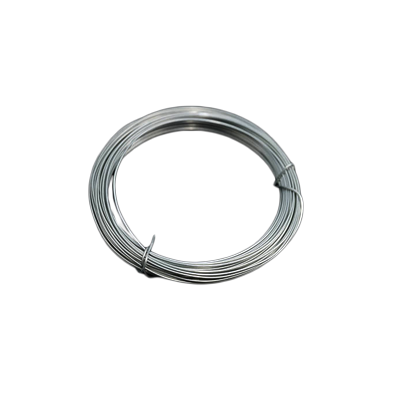
3. **Tying and Securing**: Secure stirrups to longitudinal bars using tie wire to prevent displacement during concrete pouring.
4. **Cover**: Ensure adequate concrete cover to protect reinforcement from environmental effects and ensure proper bond.
By following these guidelines, lateral reinforcement is effectively designed and placed to ensure structural integrity and performance under various loading conditions.
What are the benefits of using stirrups or ties as lateral reinforcement?
Stirrups or ties, used as lateral reinforcement in concrete structures, offer several benefits:
1. **Shear Resistance**: Stirrups enhance the shear capacity of beams and columns, preventing shear failure by holding the concrete together and resisting diagonal tension.
2. **Confinement**: They confine the core concrete, improving its compressive strength and ductility. This is crucial in seismic zones where structures must withstand lateral forces.
3. **Buckling Prevention**: Stirrups prevent the longitudinal reinforcement bars from buckling under compressive loads, maintaining the structural integrity of columns and beams.
4. **Crack Control**: They help control the width and propagation of cracks by distributing stresses more evenly across the concrete section.
5. **Load Distribution**: Stirrups assist in distributing loads more uniformly, reducing stress concentrations and enhancing the overall stability of the structure.
6. **Construction Ease**: They provide a framework that holds the longitudinal bars in place during construction, ensuring proper alignment and spacing.
7. **Durability**: By preventing excessive cracking and buckling, stirrups contribute to the long-term durability and serviceability of the structure.
8. **Seismic Performance**: In earthquake-prone areas, stirrups improve the energy dissipation capacity of structures, allowing them to absorb and withstand seismic forces more effectively.
9. **Flexural Strength**: While primarily for shear, stirrups also contribute to the flexural strength of beams by supporting the tension reinforcement.
10. **Safety**: Overall, the use of stirrups enhances the safety and reliability of concrete structures, reducing the risk of catastrophic failure.
In summary, stirrups or ties are essential for ensuring the structural performance, safety, and longevity of reinforced concrete elements by providing critical lateral support and enhancing various mechanical properties.
How does lateral reinforcement prevent buckling of the main bars in concrete elements?
Lateral reinforcement, often in the form of transverse ties or stirrups, plays a crucial role in preventing the buckling of main bars in concrete elements. When a concrete element, such as a column or beam, is subjected to compressive loads, the main longitudinal bars can experience buckling due to slenderness and lack of lateral support. Lateral reinforcement provides this necessary support by confining the main bars and enhancing their stability.
The primary mechanism by which lateral reinforcement prevents buckling is through confinement. The transverse ties or stirrups encircle the main bars, effectively reducing their unsupported length and increasing their critical buckling load. This confinement restricts lateral movement and provides a bracing effect, which helps maintain the alignment of the main bars under load.
Additionally, lateral reinforcement improves the ductility and energy absorption capacity of the concrete element. By holding the main bars in place, it allows them to undergo larger deformations without losing load-carrying capacity. This is particularly important in seismic regions where structures are subjected to dynamic and cyclic loads.
Moreover, lateral reinforcement helps in distributing the stresses more evenly across the concrete section, reducing the likelihood of localized failures. It also aids in controlling crack widths and enhancing the overall durability of the structure by preventing premature spalling of the concrete cover.
In summary, lateral reinforcement is essential for maintaining the structural integrity of concrete elements under compressive loads by providing lateral support to the main bars, enhancing their buckling resistance, and improving the overall performance of the structure.