Call +(254) 703 030 000 / 751 483 999 / 721 704 777


Showing 0 products
Frequently Asked Questions
What are seamless steel pipes?
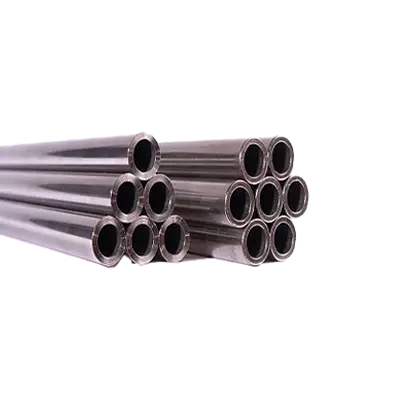
Seamless steel pipes are cylindrical tubes made from a solid billet of steel, which is heated and then pierced through the center to create a hollow tube. Unlike welded pipes, seamless pipes do not have a seam or a welded joint, which enhances their strength and ability to withstand high pressure and temperature. The absence of a seam also reduces the risk of leakage and corrosion, making them ideal for critical applications.
The manufacturing process of seamless steel pipes involves several steps. Initially, a solid cylindrical steel billet is heated to a high temperature. It is then pierced with a mandrel to form a hollow tube. This tube is further elongated and shaped through a series of rolling and stretching processes to achieve the desired diameter and wall thickness. The final product is then cooled, straightened, and cut to the required length.
Seamless steel pipes are used in a variety of industries due to their durability and reliability. They are commonly employed in the oil and gas sector for drilling and transporting fluids, in power plants for high-pressure applications, and in the automotive industry for manufacturing components like axles and exhaust systems. Additionally, they are used in construction, chemical processing, and shipbuilding.
The advantages of seamless steel pipes include their ability to handle high pressure, resistance to corrosion and wear, and uniformity in shape and size. These characteristics make them suitable for applications where safety and performance are critical. However, seamless pipes are generally more expensive than welded pipes due to the complexity of their manufacturing process.
How are seamless steel pipes manufactured?
Seamless steel pipes are manufactured through a process that involves several key steps:
1. **Selection of Raw Material**: High-quality steel billets are chosen as the raw material. These billets are typically made from carbon steel or alloy steel.
2. **Heating**: The steel billets are heated in a rotary hearth furnace to a temperature suitable for deformation, usually around 1200°C.
3. **Piercing**: The heated billet is then pierced using a rotary piercing mill. This process involves rotating the billet and forcing it over a piercing mandrel, creating a hollow tube. This step is crucial for forming the initial hollow shape of the pipe.
4. **Elongation**: The pierced billet, now a hollow shell, is elongated using a mandrel mill or a plug mill. This process involves rolling the shell over a mandrel or plug to increase its length and reduce its wall thickness.
5. **Sizing and Stretch Reducing**: The elongated tube is passed through a series of rolling stands in a stretch reducing mill to achieve the desired diameter and wall thickness. This step ensures uniformity and precision in the pipe dimensions.
6. **Cooling**: The pipe is then cooled, usually in a controlled manner, to relieve internal stresses and improve mechanical properties.
7. **Straightening**: After cooling, the pipe is straightened using a straightening machine to ensure it meets the required specifications.
8. **Cutting and Finishing**: The pipe is cut to the desired length and undergoes finishing processes such as beveling, threading, or coating, depending on the application requirements.
9. **Inspection and Testing**: Finally, the seamless pipes undergo rigorous quality control tests, including dimensional checks, non-destructive testing, and mechanical testing, to ensure they meet industry standards and customer specifications.
What are the advantages of seamless steel pipes over welded pipes?
Seamless steel pipes offer several advantages over welded pipes:
1. **Strength and Durability**: Seamless pipes are inherently stronger as they do not have a welded seam, which is a potential weak point. This makes them more suitable for high-pressure applications.
2. **Uniformity**: The absence of a weld seam ensures uniformity in the structure, leading to consistent mechanical properties throughout the pipe.
3. **Corrosion Resistance**: Without a seam, there is less chance of corrosion starting at the weld, enhancing the pipe's longevity, especially in corrosive environments.
4. **Pressure Handling**: Seamless pipes can handle higher pressures and temperatures due to their homogeneous structure, making them ideal for critical applications in industries like oil and gas.
5. **Aesthetic and Surface Finish**: Seamless pipes generally have a better surface finish and appearance, which can be important for certain applications.
6. **Dimensional Accuracy**: They offer better dimensional accuracy and can be manufactured to tighter tolerances, which is crucial for precision applications.
7. **Versatility**: Seamless pipes can be used in a wider range of applications, including those requiring bending, flanging, or other forming processes, without the risk of weld failure.
8. **Reduced Inspection and Testing**: The absence of a weld seam reduces the need for extensive inspection and testing, which is often required for welded pipes to ensure weld integrity.
9. **Reliability**: Seamless pipes are considered more reliable in critical applications due to their uniformity and strength, reducing the risk of failure.
10. **Longer Lifespan**: The combination of strength, corrosion resistance, and uniformity often results in a longer service life compared to welded pipes.
In which industries are seamless steel pipes commonly used?
Seamless steel pipes are commonly used in the following industries:
1. **Oil and Gas Industry**: They are crucial for the transportation of oil, gas, and other fluids. Their ability to withstand high pressure and temperature makes them ideal for drilling, pipeline systems, and offshore rigs.
2. **Petrochemical Industry**: Seamless pipes are used in the processing and transportation of chemicals. Their resistance to corrosion and high temperatures is essential for handling aggressive substances.
3. **Power Generation**: In power plants, seamless steel pipes are used in boilers, superheaters, and heat exchangers due to their ability to endure high pressure and temperature.
4. **Automotive Industry**: These pipes are used in the manufacturing of vehicle components such as exhaust systems, fuel injection systems, and hydraulic systems, where durability and precision are critical.
5. **Construction and Infrastructure**: Seamless pipes are used in structural applications, including building frameworks, bridges, and scaffolding, due to their strength and reliability.
6. **Aerospace Industry**: They are used in aircraft components and systems that require high strength-to-weight ratios and resistance to extreme conditions.
7. **Mechanical and Engineering Applications**: Seamless pipes are used in the manufacturing of machinery and equipment, including hydraulic cylinders and bearings, where precision and strength are necessary.
8. **Shipbuilding**: In shipbuilding, seamless pipes are used for various applications, including the construction of ship hulls and internal systems, due to their robustness and resistance to harsh marine environments.
9. **Food and Beverage Industry**: They are used in processing and transporting food products, where hygiene and corrosion resistance are important.
10. **Pharmaceutical Industry**: Seamless pipes are used in the production and transportation of pharmaceutical products, where purity and cleanliness are critical.
These industries rely on the unique properties of seamless steel pipes, such as their strength, durability, and ability to withstand extreme conditions, making them indispensable in various applications.
What materials are used to make seamless steel pipes?
Seamless steel pipes are primarily made from a variety of steel grades, each chosen based on the specific requirements of the application. The main materials used include:
1. **Carbon Steel**: This is the most common material for seamless pipes. It includes grades like ASTM A106, ASTM A53, and API 5L. Carbon steel is favored for its strength, durability, and cost-effectiveness.
2. **Alloy Steel**: For applications requiring higher strength and resistance to corrosion or high temperatures, alloy steels are used. Common grades include ASTM A335 and ASTM A213, which contain elements like chromium, molybdenum, and nickel to enhance performance.
3. **Stainless Steel**: Used for applications requiring high corrosion resistance, stainless steel seamless pipes are made from grades like 304, 316, and 321. These contain chromium and nickel, providing excellent resistance to rust and corrosion.
4. **High-Temperature Steel**: For applications involving high temperatures, such as in power plants or refineries, high-temperature steel grades like ASTM A335 P91 are used. These contain elements like chromium and molybdenum to withstand extreme conditions.
5. **Low-Temperature Steel**: For applications in cold environments, low-temperature steel grades like ASTM A333 are used. These are designed to maintain toughness and ductility at low temperatures.
6. **Duplex and Super Duplex Stainless Steel**: These are used for applications requiring high strength and corrosion resistance, especially in harsh environments like offshore oil and gas. They contain a balanced mix of austenitic and ferritic structures.
7. **Nickel Alloys**: For highly corrosive environments, nickel alloys like Inconel and Monel are used. These offer exceptional resistance to corrosion and high temperatures.
The choice of material depends on factors like pressure, temperature, and the corrosive nature of the environment where the pipe will be used.
How do seamless steel pipes improve safety and reliability?
Seamless steel pipes enhance safety and reliability through several key attributes. Firstly, their lack of welded seams eliminates the primary weak points found in welded pipes, reducing the risk of leaks and failures under pressure. This structural integrity is crucial in high-pressure applications such as oil and gas transportation, where leaks can lead to catastrophic environmental and safety hazards.
Secondly, seamless pipes are manufactured through a process that ensures uniformity in shape and strength, providing consistent performance across the entire length of the pipe. This uniformity minimizes the chances of unexpected failures, enhancing reliability in critical applications.
The manufacturing process of seamless pipes involves high-temperature extrusion, which results in a refined microstructure. This enhances the pipe's mechanical properties, such as tensile strength and resistance to corrosion and wear. These properties are vital for maintaining long-term durability, especially in harsh environments like offshore drilling or chemical processing.
Additionally, seamless pipes can withstand higher temperatures and pressures compared to welded pipes, making them suitable for extreme conditions. This capability ensures that the pipes maintain their integrity and function effectively, even under demanding operational circumstances.
The absence of welds also means fewer inspections and maintenance requirements, reducing downtime and operational costs. This reliability is crucial for industries where continuous operation is essential, such as power generation and petrochemicals.
In summary, seamless steel pipes improve safety and reliability by offering superior structural integrity, uniformity, enhanced mechanical properties, and reduced maintenance needs, making them an ideal choice for critical and high-stakes applications.
What are the typical applications of seamless steel pipes in high-pressure environments?
Seamless steel pipes are extensively used in high-pressure environments due to their strength, durability, and ability to withstand extreme conditions. Typical applications include:
1. **Oil and Gas Industry**: Seamless steel pipes are crucial in the exploration, extraction, and transportation of oil and gas. They are used in drilling operations, as casing and tubing, and in pipelines that transport crude oil and natural gas under high pressure.
2. **Power Generation**: In power plants, seamless steel pipes are used in high-pressure boilers, heat exchangers, and superheaters. They are essential for the efficient transfer of steam and water at high temperatures and pressures.
3. **Petrochemical Industry**: These pipes are used in the construction of refineries and chemical plants. They handle the high-pressure flow of chemicals and gases, ensuring safe and efficient processing.
4. **Automotive Industry**: Seamless steel pipes are used in the manufacturing of high-pressure fuel injection systems and hydraulic systems in vehicles, providing reliability and performance.
5. **Aerospace Industry**: In aerospace applications, seamless steel pipes are used in hydraulic systems and fuel lines, where they must withstand high pressures and temperatures.
6. **Construction and Infrastructure**: They are used in the construction of high-pressure water and sewage systems, ensuring durability and leak-proof performance.
7. **Marine Applications**: Seamless steel pipes are used in shipbuilding for high-pressure applications such as hydraulic systems and fuel lines, where corrosion resistance and strength are critical.
8. **Industrial Equipment**: They are used in the manufacturing of high-pressure equipment like hydraulic presses, cylinders, and pumps, providing structural integrity and safety.
These applications leverage the seamless construction of the pipes, which eliminates the risk of weak points and ensures consistent performance under high-pressure conditions.