Disposable Plates: How to Choose Type, Coating and Compost Claims
By Bryan Piñol · 25 August 2026
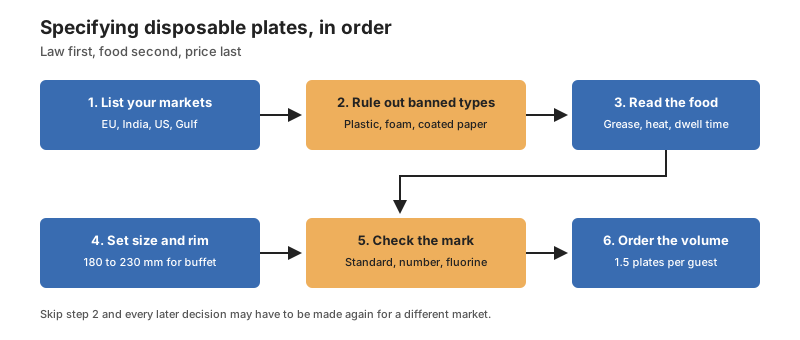
Disposable plates used to be a price decision. Since 2021 they have been a legal one, and price comes second.
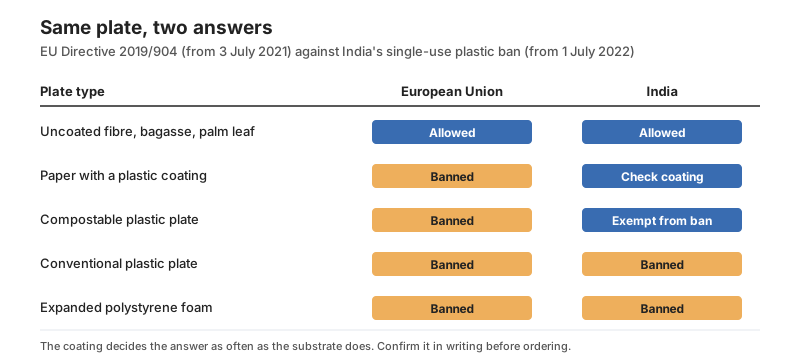
The same plate can be legal in one market and banned in the next.
So the order of questions has changed. Ask what you may place on the market, then ask what the food will do to it. Only then compare quotes.
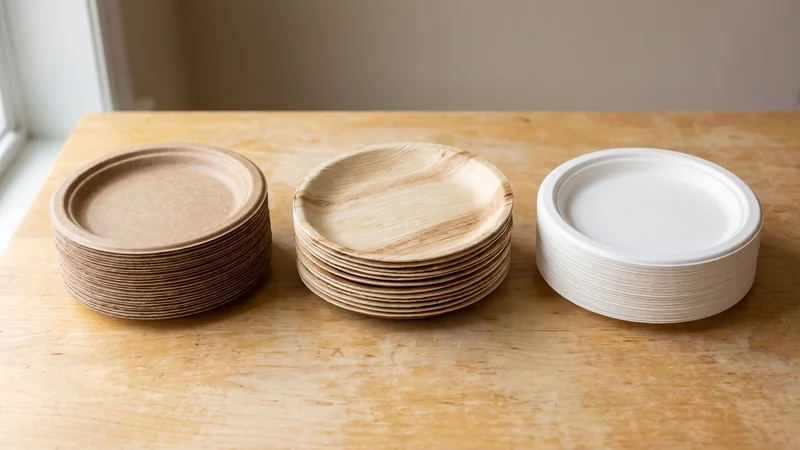
What Disposable Plates Are Made From
Paper and Coated Board
Plain paperboard is the cheapest option and the weakest against sauce. Most catering-grade disposable plates therefore carry a thin coating that holds liquid back. That coating is the detail that decides everything else.
- Uncoated board — dry food only, and it softens fast.
- Poly-coated board — a thin plastic film, usually polyethylene.
- Dispersion coated — a water-based barrier with no plastic film. - Ask which one it is, in writing.
Moulded Fibre and Bagasse
Moulded fibre is pressed from pulp, and bagasse is the sugarcane fibre left after juice extraction. Both give a rigid plate with no separate coating layer.
Suppliers commonly rate bagasse as microwave and freezer safe, with heat resistance near 120 °C. Composting times of 60 to 90 days are widely quoted. Treat both figures as supplier claims rather than standards.
Palm Leaf, Wood, Foam and Plastic
Palm leaf plates are pressed from fallen areca sheaths, and wood veneer works the same way at a thinner gauge.
Neither carries a coating, which keeps the compliance conversation short.
Foam plates are light and cheap, and now banned in much of the world.
Rigid plastic plates face the same rules.
| Plate type | Barrier | Strength | Legal risk |
|---|---|---|---|
| Uncoated board | Poor | Low | Low |
| Poly-coated board | Good | Medium | High in the EU |
| Fibre or bagasse | Good | High | Low |
| Palm leaf or wood | Good | High | Low |
| Foam or plastic | Excellent | High | Banned in many markets |
The Rules That Decide What You Can Sell
The EU Single-Use Plastics Directive
Directive 2019/904 took effect on 3 July 2021 and stops certain single-use plastic items being placed on the EU market. Single-use plastic plates and cutlery are on that list, with cups and food containers of expanded polystyrene.
The catch is broader than it looks. Compostable plastic plates are banned too, and so are paper disposable plates carrying a plastic coating, even a compostable one.
India's Single-Use Plastic Ban
India banned the making, import, stocking, sale and use of listed single-use plastic items from 1 July 2022. Plastic plates, cups, glasses, cutlery, straws and trays are all named.
The exemption matters. That sub-list does not apply to goods made of compostable plastic, which is the opposite of the EU position.
- EU — a compostable plastic plate is still a banned plate.
- India — a compostable plastic plate sits outside the ban. - Read the two rules as separate specifications, never as one.
- Everywhere — check the coating, not only the substrate.
Grease-Proofing and PFAS
In February 2024 the FDA announced that PFAS-containing grease-proofing substances were no longer sold into the United States market for paper food packaging. The agency calls that the main source of PFAS in the diet from approved uses. It also built a screening method so paper and paperboard can be monitored.
Reading a Compost Claim on Disposable Plates
The Standards Behind the Mark
Three standards carry the weight. ASTM D6400 covers industrial composting of plastics, and EN 13432 is the EU packaging rule. ASTM D6868 covers plastic used as a coating on paper and board, which is what most coated disposable plates rely on.
Testing runs in tiers and takes at least six months.
What the Tests Measure
Disintegration has a hard number behind it. No more than 10 percent of the plate by dry weight may fail to pass a 2 mm sieve. Ecotoxicity is judged on plants instead.
- Biodegradation — the plate turns to carbon dioxide in the window.
- Disintegration — 10 percent maximum left on a 2 mm sieve.
- Ecotoxicity — about 90 percent of control germination and biomass. - Fail here and the whole mark fails.
Industrial Is Not Home
An industrial mark assumes a large composting plant. Home marks use a different basis, so the two are not the same.
| Mark | Basis | PFAS position |
|---|---|---|
| BPI Industrial | ASTM D6400, D6868, D8410 | None added, 100 ppm cap |
| TUV OK compost INDUSTRIAL | EN 13432 | Total fluorine 100 mg/kg |
| BPI Home Compostable | NF T 51-800 | None added, 100 ppm cap |
A genuine mark is therefore the cheapest PFAS assurance a buyer can get.
Matching Disposable Plates to the Food
Grease, Moisture and Sauce
Hot oil is the hardest test a plate faces. Fried food, curry and anything sitting in sauce will find an uncoated plate within minutes. Match the barrier on your disposable plates to the dwell time, not to the menu photograph.
- Dry and cold — uncoated board is fine and cheapest.
- Warm and dry — coated board or moulded fibre.
- Hot and wet — bagasse or palm leaf, every time. - Test your worst dish before buying a pallet.
Heat, Microwaves and Steam
Reheating changes the answer. Confirm the microwave rating on the data sheet, and treat oven claims carefully.
Steam is the quiet failure mode. A stack of covered disposable plates on a hot counter softens from below long before anything looks wrong.
Sizing and Quantity for Disposable Plates
Rim Depth and Diameter
A plate fails at the rim first, when a guest carries it one-handed. Rigidity comes from thickness and rim depth, not from the plate type.
- Under 180 mm — side plates, canapes and dessert.
- 180 to 230 mm — the standard buffet plate.
- Over 230 mm — mains, and it needs a deep rim.
Count Per Guest, Not Per Pack
Buffets consume more disposable plates than covers. Plan on guests returning, and on a share of disposable plates being abandoned half used. A run-out mid-service costs far more than the surplus.
- One and a half plates per guest — a workable buffet figure.
- Two sizes, not one — a main plate and a smaller side plate.
- Add a bowl line — soup and curry do not belong on a flat plate. - Order matching bowls together so the finish stays even.
Buying and Storing Disposable Plates
Questions to Put to the Supplier
Most disputes start with an unasked question. Put the answers in the purchase order.
- What is the coating — plastic film, or a water-based dispersion.
- Which certificate — the mark, the standard and the number.
- What temperature — microwave, oven and steam-table ratings separately.
- Which market — written proof the disposable plates may be sold there.
Storage and Paperwork
Fibre plates draw moisture from the air, so storage matters more than it does for plastic. Keep disposable plates sealed, off the floor and away from a dish pit.
Food-contact paper is regulated on its own terms. India's packaging rules, for instance, ask that board touching food be food grade, even in thickness and free from grease marks, specks and pinholes. Keep that paperwork on file with the mark.
- Seal the pallet — fibre disposable plates take up humidity fast.
- Rotate stock — oldest cases forward.
- File by SKU — certificates belong against the line, not the invoice.
Frequently Asked Questions
Are compostable disposable plates allowed in the EU?
Not if the plate is compostable plastic, and not if a paper plate carries a compostable plastic coating. Uncoated fibre plates such as bagasse or palm leaf are the usual answer there.
Are disposable plates banned in India?
Plastic ones are, from 1 July 2022, along with plastic cups, cutlery, straws and trays. Items made of compostable plastic sit outside that ban.
Can disposable plates go in the microwave?
Many bagasse and moulded fibre lines are rated for it, but the rating belongs to the product rather than the material. Check the data sheet for the exact line you buy.
Do paper disposable plates still contain PFAS?
Since February 2024 the FDA reports that PFAS grease-proofing agents are no longer sold into the US market for paper food packaging. A current compostability certificate adds a fluorine limit on top.
How long do bagasse disposable plates take to compost?
Supplier figures commonly land between 60 and 90 days under composting conditions. Those conditions mean a managed facility, not a garden heap.
Conclusion
Disposable plates are now specified from the law inwards. Decide which markets the stock must clear, then let grease, heat and rigidity choose between the types that remain.
Get the coating answered in writing and keep the certificate. Compare the range of disposable plates, add disposable bowls for wet dishes, and finish with disposable cutlery.
Related Posts

HEPA Filter Guide: What the Grades Mean and Where One Belongs

Handrail Height: How to Get the Number Right in Every Code

Garage Floor Epoxy Coating: How to Test, Specify and Order It