Fiber Optic Cable: How to Choose the Right Type for Every Application
By Jackie Guo · 18 July 2026
Every network run depends on one choice made early: the fiber optic cable. Pick the wrong type, and a data center link runs slow, or a riser cable fails a fire inspection.
Buyers often grab whatever fiber optic cable was used last time, a habit that works until it does not. This guide breaks the choice into three parts: fiber type, jacket rating, and outdoor category.
What Fiber Optic Cable Does and Why Type Matters
Fiber optic cable carries data as pulses of light through a thin glass core. That core size and the cable jacket around it decide where a run can go and how fast it can carry data. Getting either one wrong shows up fast once the cable is installed.
- Carry the signal far enough. The fiber type must reach the required distance without excess signal loss.
- Survive the pathway. The jacket must meet the fire and safety rating for its space.
- Handle the environment. The outer construction must resist moisture, crushing, or sunlight where needed.
A data center rack link and a campus backbone run stress fiber optic cable in very different ways. Matching the cable to the job is what keeps a network running for years.
Common signs of the wrong fiber optic cable:
- Performance signs: - The link fails to reach its rated distance or speed. - Connectors will not mate because the fiber size does not match.
- Installation signs: - The cable fails a fire or building inspection. - The jacket cracks or degrades after outdoor exposure.
Any of these signs points back to a mismatch between cable and job.
Single-Mode vs. Multimode Fiber Optic Cable
Two core designs cover almost every fiber optic cable in use: single-mode and multimode.
Core Diameter and Light Source
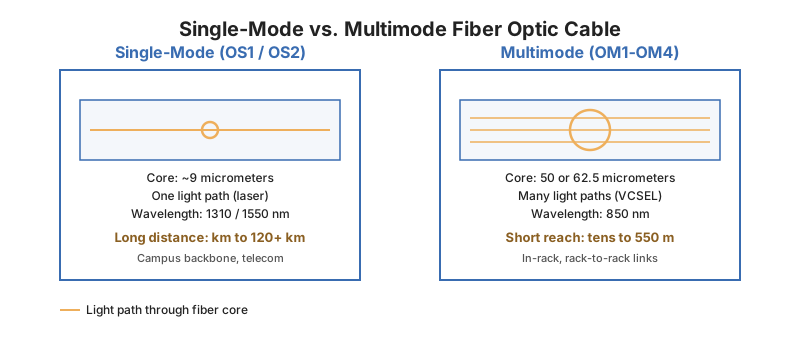
Single-mode fiber optic cable has a core around 9 micrometers wide and carries one light path. Multimode fiber optic cable has a larger core, either 50 micrometers or 62.5 micrometers, and carries many light paths at once.
Both share the same 125-micrometer outer cladding.
- Single-mode: paired with laser light at 1310 nm or 1550 nm.
- Multimode: paired with VCSEL light at 850 nm, or older LED sources at 1300 nm.
OM and OS Grades
Multimode and single-mode fiber optic cable each carry a grade label set by ISO/IEC 11801.
- Multimode grades: - OM1. Standard 62.5-micrometer glass. Shortest reach, lowest speed. - OM2. Standard 50-micrometer glass. A step up from OM1. - OM3. Enhanced 50-micrometer glass. Supports 10 Gigabit Ethernet out to 300 meters. - OM4. Further-enhanced glass. Supports 10 Gigabit Ethernet out to 550 meters.
- Single-mode grades: - OS1. Standard singlemode glass for long-distance links. - OS2. Low-water-peak singlemode glass for very long, high-quality runs.
Bandwidth and Maximum Distance
Modal bandwidth rises sharply from OM1 to OM4, which is why higher grades reach further at the same data rate. Single-mode fiber optic cable carries no modal bandwidth rating at all, since it sends only one light path.
| Fiber Grade | Bandwidth at 850nm | 10G Max Distance | 100G Max Distance |
|---|---|---|---|
| OM1 | 200 MHz-km | 33 meters | Not typical |
| OM3 | 2000 MHz-km | 300 meters | 70 meters |
| OM4 | 4700 MHz-km | 400 meters | 100 meters |
| OS2 (single-mode) | None | 10 to 120 km | 10 to 40 km |
Cost Factors
Fiber optic cable itself carries only a small price gap between single-mode and multimode. Transceivers are the real cost driver, and that gap widens fast at higher speeds. Budget for the full link, not just the cable spool.
- 10G: single-mode and multimode transceivers cost roughly the same.
- 40G and 100G: single-mode transceivers can cost several times more than multimode.
Jacket and Fire Ratings for Indoor Cable
Once fiber type is set, the jacket rating decides where fiber optic cable can legally run inside a building.
General-Purpose Cable
General-purpose cable, marked OFNG or OFN, suits equipment rooms and short protected runs. It should not enter riser or plenum spaces unless it sits inside an approved raceway.
Riser-Rated Cable
Riser-rated cable, marked OFNR, is built for vertical runs between floors. It resists floor-to-floor flame spread but does not meet plenum-level smoke rules.
Plenum-Rated Cable
Plenum-rated cable, marked OFNP, is built for air-handling spaces like open ceilings and raised floors. It limits flame spread and smoke more than riser or general-purpose cable, and it usually costs more.
LSZH and CPR Ratings
- LSZH (Low Smoke Zero Halogen). A jacket material rule, common in data centers and transit systems, that cuts smoke and toxic gas in a fire.
- CPR (Construction Products Regulation). The European Euroclass system for fire performance, separate from U.S. ratings like OFNP and OFNR.
| Rating | Marking | Typical Pathway |
|---|---|---|
| General-purpose | OFNG / OFN | Equipment rooms, protected runs |
| Riser | OFNR | Vertical shafts between floors |
| Plenum | OFNP | Air-handling ceilings and floors |
Outdoor and OSP Cable Types
Fiber optic cable built for outdoor use follows its own set of rules.
Indoor/Outdoor Cable
Indoor/outdoor cable transitions between outside and inside in one run. It still needs the correct indoor fire rating for the portion that enters the building.
OSP, UV-Rated, and Direct Burial Cable
- OSP (outside plant) cable. Runs between buildings, through conduit, or across a campus.
- UV-rated cable. Resists sunlight damage on exposed runs.
- Direct burial cable. Goes straight into the ground, often with water-blocking and armor.
Armored Cable
Armored cable adds a protective layer against crushing, rodents, and impact. Armor alone does not grant a plenum, riser, or LSZH rating, so those ratings still apply on their own.
Matching Fiber Optic Cable to Application
Data Center and Campus Backbone
Data centers favor multimode fiber optic cable for short in-rack and rack-to-rack links, and single-mode for longer campus backbone runs. The split keeps short-link cost down without limiting backbone reach.
Commercial Building Risers and Plenums
Commercial buildings need riser-rated cable for vertical shafts and plenum-rated cable for open ceiling and raised-floor air paths. Local code usually settles which rating a given pathway needs.
Outdoor and Underground Runs
Outdoor and underground runs call for OSP, direct burial, or armored fiber optic cable, switched to an indoor-rated cable before entering the building. Skipping that transition is one of the most common outdoor cabling mistakes.
Quick reference:
- Data center and backbone: - Short in-rack and rack-to-rack links: multimode. - Long campus backbone runs: single-mode.
- Commercial riser and plenum: - Vertical shafts: OFNR. - Air-handling spaces: OFNP.
- Outdoor and underground: OSP or direct burial cable, transitioned at building entry.
Fiber optic cable rarely runs alone. Pairing it with the right indoor fiber cable, outside plant cable, and a matching fiber patch panel keeps a network easy to maintain for years.
Frequently Asked Questions
Here are common questions buyers ask about fiber optic cable.
What is the difference between single-mode and multimode fiber optic cable?
Single-mode fiber optic cable has a smaller core and carries one light path, which suits long-distance runs. Multimode fiber optic cable has a larger core and suits short, budget-sensitive links inside a building or data center.
Can I mix single-mode and multimode fiber optic cable on the same link?
No. The core sizes and light paths do not match, and mixing them causes high signal loss or a failed link. Keep fiber type consistent from end to end.
Do I always need plenum-rated cable indoors?
No. Plenum-rated cable is required only in air-handling spaces such as open ceilings and raised floors. Riser or general-purpose cable is fine elsewhere, based on the pathway and local code.
Is armored fiber optic cable also fire-rated?
Not always. Armor adds physical protection against crushing and rodents, but the cable still needs its own plenum, riser, or LSZH rating for the space where it runs.
Conclusion
Choosing the right fiber optic cable comes down to three questions.
- Does the job need single-mode reach, or is multimode enough?
- What jacket rating does the pathway require, indoors?
- Does any part of the run go outdoors or underground?
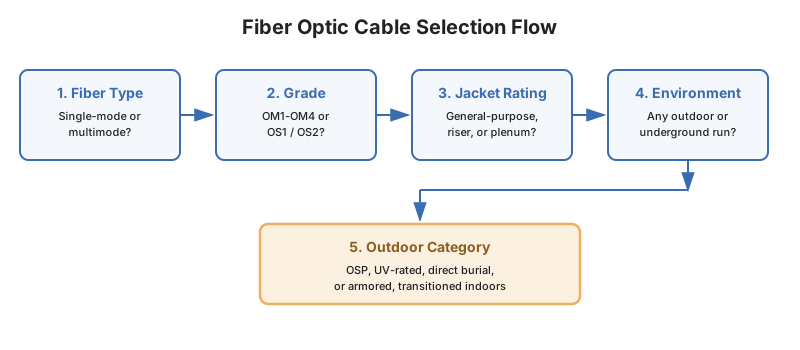
Work through fiber type, jacket rating, and outdoor category in that order. A confusing cable catalog turns into a short list built to perform for the life of the network.
Related Posts

What Bathroom Partitions Have to Survive

Pipe Fittings Explained: Types, Materials and How to Choose

Box Stapler Guide: Types, Staple Sizes and How to Choose One