Call +(254) 703 030 000 / 751 483 999 / 721 704 777

.....Read More
Frequently Asked Questions
What are the benefits of using inspection and maintenance labels in the workplace?
Inspection and maintenance labels in the workplace offer several benefits:
1. **Safety Assurance**: They ensure that equipment and machinery are regularly checked and maintained, reducing the risk of accidents and injuries.
2. **Compliance**: Labels help organizations comply with industry regulations and standards, avoiding legal penalties and ensuring a safe working environment.
3. **Equipment Longevity**: Regular inspections and maintenance, as indicated by labels, extend the lifespan of equipment by preventing wear and tear.
4. **Operational Efficiency**: Properly maintained equipment operates more efficiently, reducing downtime and increasing productivity.
5. **Accountability**: Labels provide a record of inspections and maintenance, holding employees accountable and ensuring tasks are completed on schedule.
6. **Cost Savings**: Preventive maintenance reduces the likelihood of costly repairs and replacements, saving money in the long run.
7. **Quality Control**: Regular checks ensure that equipment functions correctly, maintaining product quality and consistency.
8. **Communication**: Labels communicate the status of equipment to all employees, ensuring everyone is aware of any issues or maintenance schedules.
9. **Risk Management**: They help identify potential hazards before they become serious problems, contributing to a proactive risk management strategy.
10. **Employee Confidence**: Knowing that equipment is regularly inspected and maintained boosts employee confidence and morale, as they feel safer in their work environment.
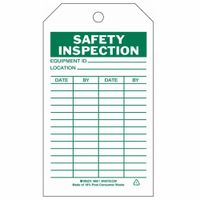
How do safety inspection labels help in maintaining equipment?
Safety inspection labels play a crucial role in maintaining equipment by providing a clear and immediate visual indication of the equipment's inspection status. These labels help ensure that equipment is regularly checked and maintained, which is essential for safe and efficient operation.
Firstly, inspection labels serve as a reminder for scheduled maintenance and inspections. They typically include information such as the date of the last inspection, the next due date, and the inspector's initials or identification. This helps maintenance personnel and operators quickly determine whether the equipment is up-to-date with its maintenance schedule.
Secondly, these labels enhance accountability and traceability. By documenting inspection details, they create a record that can be audited to ensure compliance with safety regulations and standards. This is particularly important in industries where equipment failure can lead to significant safety hazards or financial losses.
Thirdly, safety inspection labels help in identifying equipment that is safe to use. If equipment has passed inspection, the label will indicate that it is in good working condition, reducing the risk of accidents caused by faulty equipment. Conversely, if equipment fails inspection, the label can indicate that it should not be used until necessary repairs or maintenance are completed.
Finally, inspection labels contribute to a culture of safety within an organization. They reinforce the importance of regular maintenance and safety checks, encouraging employees to prioritize safety in their daily operations. This can lead to a reduction in workplace accidents and improve overall operational efficiency.
In summary, safety inspection labels are a vital tool in equipment maintenance, ensuring regular checks, enhancing accountability, indicating equipment status, and promoting a safety-first culture.
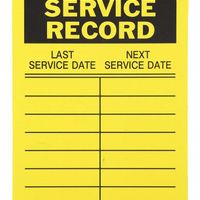
What information should be included on repair and maintenance record labels?
1. **Equipment Identification**: Include the equipment's serial number, model number, and any other unique identifiers.
2. **Date of Service**: Clearly state the date when the repair or maintenance was performed.
3. **Description of Work Performed**: Provide a detailed account of the repair or maintenance tasks completed.
4. **Parts Replaced or Used**: List any parts that were replaced or used during the service, including part numbers.
5. **Technician Information**: Include the name and contact information of the technician or service provider who performed the work.
6. **Next Scheduled Maintenance**: Indicate the date or operational milestone for the next scheduled maintenance.
7. **Condition of Equipment**: Note the condition of the equipment before and after the service.
8. **Approval or Authorization**: Include any necessary signatures or approvals from authorized personnel.
9. **Warranty Information**: If applicable, provide details about any warranties related to the repair or parts used.
10. **Safety Checks**: Document any safety checks performed and their outcomes.
11. **Cost of Service**: Optionally, include the cost of the repair or maintenance for record-keeping purposes.
12. **Service Provider Details**: Provide the name, address, and contact information of the service provider or company.
13. **Compliance and Standards**: Note any compliance with industry standards or regulations.
14. **Special Instructions or Notes**: Include any special instructions or additional notes relevant to the equipment's operation or future maintenance.
15. **Signature of Receiver**: Obtain a signature from the person receiving the equipment post-service, if applicable.
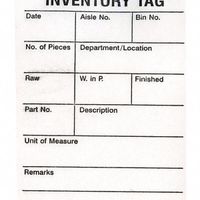
How can inventory and production status tags improve asset management?
Inventory and production status tags enhance asset management by providing real-time visibility and control over assets. These tags, often equipped with RFID or barcode technology, allow for accurate tracking of inventory levels and production stages. This leads to improved decision-making and resource allocation.
Firstly, status tags facilitate efficient inventory management by offering precise data on stock levels, reducing the risk of overstocking or stockouts. This ensures that production processes are not interrupted due to material shortages, optimizing the supply chain and reducing carrying costs.
Secondly, production status tags provide insights into the manufacturing process, allowing managers to monitor the progress of production in real-time. This visibility helps in identifying bottlenecks, improving workflow efficiency, and ensuring timely completion of production schedules.
Additionally, these tags enhance asset utilization by tracking the location and condition of equipment and machinery. This information aids in preventive maintenance, reducing downtime and extending the lifespan of assets.
Furthermore, status tags improve accountability and security by providing a digital trail of asset movement and usage. This reduces the risk of theft or loss and ensures compliance with regulatory requirements.
In summary, inventory and production status tags streamline asset management by offering real-time data, improving operational efficiency, reducing costs, and enhancing asset security and utilization.
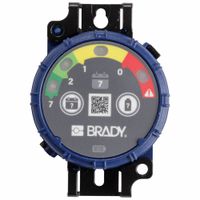
What are the best practices for implementing inspection timers in a facility?
1. **Define Objectives**: Clearly outline the purpose of the inspection timers, such as improving efficiency, ensuring compliance, or enhancing safety.
2. **Select Appropriate Technology**: Choose reliable and user-friendly timer systems that integrate well with existing facility operations and equipment.
3. **Standardize Procedures**: Develop standardized inspection protocols and ensure timers are set according to these procedures to maintain consistency.
4. **Training**: Provide comprehensive training for staff on how to use the timers effectively and understand their importance in the inspection process.
5. **Integration with Maintenance Systems**: Ensure timers are integrated with maintenance management systems for automatic scheduling and alerts.
6. **Customization**: Customize timer settings to suit different inspection needs, such as varying intervals for different equipment or areas.
7. **Regular Calibration**: Schedule regular calibration and maintenance of timers to ensure accuracy and reliability.
8. **Data Collection and Analysis**: Use timers to collect data on inspection durations and frequency, and analyze this data to identify trends and areas for improvement.
9. **Feedback Mechanism**: Implement a feedback system for staff to report issues or suggest improvements related to the use of timers.
10. **Compliance and Documentation**: Ensure that timer usage complies with industry regulations and standards, and maintain thorough documentation for audits and reviews.
11. **Continuous Improvement**: Regularly review and update timer settings and procedures based on feedback and performance data to enhance efficiency and effectiveness.
12. **Emergency Protocols**: Establish protocols for handling timer malfunctions or emergencies to minimize disruptions in inspection processes.
How often should equipment be inspected and labeled for maintenance?
The frequency of equipment inspection and labeling for maintenance depends on several factors, including the type of equipment, its usage, industry standards, and regulatory requirements. Generally, the following guidelines can be considered:
1. **Manufacturer's Recommendations**: Always start with the manufacturer's guidelines, which provide specific intervals for inspections and maintenance based on the equipment's design and intended use.
2. **Regulatory Requirements**: Certain industries have strict regulations that dictate inspection frequencies. For example, OSHA and other safety organizations may require specific intervals for equipment like cranes, forklifts, and pressure vessels.
3. **Usage Intensity**: Equipment used continuously or under harsh conditions may require more frequent inspections. High-use equipment might need daily or weekly checks, while less frequently used items might only need monthly or quarterly inspections.
4. **Type of Equipment**: Different types of equipment have different needs. For instance, safety-critical equipment might need more frequent inspections compared to non-critical equipment.
5. **Environmental Conditions**: Equipment operating in extreme environments (e.g., high humidity, temperature extremes, corrosive environments) may require more frequent inspections to prevent premature wear and failure.
6. **Historical Data and Predictive Maintenance**: Use historical maintenance data and predictive analytics to determine optimal inspection intervals. Equipment with a history of frequent issues may need more regular checks.
7. **Risk Assessment**: Conduct a risk assessment to determine the potential impact of equipment failure. High-risk equipment should be inspected more frequently to mitigate potential hazards.
8. **Labeling**: After inspection, equipment should be labeled with the date of inspection, the next due date, and any relevant findings. This ensures transparency and accountability in maintenance practices.
In summary, while there is no one-size-fits-all answer, a combination of manufacturer guidelines, regulatory requirements, and operational factors should guide the inspection and labeling frequency for equipment maintenance.
What are the different types of labeling and marking products available for equipment status documentation?
1. **Adhesive Labels**: These are pre-printed or customizable stickers that can be affixed to equipment. They are available in various materials like paper, vinyl, or polyester, and can be used for temporary or permanent labeling.
2. **Engraved Plates**: Made from metal or plastic, these plates are engraved with information and attached to equipment. They are durable and suitable for harsh environments.
3. **Magnetic Labels**: These are flexible magnetic strips that can be easily attached and removed from metal surfaces, ideal for temporary labeling.
4. **Cable and Wire Markers**: These are used to label cables and wires, often in the form of sleeves, tags, or wraps, ensuring clear identification in complex wiring systems.
5. **Barcode Labels**: These labels contain barcodes that can be scanned for quick access to equipment information, facilitating inventory management and tracking.
6. **RFID Tags**: Radio-frequency identification tags store data electronically and can be read remotely, offering a high-tech solution for equipment tracking and status documentation.
7. **Color-Coded Tags**: These tags use color-coding to indicate the status or condition of equipment, providing a quick visual reference.
8. **Write-On Tags**: These tags allow for manual writing of information, often used for temporary or changing data.
9. **Heat-Shrink Labels**: Used primarily for cables, these labels shrink to fit when heated, providing a secure and durable labeling solution.
10. **Laser-Etched Labels**: These are created by using a laser to etch information onto a surface, offering a permanent and tamper-resistant labeling option.
11. **Safety and Warning Labels**: These labels provide critical safety information and warnings, ensuring compliance with safety regulations.
12. **QR Code Labels**: Similar to barcodes, QR codes can be scanned with smartphones to access detailed equipment information online.