Hydraulic Pumps: How to Choose the Right Type for Every Application
By Jan Hoffmeier · 18 July 2026
Every fluid power system depends on one part: the hydraulic pump. Pick the wrong type, and the result is wasted power and excess heat. Worse, the pump may wear out long before the rest of the machine.
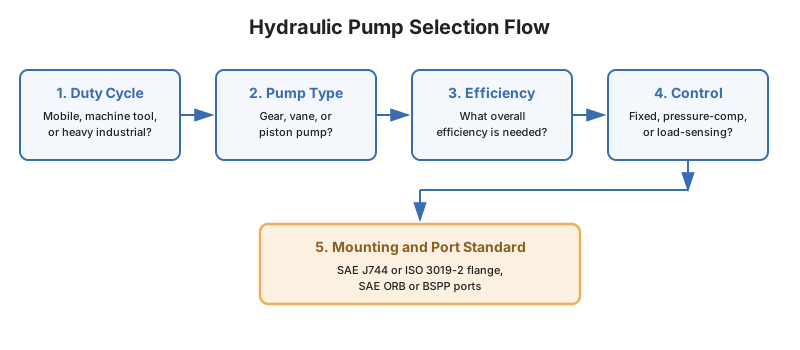
Buyers often reach for whatever pump filled the last order, a habit that works until it does not. This guide breaks hydraulic pump choice into four simple steps: type, efficiency, control method, and mounting standard.
What a Hydraulic Pump Does and Why Type Matters
A hydraulic pump turns mechanical energy into fluid flow. That flow, resisted by the system, creates pressure. Every hydraulic pump has to do three jobs at once.
- Deliver enough flow. Enough fluid to hit the actuator speed the job needs.
- Hold up under pressure. Handle working pressure without excess internal leakage.
- Run efficiently. Waste as little energy as possible as heat.
A mobile crane and a plastic injection press place very different demands on a hydraulic pump. Matching pump type to the job is what makes equipment last, instead of failing early.
Common signs of the wrong pump type:
- The system runs hot even with a good cooler.
- Output flow drops fast as the hydraulic pump wears in.
- The hydraulic pump is far noisier than nearby equipment.
Any of these signs points to a mismatch between pump and job.
Hydraulic Pump Types: Gear, Vane, and Piston
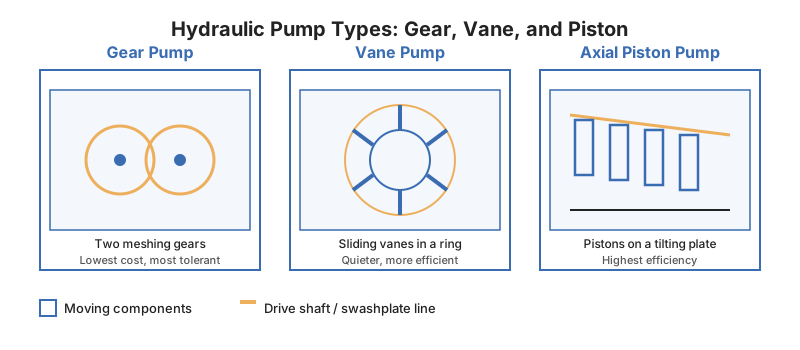
Three main hydraulic pump designs, gear, vane, and piston, cover almost every fluid power system.
Gear Pumps
Gear pumps use two gears turning inside a tight housing. One gear drives the other, carrying fluid around the pump body. Gear pumps cost the least of the three types, and they cover the widest range of output, from tiny to large.
- Strengths: - Lowest cost per unit of flow. - Best tolerance for dirty fluid. - Simple, mostly fixed-output design.
- Trade-offs: - Least efficient of the three hydraulic pump types. - Louder than vane or piston designs. - Efficiency drops further as parts wear.
Vane Pumps
Vane pumps use sliding vanes in a rotor that sweep fluid around an internal ring. A fixed-output vane pump costs two to three times a gear pump, but runs quieter and more efficiently.
- Where vane pumps fit best: - Machine tool circuits that need low-cost, steady pressure. - Small to medium flow jobs where noise matters. - Fixed-output duty where moderate efficiency is fine.
High-pressure variable vane pumps exist, but a piston pump is often the smarter buy at that price.
Piston Pumps
Piston pumps are the most efficient family, though pricier and more varied. Output ranges from small units to very large ones.
- Axial piston pumps. The most common design. A tilting plate changes stroke length to vary output, keeping the unit compact.
- Bent-axis piston pumps. Hold a fixed angle between shaft and piston set. A strong bearing resists side load, suiting fast, engine-driven jobs.
- Radial piston pumps. Reach the highest efficiency of the three, near 95 percent in some models. Size, weight, and price climb fast as output grows.
| Pump Type | Relative Cost | Relative Efficiency | Typical Output Range | Tolerance for Dirty Fluid |
|---|---|---|---|---|
| Gear | Lowest | Lowest | Small to large | Best |
| Vane | Moderate | Moderate to high | Small to medium | Moderate |
| Piston | Highest | Highest (up to ~95%) | Small to very large | Lowest |
Hydraulic Pump Efficiency: Volumetric, Mechanical, and Overall
Efficiency sets how much drive power a hydraulic pump needs, and how much heat the system must shed. Three types describe it.
Volumetric Efficiency
Volumetric efficiency compares real flow to expected flow. Expected flow is the hydraulic pump's rated output per turn, times its speed. If a pump should deliver 100 units of flow but a meter reads 90, volumetric efficiency is 90 percent.
Mechanical Efficiency
Mechanical efficiency compares expected drive effort to real drive effort. The gap between the two is energy lost to friction.
Overall Efficiency and the Cost of Heat
Overall efficiency multiplies volumetric efficiency by mechanical efficiency. A hydraulic pump running at 90 percent volumetric and 91 percent mechanical efficiency lands near 82 percent overall. That gap between pump types adds up fast at scale.
| Pump Type | Overall Efficiency | Relative Drive Power Needed | Relative Heat Load |
|---|---|---|---|
| External gear pump | ~85% | Higher | Higher |
| Bent-axis piston pump | ~92% | Lower | Lower |
A system built around gear pumps needs a bigger heat exchanger than an equal piston pump system. Most teams change out a hydraulic pump once bearing life or efficiency drops, whichever comes first.
Control Technologies for Variable-Output Pumps
Fixed-output pumps deliver the same flow every turn. Variable-output pumps, mostly piston and some vane designs, add a control method.
- Fixed-output pumps: simpler, cheaper, and best for one-actuator or steady-demand jobs.
- Variable-output pumps: adjust flow to match changing demand, cutting wasted energy on multi-actuator circuits.
Pressure-Compensated Control
Pressure-compensated control uses a valve-like signal to reduce hydraulic pump output as system pressure climbs toward a set limit. This keeps the hydraulic pump from overloading once pressure is met.
Load-Sensing Control
Load-sensing control adds sensing lines that track pressure past a metering valve, holding a small, steady gap, often 300 to 400 psi. This method saves far more energy than pressure compensation alone, but it costs more.
Horsepower-Limiting Control
Horsepower-limiting control caps total power output, so a pump can deliver high flow or high pressure, but not both at once. Excavators often use this control to balance fast, light work against slow, heavy digging.
Electric and Proportional Control
Electric control ranges from a simple switch to a full electronic system that adjusts pressure and flow with fine precision.
Sizing and Setup Standards
Calculating Flow and Output
Start by finding the flow your actuators need at target speed. Then divide that by hydraulic pump speed to size the output per turn. Add 10 to 30 percent extra flow to cover speed-up and cycle time.
Mounting Standards: SAE J744 and ISO 3019-2
SAE J744 sets pump mounting pattern, shaft type, and pilot fit across North America, in 2-bolt or 4-bolt styles. ISO 3019-2 is the global match, using a different flange shape and bolt spacing.
Port Standards
- SAE ORB or flanged ports are common across North America.
- BSPP or flanged ports are common across Europe.
- Flanged ports beat tapered ports where the option exists, since they install easier and tolerate fitting angle better.
Matching Pump Type to Application
Mobile and PTO-Driven Equipment
Mobile and power-take-off equipment favor gear or bent-axis piston pumps for high speed, vibration, and rough field conditions.
Machine Tool and Light Industrial Systems
Machine tool and light industrial systems lean on fixed or variable vane pumps for quiet, precise flow at moderate pressure.
Heavy Industrial and High-Pressure Systems
Heavy industrial and high-pressure systems, including presses and molding equipment, usually call for axial or radial piston pumps, where efficiency and control offset the higher upfront cost.
Quick reference:
- Mobile and PTO-driven: gear or bent-axis piston, favoring toughness over peak efficiency.
- Machine tool and light industrial: fixed or variable vane, favoring quiet and precise flow.
- Heavy industrial and high-pressure: axial or radial piston, favoring efficiency and control.
A hydraulic pump rarely works alone. The right hydraulic filtration and a properly sized hydraulic power unit protect the investment and keep efficiency near its rated figure.
Frequently Asked Questions
Here are common questions buyers ask about hydraulic pumps.
What is the difference between a gear pump and a piston pump?
A gear pump uses two turning gears to move fluid, while a piston pump uses moving pistons in a rotating set. Gear pumps cost less and tolerate dirty fluid better; piston pumps run more efficiently at a higher price.
How do I know what pump output I need?
Work out required flow from actuator size and speed, then divide by drive speed to size pump output. Add a 10 to 30 percent margin before choosing a model.
Is a variable-output pump worth the extra cost?
A variable-output pump saves energy on circuits with changing flow demand, such as load-sensing mobile equipment. A steady, single-actuator circuit runs fine on a fixed-output pump.
Do all hydraulic pumps use the same mounting standard?
No, they do not. North American pumps typically follow SAE J744 flange and shaft rules, while pumps built for the global market often follow ISO 3019-2 instead. Always check the standard before you order a replacement.
Conclusion
Choosing the right hydraulic pump comes down to four questions.
- Which type, gear, vane, or piston, fits the job and the budget?
- What overall efficiency does the job really need?
- Does the circuit need fixed flow, or a control method like pressure compensation?
- Which mounting and port standard matches the rest of the system?
Work through type, efficiency, control method, and mounting standard in that order. A confusing hydraulic pump catalog turns into a short list built to run well for the life of the machine.
Related Posts

What Bathroom Partitions Have to Survive
Pipe Fittings Explained: Types, Materials and How to Choose

Box Stapler Guide: Types, Staple Sizes and How to Choose One