Gutter Guards: How to Choose the Right Type for Every Roof
By Sonali Patel · 13 July 2026
A clogged gutter looks like a small problem.
Then a storm hits, water backs up under the roofline, and a small problem turns into a fascia repair.
Gutter guards exist to break that chain. But the category is not one product.
Five different gutter guard designs solve the debris-versus-water problem in five ways, and the wrong pick wastes budget and a maintenance visit. This guide compares each type on cost, lifespan, and rain capacity, then shows how to match one to your roof.
What Gutter Guards Do and Why They Matter
Every gutter guard solves the same two-part problem: it keeps debris out of the trough while still letting water in.
Skipping gutter guards is not free:
- Leaves and needles settle into an open gutter and hold moisture against the metal. - That moisture speeds up corrosion at the seams.
- Debris freezes in cold climates, adding weight to the run. - Extra weight can pull fasteners loose from the fascia.
- A clogged trough backs up under roof edges during a storm. - That backup is a common cause of fascia and soffit repairs.
How Gutter Guards Work
Two mechanisms cover almost every gutter guard: filtration and surface tension. Micro-mesh and screens filter, holding debris on top while gravity pulls water through.
Reverse-curve guards use surface tension instead. Water clings to a curved nose into a narrow slot, while stiffer debris falls off the edge.
Gutter Sizing Comes Before Guard Choice
A gutter guard cannot fix an undersized gutter. SMACNA's Architectural Sheet Metal Manual sizes gutters and downspouts from rainfall data and NIST-verified capacity figures, and the International Plumbing Code backs that up at the code level: a 3-by-5-inch gutter at a quarter-inch-per-foot slope carries 157 gallons per minute. Confirm the gutter and downspouts fit the roof area before shopping for gutter guards.
Types of Gutter Guards and How They Work
Five gutter guard types cover nearly every property, each trading filtration precision against cost:
- Micro-mesh guards use a fine stainless weave that blocks pine needles, seeds, and shingle grit. - Best for properties with conifers or fine debris.
- Perforated screen guards use larger punched or slotted panels that block big leaves. - Best for deciduous-only properties on a tighter budget.
- Reverse-curve guards use surface tension to pull water around a curved nose while debris falls off. - Best for broadleaf-heavy lots with moderate rainfall.
- Foam inserts are porous wedges that let water pass through the trough. - Best for short sections or a temporary fix.
- Brush inserts are bristled cylinders that block large debris while water flows past. - Best for open areas with minimal tree cover.
Micro-Mesh Guards
Micro-mesh uses a stainless weave with apertures measured in microns. That fine weave is the only style that reliably stops pine needles, which slip through screens and weave into brush bristles.
High-end micro-mesh with a ribbed surface has been tested in some systems to handle over 10 inches of rain per hour, well above most severe-storm intensities, though rated capacity varies by manufacturer and model.
Perforated Screen Guards
Screen guards are aluminum panels stamped with holes or slots that snap onto the gutter lip. Solid aluminum resists rust for years and handles heavy rain well.
The tradeoff is filtration. Wide openings also let pine needles and small seeds through, so screens suit broadleaf-only properties better.
Reverse-Curve (Surface-Tension) Guards
Reverse-curve guards cover the gutter with a solid, curved lid. Water clings to the curve into a narrow slot, while larger debris cannot follow the curve and falls to the ground.
Performance depends on rainfall intensity and angle. In a downpour, water can overshoot the intake slot, the most common complaint about this style.
Foam and Brush Inserts
Foam inserts are porous wedges that fill the channel with no tools or brackets. The same material that lets water through also traps debris, which can sprout weeds and moss.
Brush inserts are bristled cylinders that sit inside the trough. Pine needles weave into the bristles instead of shedding cleanly, making brush guards harder to clear than an open gutter once loaded. Both styles suit a rental or a short run, not a long-term system.
Cost, Lifespan, and Cleaning Frequency Compared
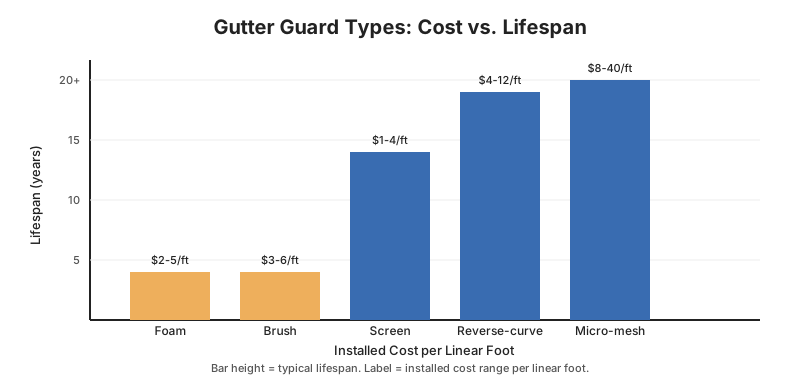
Installed price, service life, and cleaning frequency vary sharply by gutter guard type:
| Guard Type | Installed Cost (per linear ft) | Typical Lifespan | Cleaning Frequency |
|---|---|---|---|
| Micro-mesh | $8 to $40 | 15 to 20-plus years | About once a year |
| Perforated screen | $1 to $4 | 10 to 20 years | About twice a year |
| Reverse-curve | $4 to $12 | Up to 20 years | About once a year |
| Foam insert | $2 to $5 | 1 to 5 years | About twice a year |
| Brush insert | $3 to $6 | 3 to 6 years | About twice a year |
Sticker price only tells part of the story:
- A cheap guard needing annual replacement can cost more over 15 years than one premium guard installed once.
- A guard with a longer service life cuts material and labor costs together.
Matching Gutter Guard Type to Roof and Debris Load
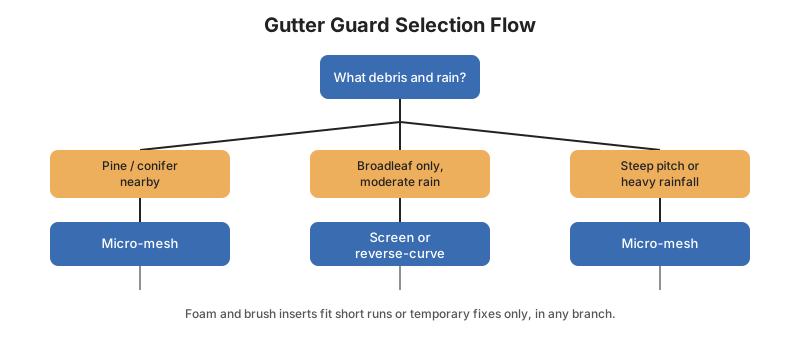
The right gutter guard depends on trees, rainfall, and roof shape more than brand names. Match the property first, then pick from the five types above.
Pine and Conifer-Heavy Properties
Pine needles defeat more gutter guard types than any other debris:
- Screen guards let needles slip straight through.
- Brush guards trap needles inside the bristles instead of shedding them.
- Reverse-curve guards let thin needles trail around the curve with the water.
Micro-mesh is the only style that reliably stops needles long-term. Budget for it wherever conifers grow near the roofline.
Broadleaf-Only Properties
Broadleaf-only properties are an easier match. Screen guards handle large leaves at a fraction of micro-mesh cost, and reverse-curve guards perform well too.
High-Rainfall or Steep-Pitch Roofs
Heavy storm intensity favors filtration guards over surface-tension designs:
- Micro-mesh with a ribbed surface keeps pace with intense rain on any pitch. - Some quality systems are tested above 10 inches per hour, though capacity varies by product.
- Reverse-curve guards are the style most likely to overshoot in a downpour. - Steep pitches raise that risk further, since water arrives faster.
Installation and Rain-Capacity Notes
A guard that fits the property still needs correct installation. Angle and pitch decide whether it performs as designed.
Roof Pitch and Guard Angle
Micro-mesh and reverse-curve guards must sit at an angle that matches the roof pitch, so debris sheds naturally instead of pooling flat. A premium gutter guard installed flat performs worse than a mid-tier one installed correctly. Ask any installer to confirm the angle before they leave the site.
Gutter and Downspout Sizing Still Matters
USDA NRCS guidance flags very flat slopes as an installation risk. Slopes such as one thirty-second or one sixty-fourth of an inch per foot cut into flow margin.
- Confirm slope meets a minimum of roughly one sixteenth of an inch per foot. - Flatter runs need a licensed installer's sign-off.
- Match downspout size to the gutter's rated capacity. - An undersized downspout backs up water even with a clean gutter.
- Limit gutter runs to about 50 feet per downspout for thermal expansion.
Common Gutter Guard Mistakes to Avoid
Most gutter guard disappointments trace back to a mismatch, not a bad product. The fixes below are quick once that mismatch is clear.
- Installing a reverse-curve guard on a steep, high-rainfall roof, the likely overshoot scenario. - Fix: choose micro-mesh instead.
- Choosing screen or foam guards under pine trees, where needles slip through. - Fix: budget for micro-mesh near conifers.
- Mounting a filtration guard flat instead of angled. - Fix: match guard angle to the roof.
- Assuming a guard means zero maintenance. - Fix: schedule an annual check even for micro-mesh.
- Skipping sizing checks before ordering guards. - Fix: verify capacity first, then pick the guard.
Frequently Asked Questions
Do gutter guards eliminate gutter cleaning entirely?
No. Even top-tier micro-mesh cuts cleaning to about once a year, since fine grit still settles on the surface. Budget one check a year no matter the guard type.
Which gutter guard works best under pine trees?
Micro-mesh is the only type built to reliably block pine needles, since they slip through screens and lodge in brush bristles. Choose a stainless weave for the longest service life.
Are reverse-curve gutter guards a good fit for steep roofs?
Not usually. Steep pitches speed up water arrival, raising the odds rain overshoots the intake slot.
How long do foam and brush gutter guards actually last?
Most foam inserts need replacing within one to five years, and brush inserts within three to six, as trapped debris breaks each material down. Factor that replacement cost into the total price before choosing either style.
Do gutter guards replace correct gutter sizing?
No. A gutter guard sits on an already-sized system. Confirm gutter and downspout capacity, per codes such as the International Plumbing Code, before choosing a type.
Conclusion
Choosing among gutter guards comes down to two questions: what debris does the property shed, and how intense does local rainfall get?
Micro-mesh gutter guards win under conifers and on steep or high-rainfall roofs. Screen and reverse-curve guards suit broadleaf-only, moderate-weather properties. Foam and brush belong on short runs only.
A few habits keep the decision simple:
- Match guard type to the dominant debris on site, not price.
- Confirm gutter slope and downspout sizing before guards go up.
- Schedule at least one annual check no matter the type.
Get the match right once, and the gutter stops needing a repeat visit.
Related categories: Gutters & Accessories · Roofing Underlayment · Flashings
Related Posts