Mattress Types: How to Choose the Right One for Every Guest Room

By Bryan Piñol · 16 July 2026
A single wrong mattress order rarely stays a single mistake. Multiply it across fifty guest rooms, a dorm wing, or a care-home floor, and the wrong mattress types become a recurring complaint fast.
This guide compares the main mattress types and shows how firmness and density are actually measured. It also covers the one fire-safety rule every bulk buyer needs to know first.
Why Mattress Types Matter for Bulk Buying
What Changes Between Mattress Types
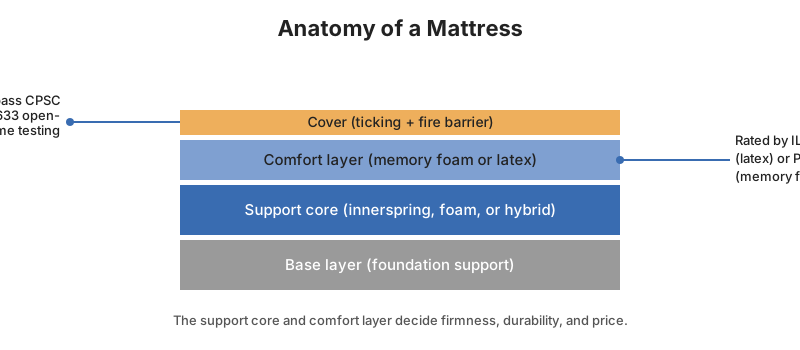
Every mattress uses the same basic stack: a cover, a comfort layer, a support core, and a base. The material in each layer is what changes between mattress types.
That single change in materials affects more than how a bed feels on night one.
- Firmness and feel, from plush to extra firm. - Firmness is a personal preference, not a sign of quality.
- Motion isolation, which matters most in shared or double-occupancy rooms.
- Heat retention, a common complaint with denser foams.
- Durability and lifespan, which drives replacement budgets.
- Weight and handling, a real factor for housekeeping staff.
Why Bulk Buyers Must Get This Right
A guest picks one mattress, once, in a showroom. A hotel or hospital buys the same mattress type hundreds of times over.
- Guest turnover wears out a bed faster than typical home use.
- One wrong density choice multiplies into hundreds of complaints. - Fixing a bulk order mid-contract costs far more than getting the spec right up front.
- Fire-code rules apply to every unit in the order, not just a sample.
Mattress Types at a Glance
The table below compares the main mattress types buyers choose between.
| Mattress Type | Support Core | Best For | Typical Lifespan |
|---|---|---|---|
| Innerspring | Steel coils | Budget bulk orders, familiar feel | 5 to 7 years |
| Memory foam | Foam, rated by PCF | Pressure relief, quiet nights | 5 to 10+ years by density |
| Latex | Natural or synthetic latex, rated by ILD | Responsive feel, durability | 10 to 15 years |
| Hybrid | Coils plus foam or latex top | Mid-tier to upscale hospitality | 6 to 8 years |
| Institutional | Simplified foam or coil build | Dorms, care homes, corrections | 5 to 8 years |
Innerspring Mattresses: The Traditional Workhorse
How Innerspring Support Works
An innerspring mattress uses a core of steel coils, topped with a thin comfort layer of foam or fiber. Coil count and gauge set how much bounce and support the bed gives. This is why innerspring mattress types vary so much between suppliers.
Where Innerspring Still Wins
Innerspring stays common in budget-minded bulk buying. It is familiar, easy to source, and simple to compare across suppliers.
- Airflow, since coils let more air move than solid foam does. - This keeps the bed cooler than most all-foam mattress types.
- Lower upfront cost per unit at high order volumes.
- Familiar feel for guests who find foam new or too soft.
Memory Foam Mattress Types and Density Ratings
Understanding PCF Density
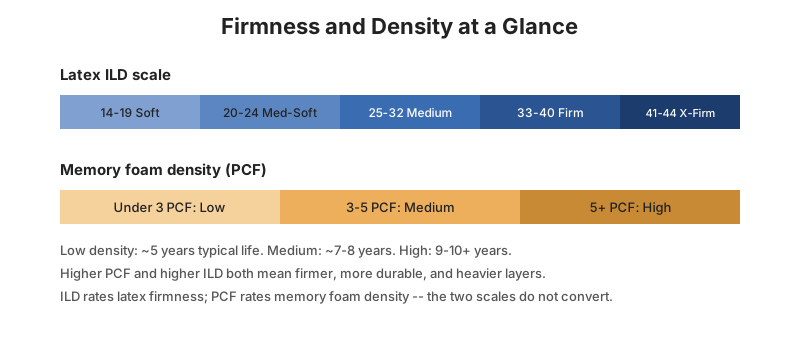
Memory foam is rated by density, measured in pounds per cubic foot, or PCF. Density measures how much foam is packed into the layer. It does not measure how firm the layer feels.
- Low density, under 3 PCF: soft and cheap, but shorter-lived, roughly 5 years of typical life.
- Medium density, 3 to 5 PCF: the balanced middle tier, roughly 7 to 8 years of typical life.
- High density, 5 PCF and up: firmest and most durable, 9 to 10 years or more, though it holds more heat.
Matching Density to Guest Turnover
High-turnover rooms do best with medium or high-density foam, since it resists sagging under constant use.
Low-density foam still has a place. Guest rooms used less often, overflow inventory, and budget-tier properties all suit shorter replacement cycles anyway.
Latex Mattress Types and ILD Firmness Ratings
How ILD Is Measured
Latex firmness is rated by ILD, short for Indentation Load Deflection. The test presses a disc into the latex. It records how many pounds of force compress the latex by 25 percent of its thickness.
A layer needing 20 pounds of force carries an ILD of 20. A layer needing 44 pounds carries an ILD of 44.
Reading the ILD Scale
The ILD scale runs roughly from 14 to 44 across the mattress industry.
- 14 to 19, soft: gentle give, suited to lighter sleepers. - Often used only as a top comfort layer, never as a support core.
- 20 to 24, medium-soft: a common comfort-layer choice for general guest use.
- 25 to 32, medium to medium-firm: a versatile middle range for mixed body types.
- 33 to 40, firm: denser support layers, or a firm-feel room by request.
- 41 to 44, extra firm: reserved for support layers, rarely used as comfort layers.
ILD and PCF Quick Reference
Latex and memory foam use two different rating scales, so the numbers do not compare directly.
| Scale | Material | Range | Meaning |
|---|---|---|---|
| ILD | Latex | 14 to 24 | Soft to medium-soft |
| ILD | Latex | 25 to 44 | Medium to extra firm |
| PCF | Memory foam | Under 3 | Low density |
| PCF | Memory foam | 3 to 5 | Medium density |
| PCF | Memory foam | 5 and up | High density |
Hybrid and Institutional Mattress Types
Hybrid Mattresses
A hybrid mattress pairs an innerspring core with a foam or latex layer on top. Among mattress types, this mix is common in mid-tier and upscale hospitality buying.
- Coils underneath add airflow and edge support like innerspring. - This also helps a hybrid mattress handle heavier guests without sagging early.
- A foam or latex top layer adds the pressure relief guests expect from foam.
- The mix usually costs more per unit than plain innerspring, but less than all-latex.
Institutional and Adjustable Mattress Types
Institutional mattress types have a different job than a hotel guest room bed.
- Healthcare and care-home facilities often specify high-density foam for infection-control covers and easier cleaning.
- Adjustable-base mattress types need enough flex in the core to bend without damage.
- Dorm and correctional-facility mattress types commonly use simple, single-layer foam for cost and durability.
Flammability Compliance for Bulk Buyers
What CPSC 16 CFR 1633 Requires
Every mattress sold in the United States must meet the CPSC's open-flame flammability standard, 16 CFR Part 1633. The rule has been in force since July 1, 2007.
It is a prohibited act to sell a mattress made after that date that fails the standard's open-flame test. Makers must pass each design through three straight tests before they can sell it.
Why Institutional Buyers Face Stricter Rules
Mattresses sold to hotels and dorms under contract count as "interior furnishings." That means they fall under the same federal rule as any other mattress.
- Federal or state agencies may set rules stricter than 16 CFR 1633 for their own facilities.
- Buyers filling government contracts should confirm which standard applies before ordering.
- A mattress topper is excluded from the rule's definition of "mattress," so toppers skip this compliance label.
For hospitality and institutional buyers, browsing mattresses, toppers, and box springs alongside institutional beds and mattresses makes it easy to compare compliant, bulk-ready mattress types side by side. Pairing any bulk order with the right mattress protectors and encasements extends mattress life and keeps the fire barrier safe from spills and wear.
Frequently Asked Questions
What is the most durable mattress type for hotels?
High-density memory foam and hybrid mattress types tend to outlast low-density foam and basic innerspring under constant guest turnover, though they cost more per unit upfront.
Do all mattress types need to meet the same fire-safety standard?
Yes. Every mattress sold in the United States must meet CPSC 16 CFR 1633, no matter the type. Some institutional buyers, including certain government contracts, may need an even stricter standard.
Is a firmer mattress type always better for guest rooms?
No. Firmness is a preference, not a quality marker. A property serving a broad mix of guests often does best with a medium-firm option, in the ILD 25 to 32 or medium-density PCF range.
Can I mix mattress types across the same property?
Yes, and many hospitality buyers do. A common approach uses one mattress type for standard rooms and a firmer or hybrid option for premium or accessible rooms.
How often should bulk-purchased mattress types be replaced?
It depends on density and use. Low-density foam and basic innerspring often need replacing around 5 years under heavy turnover, while medium and high-density mattress types can last 7 to 10 years or more.
Conclusion
Choosing between mattress types is not just a comfort call when the order covers fifty rooms instead of one bed. Density, firmness rating, and fire-code compliance all compound across every unit in the purchase.
Match the mattress type to the room's turnover and guest mix. Check the ILD or PCF rating against the ranges above, and confirm the fire-safety standard before the order ships.
That combination keeps a bulk mattress purchase from turning into next year's most expensive mistake.
Related Posts


What Bathroom Partitions Have to Survive
Pipe Fittings Explained: Types, Materials and How to Choose

Box Stapler Guide: Types, Staple Sizes and How to Choose One