VFD Guide: How to Choose the Right Variable Frequency Drive for Every Application
By Patrick Martiro · 21 July 2026
A VFD can cut a motor's energy bill by half and give an operator precise control over speed. The wrong choice can trip on startup, run hot, or fail early. Picking the right variable frequency drive means matching current rating, enclosure protection, and setup to the motor and the space it works in.
This guide covers how a VFD works, how much energy it really saves, the main drive types, and the sizing choices that decide whether it delivers on that promise.
What Is a Variable Frequency Drive (VFD)?
A VFD is a device that controls the voltage and frequency sent to an AC motor. Controlling frequency controls motor speed. People also call it a variable speed drive, an adjustable speed drive, or an inverter, and the terms mean the same thing.
Where these drives show up most:
- HVAC fans and blowers that need to match airflow to demand.
- Water and wastewater pumps running at partial load most of the day.
- Conveyor lines that speed up or slow down with production volume.
- Compressors and industrial process equipment with variable torque needs.
How a VFD Works
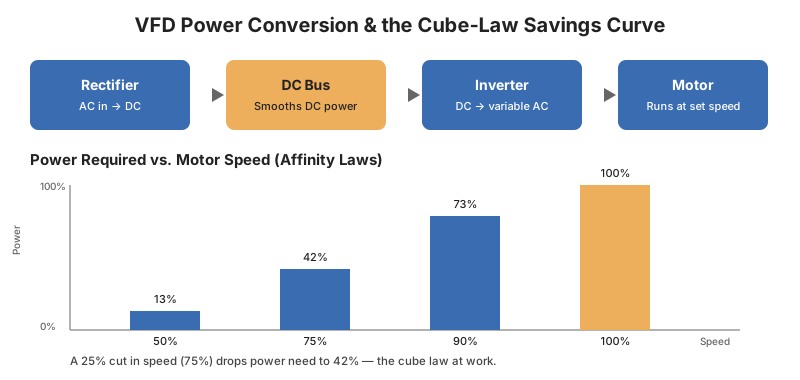
It runs as a three-stage electronic converter. Each stage handles one part of the conversion, listed below.
The three stages:
- Rectifier: turns incoming fixed-frequency AC power into DC.
- DC bus: smooths and stores that DC power.
- Inverter: converts the DC back into AC at a new, variable frequency, which speeds up or slows down the motor.
Motor speed follows supply frequency, 60 Hz in the United States and 50 Hz in many other countries. Adjusting that frequency electronically gives continuous speed control instead of the fixed or stepped speeds a direct motor connection allows.
VFD vs. Soft Starter
A soft starter ramps voltage up slowly at startup to cut inrush current, then runs the motor at one fixed speed. A drive keeps full speed control available the whole time it runs, not just at startup.
Quick comparison:
- Soft starter: lowers startup current, no ongoing speed control, lower cost.
- VFD: full speed and torque control, higher upfront cost, much bigger energy savings.
Most facilities in a variable-torque job choose the drive over a soft starter. The extra upfront cost pays back through energy savings a soft starter cannot provide.
How VFDs Save Energy
Energy savings are the main reason facilities install one, and the numbers are large enough to justify the equipment cost in many jobs.
The Cube Law Behind VFD Savings
A motor's power need rises with the cube of its speed, a rule known as the Affinity Laws. A small speed cut produces a much bigger drop in power draw.
| Fan or Pump Speed | Mechanical Power Required |
|---|---|
| 100% | 100% |
| 90% | 73% |
| 75% | 42% |
| 50% | 13% |
Real-World Energy Savings Example
The numbers behind VFD energy savings are worth a closer look.
Trimming a ventilation fan's speed by just 20 percent cuts its energy use to about 51 percent of the original amount. That is close to a 49 percent power cut from one modest speed change. In the right variable-torque job, a drive typically cuts electricity use by 20 to 50 percent.
It does draw a small amount of power itself. A modern, high-quality drive runs at about 97 to 98 percent efficiency, so only 2 to 3 percent of the power passing through it is lost. That small loss is minor next to the savings the drive makes possible.
Types of VFDs
VFDs fall into groups based on voltage class and the power source they connect to. The right group depends on the motor's size and where its power comes from.
Main VFD types:
- Low-voltage VFDs: the standard pick for most commercial and light-industrial motors, roughly fractional horsepower up to 500 horsepower. - Common on fans, pumps, and conveyors.
- Medium-voltage VFDs: built for large industrial motors on higher supply voltages. - Common in heavy manufacturing, mining, and utility work.
- Solar VFDs: run directly from a DC solar array without converting to grid AC first. - Common on solar water-pumping systems in remote or off-grid sites.
Most facilities never need anything beyond a low-voltage drive. The medium-voltage and solar options solve specific, less common problems.
How to Size a VFD
Sizing mistakes are the top reason a new drive underperforms or fails early. Getting the current rating right up front avoids most of them.
Match Current, Not Just Horsepower
Size a drive to the motor's Full Load Amps, not to horsepower alone. An undersized unit overheats and trips under load. An oversized one works fine, but it costs more for no real benefit.
Sizing checklist:
- Confirm the motor's nameplate Full Load Amps (FLA), not just its horsepower.
- Match the rated output current to that FLA figure.
- Review the duty cycle: - Continuous duty needs a drive built for sustained full-load current. - Intermittent duty may allow a smaller frame with a higher short-term overload rating.
- Confirm the motor carries an inverter-duty or VFD rating before connecting it.
Account for Duty Cycle
A drive that looks right on paper can still fail if the real duty cycle runs harder than the nameplate suggests. Checking actual load data, not just rated output, confirms the drive fits how the equipment truly runs.
Choosing the Right Enclosure Rating
It holds sensitive electronics, and the wrong enclosure is one of the fastest ways to shorten its life. Matching the enclosure to the site protects the drive for years.
NEMA Enclosure Types
| NEMA Type | Protection Level |
|---|---|
| Type 1 | General purpose, indoor. |
| Type 3R | Rain-proof, sleet-resistant, outdoor. |
| Type 4 | Watertight, dust-tight, sleet-resistant. |
| Type 4X | Watertight, dust-tight, corrosion-resistant. |
| Type 12 | Industrial use, dust-tight and drip-tight, indoor. |
Enclosure type is not optional trim. Getting it wrong is one of the most common reasons a drive fails years ahead of schedule.
Environmental Factors
Check the installation site for:
- Ambient temperature and open space for airflow around the enclosure.
- Dust or airborne particles on the plant floor.
- Humidity or wash-down needs in the area.
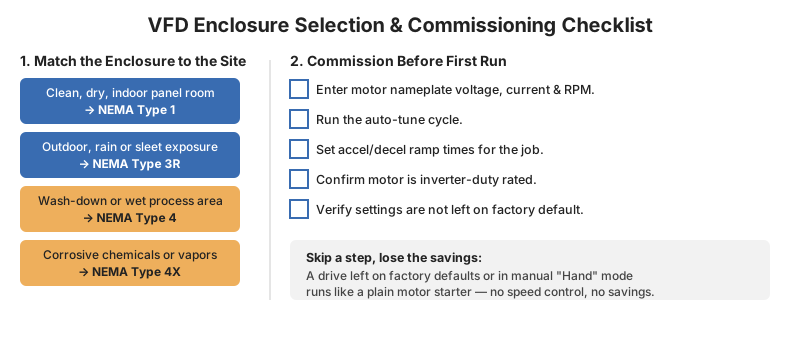
- Corrosive chemicals or vapors that call for a Type 4X enclosure.
Installation and Common Mistakes
A correctly sized drive still underperforms with poor setup or the wrong daily habits. Good commissioning habits close that gap.
Programming and Commissioning
- Enter the motor's nameplate data: voltage, current, and RPM.
- Run an auto-tune cycle so the drive matches its output to the motor.
- Set speed-up and slow-down ramp times for the job.
- Confirm the settings are not left on factory defaults.
None of these steps take more than a few minutes. Skipping them is the single biggest reason a correctly sized drive still underperforms.
Mistakes That Kill Savings
- Leaving the drive in manual "Hand" mode at one fixed speed, often 100 percent.
- Leaving a bypass contactor on after a fault, which runs the motor with no drive control at all.
- Sizing by horsepower alone instead of Full Load Amps.
- Skipping the enclosure check for a dusty, wet, or corrosive site.
FAQ
A few quick answers cover the questions that come up most.
What does a VFD do? It controls the voltage and frequency sent to an AC motor, which sets the motor's speed and torque. This gives continuous speed control instead of one fixed speed.
How much energy does a VFD save? In the right variable-torque job, it typically cuts electricity use by 20 to 50 percent, since power need drops with the cube of motor speed.
How do I size a VFD correctly? Match the rated output current to the motor's Full Load Amps, not horsepower alone, and check the duty cycle before finalizing the size.
What is the difference between a VFD and a soft starter? A soft starter only cuts inrush current at startup, then runs the motor at one fixed speed. A drive gives continuous speed and torque control the whole time it runs.
Can any motor be used with a VFD? Not always. Older or non-inverter-duty motors can suffer early bearing failure from drive switching stress, so the motor should carry an inverter-duty or VFD rating.
Conclusion
The math on a VFD is simple once it runs in practice.
A VFD earns its cost through savings that follow the cube law, not a straight line with speed. Getting those savings in practice comes down to three choices: size the drive to the motor's real current and duty cycle, match the enclosure to the site, and commission it properly instead of running on factory defaults. Get those three right, and a variable frequency drive will deliver the efficiency and control it is built for.
Related categories: Variable Frequency Drives | Low-Voltage Variable Frequency Drives | Variable Frequency Drive Accessories
Related Posts

How to Choose the Right Pressure Washer for Any Job