How to Choose a Shower Curtain: Sizes, Materials and Liners

By Sonali Patel · 13 August 2026
A shower curtain almost never fails because of the pattern. It fails because it is the wrong length, or because nobody fitted a liner behind it. Both mistakes end the same way, with water on the floor.
This guide covers the sizes that actually exist, the two measurements that decide which one you need, and what each material trades away. Care and ventilation come last, because that is where a good curtain is usually lost.
What a Shower Curtain Has to Do
Privacy, Splash and Style
A shower curtain does three jobs at once. It gives privacy, it keeps water inside the bathing area, and it sets the look of a room that is usually too small to decorate any other way.
The decorative job is the one buyers shop for.
The waterproofing job is the one that gets them a mop.
- Privacy: the reason a curtain exists at all.
- Containment: keeping splash inside the tub or tray.
- Style: the largest single surface in most bathrooms.
Why the Liner Does the Real Work
In a two-part setup the shower curtain hangs outside the tub and the liner tucks inside it. That split matters more than any material choice.
Fabric shower curtains absorb water rather than repel it, so they dry slowly. The plastic liner is designed to get wet and shed water fast.
The liner is also the cheap sacrificial layer. Mould wipes off plastic, while the same growth in a woven shower curtain is far harder to shift.
- Shower curtain: hangs outside, chosen for privacy and looks.
- Liner: tucks inside, chosen to stop water.
- Replacement: liners are cheap and meant to be swapped. - A thick vinyl curtain can do both jobs on its own. - Every other material needs the liner behind it.
Shower Curtain Sizes That Fit
The Three Standard Shower Curtain Sizes
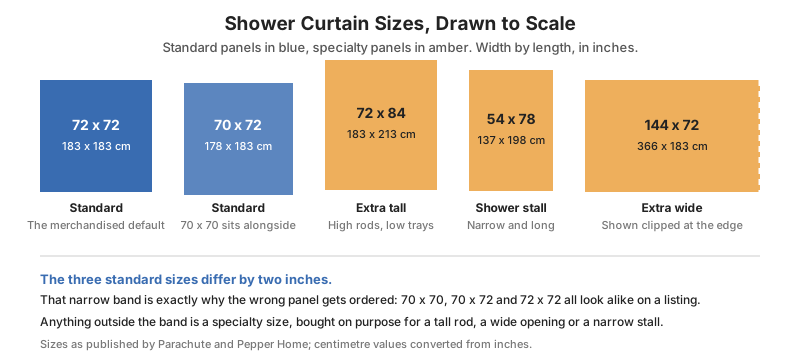
Standard shower curtain sizes vary by only a couple of inches, which is why buying the wrong one is so easy. Three sizes cover most conventional showers. Anything outside that band is a specialty size, and it exists for a reason.
| Size (in) | Size (cm) | What it fits |
|---|---|---|
| 70 x 70 | 178 x 178 | Standard tub, shorter drop |
| 70 x 72 | 178 x 183 | Standard tub, common default |
| 72 x 72 | 183 x 183 | Standard tub, the merchandised standard |
| 70 x 84 or 72 x 84 | 178 x 213 or 183 x 213 | Extra tall showers and raised rods |
| 144 x 72 | 366 x 183 | Extra wide openings and wet rooms |
| 54 x 78 | 137 x 198 | Shower stalls and narrow trays |
When You Need a Specialty Size
Extra tall sizes exist for rods hung high, and for showers where the tray sits low. Extra wide sizes cover openings that a single standard panel cannot reach across.
Stall sizes go the other way. They are narrower and longer, because a stall opening is tight and the drop to the tray is long.
- Extra tall: raised rods, high ceilings, low trays.
- Extra wide: wide openings, wet rooms, double showers.
- Stall: narrow cubicles where a standard panel bunches. - A stall curtain in a tub leaves gaps at both ends. - A tub curtain in a stall drags and holds water.
Measuring Before You Buy
Start With the Width
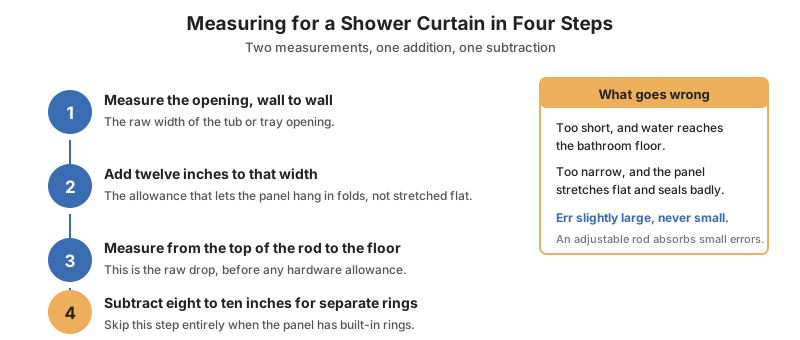
Measure the opening wall to wall, then add twelve inches. That allowance is what lets the shower curtain hang in soft folds instead of stretching flat across the gap. A stretched shower curtain looks wrong and seals badly.
Then Measure the Shower Curtain Drop
Take the second measurement from the top of the rod to the floor. That figure is the raw drop, before any allowance for how the curtain hangs. Write both numbers down before shopping, because most listings quote width first and length second.
- Width: wall to wall, plus twelve inches.
- Drop: top of the rod down to the floor.
- Order: width comes first in almost every listing.
The Ring Allowance
Here is the step most people skip. If the shower curtain hangs on separate rings rather than built-in ones, subtract eight to ten inches from the drop, because the rings themselves take up that height. Shower curtains with built-in rings need no such subtraction.
An adjustable rod softens the error either way, since a couple of inches of rod height can be tuned after the shower curtain is hung.
- Separate rings: subtract eight to ten inches.
- Built-in rings: subtract nothing.
- Adjustable rod: your margin for a small mistake. - Twelve hook holes is the usual count on a standard panel. - Ring diameter varies, so the allowance is a range.
Shower Curtain Materials and What Each Trades Away
Vinyl
Vinyl is the utilitarian answer. It is inexpensive, water resistant by design, and a thick vinyl panel works as curtain and liner in one. That is exactly why hotels and student housing buy it by the pallet.
The trade is appearance. A vinyl shower curtain reads as functional rather than furnished, which is fine in a gym block and less fine in a boutique room.
Polyester
Polyester sits between the two camps. It gives a fabric hand with the mildew resistance of a synthetic, and it holds bold colour and pattern without fading. It is still plastic, so it is not the environmental choice.
For most homes and most mid-market hospitality, it is the practical middle.
Cotton and Linen
Natural fabrics are the design choice. Cotton is airy and durable and comes in a wide range of colours, textures and weights, while linen brings a heavier, more tailored drape.
Neither is waterproof, so both need a liner behind them.
| Material | Waterproof | Liner needed | Typical use |
|---|---|---|---|
| Vinyl | Yes | No, if heavy gauge | Hotels, dorms, gyms, rentals |
| Polyester | Water resistant | Optional | Homes, mid-market hospitality |
| Cotton | No | Yes | Design-led home bathrooms |
| Linen | No | Yes | Premium and boutique interiors |
- Vinyl: cheapest, wipes clean, no liner needed on heavy gauge.
- Polyester: fabric look, mildew resistant, colourfast.
- Cotton and linen: best appearance, always paired with a liner. - Natural fabrics dry slowly and hold moisture in the weave. - Leave a natural shower curtain closed as it dries to avoid creasing.
Flame Testing for Commercial Projects
Specifying for a hotel, a hospital or a student block is a different exercise. Fabric hung in those buildings is routinely required to carry a flame propagation test result, and the National Fire Protection Association publishes the test method most often named.
That standard is titled Standard Methods of Fire Tests for Flame Propagation of Textiles and Films, currently in its 2023 edition. Its stated scope is to establish test methods that assess the propagation of flame of various textiles and films under specified fire test conditions.
Ask for the certificate at quotation stage, not after delivery.
- Residential: no flame test is normally requested.
- Commercial: expect the specifier to name a test method.
- Documentation: request test evidence before the order is placed.
Shower Curtain Liners, Hooks and Rods
Choosing a Shower Curtain Liner
Liner material is a short list, and mildew resistance is the feature worth paying for. EVA and PEVA liners are widely sold as mildew resistant, often with a weighted hem that keeps the bottom edge from billowing inward.
That weighted hem solves the single most irritating shower problem.
- PEVA and EVA: mildew resistant, chlorine-free plastics.
- Weighted hem: stops the liner clinging to your legs.
- Magnets: an alternative to weights on some liners.
Hooks, Rings and Hangers
Hooks are the cheapest upgrade in the bathroom. Glide rings on a smooth rod cost little and remove the daily snag of a curtain that will not pull cleanly.
Match the finish to the rest of the room hardware and the whole wall looks intentional.
- Plain hooks: lowest cost, most friction on the rod.
- Roller or glide rings: smoother pull, quieter operation.
- Built-in rings: fewer parts, no ring allowance to calculate.
Rods
Tension rods suit rentals and tiled recesses where drilling is unwelcome. Fixed rods carry more weight and never slip, which matters with a heavy natural fabric plus a liner.
Curved rods buy shoulder room inside a standard tub without changing anything else.
- Tension rod: no drilling, best for rentals and light panels.
- Fixed rod: carries fabric plus liner without slipping.
- Curved rod: more elbow room in the same tub footprint. - A heavy natural curtain plus a liner needs a fixed rod. - Check the rod diameter against the hook opening.
Compare shower curtains, rods and rings against the bathroom hooks and shower baskets that share the same wall, so the finishes match on the first order.
Shower Curtain Care, Mould and Ventilation
The Humidity Number
Mould on a shower curtain is a humidity problem wearing a fabric disguise. The US Environmental Protection Agency advises keeping indoor humidity below sixty percent, and ideally between thirty and fifty percent. Hit that band and shower curtains last dramatically longer.
Ventilation Beats Cleaning
The same agency notes that when mould keeps returning in a shower or bathroom, increasing ventilation and cleaning more often will usually prevent it, or at least keep it to a minimum. Running an extract fan or opening a window is the whole intervention.
It also advises acting quickly wherever condensation collects on windows, walls or pipes, and drying water-damaged areas and items within twenty-four to forty-eight hours.
- Run the fan: during the shower and after it.
- Open a window: the zero-cost version of the same fix.
- Dry quickly: within a day or two, not a week. - Condensation on pipes and walls is the early warning. - Cleaning without ventilation only delays the regrowth.
Drying and Washing
Close the shower curtain and the liner while they dry. Bunched folds trap moisture against themselves, and that is precisely where mould starts.
Fabric shower curtains can usually be machine washed cold on a delicate cycle inside a mesh bag, then line dried or tumbled on a low setting. They shrink like any other textile, so check the care label before the first wash.
- Close it to dry: never leave a shower curtain bunched.
- Cold delicate wash: mesh bag, low or no heat drying.
- Check the label: shrinkage is the common regret.
Frequently Asked Questions About Shower Curtains
What is the standard shower curtain size?
Seventy by seventy inches, seventy by seventy-two inches and seventy-two by seventy-two inches are the three standard sizes, and 72 by 72 in is the one most widely merchandised. That is roughly 183 by 183 cm.
Do I need a liner with my shower curtain?
Yes, unless the curtain is heavy-gauge vinyl. Cotton, linen and most polyester panels are not fully waterproof, so the liner tucks inside the tub and does the containment work.
How do I measure for a shower curtain?
Measure the opening wall to wall and add twelve inches for a relaxed hang. Then measure from the top of the rod to the floor. Subtract eight to ten inches from that drop if you are hanging the panel on separate rings.
Which shower curtain material resists mould best?
Plastics resist it best, which is why PEVA and EVA liners are sold as mildew resistant. Polyester is the best-performing fabric option, while cotton and linen hold moisture in the weave and rely on the liner in front of them.
Why does my shower curtain keep going mouldy?
Almost always humidity and drying, rather than the shower curtain itself. Keep indoor humidity below sixty percent, ventilate during and after showering, and leave the panel drawn closed so no damp folds sit against each other.
Conclusion
Buy a shower curtain in three steps. Measure the width and add twelve inches, measure the drop and subtract the ring allowance, then choose the material from how the room is used rather than how it looks in a photograph.
Vinyl for hard-working spaces, polyester for most homes, natural fabric plus a liner where appearance leads.
After that it is ventilation. Keep the humidity down and dry the panel closed, and a decent shower curtain will outlast several cheap ones, alongside the shower chairs and seats and fittings around it.
Related Posts
Sandblasting Sand: Why the Cheapest Abrasive Costs You the Most


Types of Pliers: Jaw Shapes, Grip and What Each Pair Is For