Arc Gouging Explained: How Air Carbon Arc Gouging Removes Metal Fast
By Sarah Zhan · 19 August 2026
Grinding a bad weld out of thick plate can eat a whole shift. Arc gouging does the same job in minutes.
Air carbon arc gouging melts metal with an electric arc, then blasts the puddle away with compressed air. The Welding Institute describes it as the one gouging method that uses a separate air jet to eject molten metal. That design choice is why arc gouging cuts so fast.
This guide covers the gear, the settings and the safety limits that matter on a real job.
What Arc Gouging Actually Does
Arc gouging is a metal removal process, not a joining process. You use it to take material out, then weld the clean groove that is left.
The Arc and the Air Jet Work Together
An arc forms between a carbon electrode and the workpiece, and the metal under it turns liquid. A high velocity air stream then sweeps that liquid metal out of the groove.
- Arc first: the arc melts a small pool under the electrode tip. - Melting happens in a fraction of a second. - Nothing is oxidised, so alloys behave predictably.
- Air second: the jet blows the pool clear before it can freeze.
- Result: a bright groove that is often ready to weld.
Why Arc Gouging Suits So Many Metals
Oxy-fuel gouging relies on oxidation, so it struggles outside carbon steel. Arc gouging does not depend on oxidation at all. That opens the door to a much wider material list.
- Steel and stainless: run direct current with the electrode positive.
- Cast iron, copper and nickel: alternating current works better here. - Fit AC rated electrodes before you switch polarity. - Mixing rod types wastes money and dirties the groove.
Building an Arc Gouging Setup
Three parts have to work as one system: power, torch and air.
The Power Source
Your machine must have a constant current output. Without it, touching the electrode to the plate causes a surge that can explode the tip.
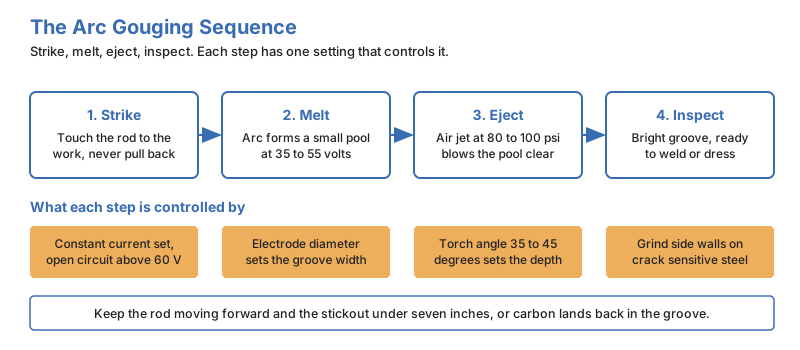
Open circuit voltage should sit above 60 V. Arc voltage during arc gouging typically runs somewhere between 35 and 55 V.
The Gouging Torch
Torches carry a duty class rating. That class sets both the amperage ceiling and the air the torch will swallow.
- Light duty: roughly 40 to 280 A, needing about 8 CFM.
- General duty: roughly 80 to 550 A, needing about 25 CFM.
- Multipurpose: the same current band at closer to 33 CFM.
Match the torch to the heaviest electrode you plan to run. Buying one size down is the classic false economy in arc gouging.
The Air Supply
Air pressure at the torch normally sits between 80 and 100 psi. Pushing past that band does not remove metal any faster. Light duty manual torches are the exception and run at 60 psi.
- Shop compressor: the usual supply, where volume matters more than pressure. - Undersized tanks drop pressure part way through a cut.
- Bottled gas: limited to about 35 psi, which caps what you can do.
Choosing the Right Arc Gouging Electrode
Electrode diameter is the one decision that shapes your groove. Get it wrong and you either stall the arc or cut deeper than the repair needs.
Match the Diameter to the Groove
ESAB suggests picking an electrode about one eighth of an inch wider than the groove depth you want. Groove width then follows the electrode diameter almost directly.
Depth is a separate control, and travel speed sets it.
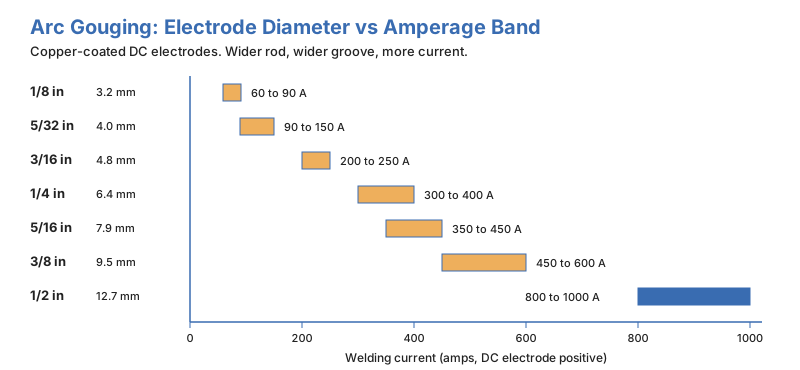
Amperage Ranges by Electrode Size
The table lists published current bands for copper coated DC electrodes.
| Electrode diameter (in) | Diameter (mm) | Minimum amps | Maximum amps |
|---|---|---|---|
| 1/8 | 3.2 | 60 | 90 |
| 5/32 | 4.0 | 90 | 150 |
| 3/16 | 4.8 | 200 | 250 |
| 1/4 | 6.4 | 300 | 400 |
| 5/16 | 7.9 | 350 | 450 |
| 3/8 | 9.5 | 450 | 600 |
| 1/2 | 12.7 | 800 | 1000 |
Copper Coating and Electrode Stickout
The electrode is a graphite rod finished with a copper coating. That coating slows erosion, so the rod holds its diameter longer. Fewer rod changes means fewer stops.
- Stickout limit: keep the rod under seven inches from the torch head.
- Air aim: the jet must sit behind the rod and sweep under the tip. - A misaligned jet leaves carbon trapped in the groove.
Dialling In Amps, Air and Travel Speed
Settings interact, so change one variable at a time.
Operating Data You Can Start From
Figures published by The Welding Institute give a solid baseline for manual work. Treat them as a start point, then adjust for your own plate.
| Electrode diameter (mm) | Current (A) | Groove depth (mm) | Groove width (mm) | Travel speed (mm/min) |
|---|---|---|---|---|
| 6.4 | 275 | 6 to 7 | 9 to 10 | 609 |
| 8.0 | 350 | 7 to 8 | 10 to 11 | 711 |
| 9.5 | 425 | 9 to 10 | 12 to 13 | 660 |
| 13.0 | 550 | 12 to 13 | 18 to 19 | 508 |
Angle Controls Depth
Hold the torch at roughly 35 to 45 degrees for general arc gouging. A shallow angle lets you travel fast and leaves a shallow groove. A steep angle digs deeper but forces you to slow down.
Steep angles also raise the risk of carbon pick-up. Save them for genuinely deep repairs.
Weaving Widens the Groove
Oscillating the electrode in a small circle widens the cut beyond the rod diameter. Keep the weave within four times the electrode diameter.
- Strike by touching: unlike stick welding, you never pull back to set arc length.
- Keep moving: a stalled electrode drops carbon into the groove.
- Watch the voltage: aim for roughly 35 to 55 V while arc gouging.
Where Arc Gouging Wins
Arc gouging earns its place wherever removal volume is high and access is tight.
Back Gouging and Defect Removal
Back gouging a double sided joint is the classic arc gouging job. You cut to sound metal from the second side, then weld into the fresh groove.
- Back gouging: opening the reverse side of a full penetration weld.
- Defect removal: cutting out porosity, cracks and slag inclusions.
- Excess weld metal: trimming overbuilt caps and reinforcement.
- Bevel preparation: shaping edges before a welding pass.
Arc Gouging Versus Grinding
A grinder removes metal in grams while arc gouging removes it in handfuls. Currents reach 2000 A on heavy automatic work, a scale no abrasive wheel can match.
- Speed: arc gouging clears deep defects far faster.
- Finish: grinding leaves a smoother, cooler surface.
- Cost: electrodes and air beat a pile of worn discs.
Grinding still wins on finish and on thin sections. Many shops gouge first, then dress the groove with a wheel. The pairing is quicker than grinding alone.
Staying Safe During Arc Gouging
High current and high pressure air make arc gouging one of the noisiest jobs in any shop.
Noise Is the First Hazard
OSHA sets permissible noise exposure at 90 dBA over an eight hour day. Two hours drops that limit to 100 dBA, and a single hour to 105 dBA.
- Action level: hearing conservation starts at an 85 dBA daily average.
- Practice: treat arc gouging as work that always needs ear protection.
Fume, Sparks and Slag
The air jet throws molten metal a long way, so clear the area before you strike. Screens, fire blankets and a spotter are all sensible.
- Hexavalent chromium: OSHA caps exposure at 5 micrograms per cubic metre. - Stainless work needs local exhaust or a powered respirator.
- Clothing: heavy leathers beat cotton when sparks fly this far.
Metallurgy After the Cut
Carbon pick-up is the quiet risk in arc gouging. Poor technique or weak air flow leaves a carbon rich layer. That layer can harden and crack.
Grind the side walls whenever you work on crack sensitive material such as high strength low alloy steel.
Arc Gouging FAQ
Does arc gouging need a special welding machine?
No, a standard constant current DC welder will run it. You need enough amperage for your electrode size and an open circuit voltage above 60 V.
What air pressure should I use for arc gouging?
Set 80 to 100 psi at the torch, or 60 psi on a light duty manual torch.
Can arc gouging cut stainless steel?
Yes, and DC electrode positive is the usual setting. The process does not rely on oxidation, so it also handles cast iron, copper and nickel alloys. Fume extraction becomes essential once chromium enters the mix.
How deep can a single pass go?
A 13 mm electrode at 550 A cuts a groove around 12 mm deep. Deeper repairs simply take a second pass.
Why does my groove keep filling with carbon?
Usually the air jet is misaligned or the electrode has stalled. Check that the air holes sit behind the rod and confirm your pressure has not dropped.
Conclusion: Put Arc Gouging to Work
Arc gouging rewards preparation more than technique. Pick the electrode to suit the groove, set amps from the published band, hold 80 to 100 psi, and keep the torch moving.
Do that and you will clear defects in a fraction of the time a grinder needs.
Explore the full air carbon arc cutting and gouging range on EYBY, compare gouging electrodes by diameter, and match them to the right gouging torches for your duty cycle.
Related Posts
Sandblasting Sand: Why the Cheapest Abrasive Costs You the Most
Types of Pliers: Jaw Shapes, Grip and What Each Pair Is For