Anti-Seize Guide: Types, Torque Effects and Where Not to Use It
By Geoff Lord · 9 August 2026
Anti-seize is the most misused product on the shelf. It goes on threads that never needed it, and it is missing from the ones that did.
The reason is simple. Most people treat the paste as insurance, when it is really a friction modifier.
Change the friction in a threaded joint and you change the clamp load a given torque produces.
That is the part the tin never mentions.
This guide covers what anti-seize does, what each type is rated for, and where it should never go. The numbers come from a NASA fastener manual and from a spark plug maker, not from packaging. Nothing here is estimated.
What Anti-Seize Actually Does
Seizing, Galling and Cold Welding
Two metal surfaces under load do not stay separate. High spots weld together, tear, and drag fresh metal into the gap. That is galling, and on threads it ends with a fastener that will not move.
- Rising torque on removal: the joint fights back harder the further you turn it.
- Bright torn metal: torn from the thread flanks rather than gently worn away.
- A stud that snaps: the usual ending for an untreated stainless steel thread.
The Sacrificial Film
Anti-seize puts solid particles between those surfaces. The carrier oil spreads them, then burns or washes away, and the solids stay behind. What is left is a film that cannot cold weld.
NASA's fastener design manual describes one common compound as leaving non-galling oxides of nickel, copper and zinc between the threads. The joint comes apart later because those solids never bonded.
Why It Is Not a Grease
Grease lubricates while it is still there. Anti-seize is built to keep working after the liquid part has gone.
- Grease: stays fluid, carries load, and eventually washes out of the joint. - Best where two parts keep moving against each other in normal service.
- Anti-seize: leaves behind a solid film that survives real service heat. - Best where the parts have to come apart again several years later.
- Penetrating oil: the rescue product for a joint that has already seized. - It does nothing at all to prevent the next seized joint.
Anti-Seize Types and Their Temperature Limits
Oil, Grease and Wax
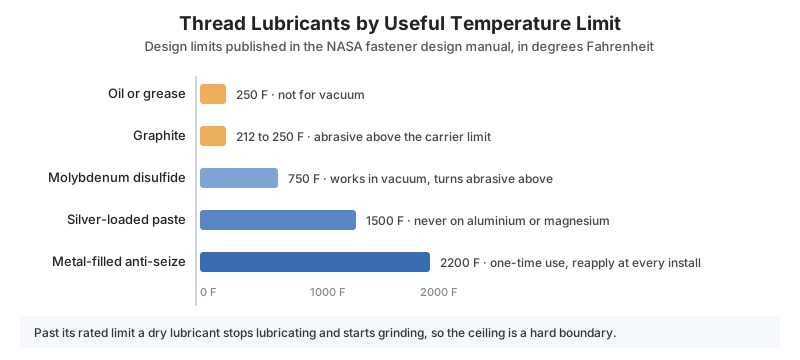
These are the default thread lubricants and the weakest link on heat. NASA puts their useful limit at 250 degrees Fahrenheit, above which the carrier melts or boils away, and none of them will hold up in a vacuum. Anything hotter than a warm gearbox needs a solid film instead.
Graphite
Dry graphite is not really dry, because it needs moisture before it lubricates at all. That gives it a working limit of roughly 212 to 250 degrees Fahrenheit, set by the carrier, and past that point the graphite is simply an abrasive sitting inside your joint.
Molybdenum Disulfide
Moly is the workhorse dry lubricant, and it does work in a vacuum. Its ceiling is about 750 degrees Fahrenheit. Above that it converts to molybdenum trisulfide, which grinds rather than lubricates.
Metal-Filled Pastes
This is what most people mean by anti-seize. NASA records one proprietary compound as satisfactory to 2200 degrees Fahrenheit as a one-time lubricant, which is a little over 1200 degrees Celsius.
Because the oil boils off, you have to brush on a fresh coat at every reassembly.
Silver-Loaded Compounds
Silver-bearing pastes hold up to 1500 degrees Fahrenheit. They carry 20 to 30 percent silver and cost accordingly.
NASA warns against using them on aluminium or magnesium parts.
| Lubricant type | Useful limit | Vacuum safe | Note |
|---|---|---|---|
| Oil or grease | 250 F | No | Most common, lowest ceiling |
| Graphite | 212 to 250 F | No | Abrasive past the carrier limit |
| Molybdenum disulfide | 750 F | Yes | Turns abrasive above the limit |
| Metal-filled anti-seize | 2200 F | Not stated | Reapply at every install |
| Silver-loaded paste | 1500 F | Not stated | Never on aluminium or magnesium |
The Torque Problem Nobody Warns You About
Torque Is Not Clamp Load
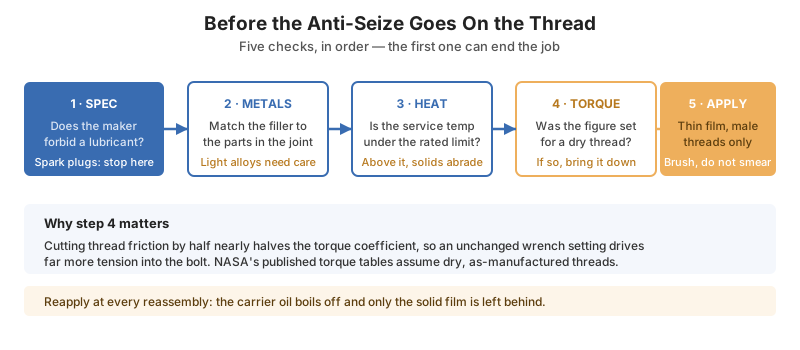
A torque wrench measures resistance, not tension. Most of what it reads is friction, and anti-seize exists to cut friction.
- Thread friction: usually the largest single share of the wrench reading.
- Face friction: the drag under the turning nut or the bolt head.
- Useful tension: the small remainder that actually clamps the joint together.
The standard shortcut is a torque coefficient, written as K. NASA warns that the value everyone assumes by habit should not be used blindly.
What the Numbers Do
Halve the friction and you nearly halve K. The same wrench setting then pulls far more tension into the bolt.
| Friction coefficient | Torque coefficient K | Effect at a fixed torque |
|---|---|---|
| 0.05 | 0.074 | Highest clamp load, yield risk |
| 0.10 | 0.133 | Well above the dry assumption |
| 0.15 | 0.189 | Realistic for steel on steel |
| 0.20 | 0.250 | Close to an unlubricated joint |
NASA's own bolt torque table assumes dry, as-manufactured threads carrying no lubricant at all.
How Much to Take Off
There is no single discount that fits every compound and every finish. NASA does give one worked case, telling engineers to cut dry torque values by 50 percent on waxed silver-plated nuts. Treat that as the scale of the effect rather than as a universal rule.
- Check the spec first: the figure may already assume a lubricated thread.
- Never apply anti-seize to a dry-torque figure: without adjusting the target.
- Be consistent: the same product, amount and coverage on every single joint.
- Respect the tool: even a good torque wrench holds only about 25 percent accuracy.
Matching Anti-Seize to the Metals in the Joint
The Galvanic Rule
Galvanic corrosion needs two dissimilar metals and an electrolyte, which in practice means moisture. The farther apart the two metals sit in the galvanic ranking, the harder that cell works.
Anti-seize adds a third metal to the joint, so the filler is part of that equation.
Anodes, Cathodes and Mass
The active metal erodes, so it should be the larger mass in the pair. NASA calls carbon steel fasteners in a stainless or copper assembly poor practice, while stainless fasteners in a carbon steel assembly are acceptable.
- Light alloys: keep silver and copper-rich pastes well away from aluminium and magnesium.
- Stainless on stainless: the classic galling pair, and the strongest case for a paste.
- Mixed metals: pick an anti-seize filler close to the parts, not far from them.
Stainless Needs Extra Thought
Stainless galls because its own oxide film keeps rewelding under pressure. NASA notes that furnace-oxidised 300 series stainless galls less, and that passivation deters galvanic activity, yet neither treatment is available to you in the middle of a shift.
Anti-seize is the practical substitute. Stock it beside your other anti-seize compounds rather than reaching for ordinary grease.
Where Anti-Seize Does Not Belong
Spark Plugs
Modern plugs arrive plated and dry, and the plating is the release agent. NGK states plainly that it ships plugs from the factory dry, with no lubrication and no anti-seize.
The paste can alter torque values by up to 20 percent, which risks thread breakage and metal shell stretch.
Shell stretch changes the heat rating of the plug and can trigger pre-ignition. That is engine damage caused by a helpful habit.
Any Joint With a Dry Torque Figure
- Published dry specs: read them as dry unless the maker states otherwise.
- Friction-critical faces: brake and clutch surfaces depend on friction to do their job.
- Above the rated limit: graphite and moly both turn into abrasives up there. - Check the ceiling before the joint sees an exhaust or a furnace.
Where the Maker Says No
Some makers qualify an assembly around one named compound and nothing else.
- Oxygen service: hydrocarbons carry a fire risk, so only approved products go near it.
- Food-contact plant: the compound needs clearance for incidental food contact.
- Coated fasteners: the factory coating may already be doing the lubricating.
Applying Anti-Seize Properly
Clean First
A compound smeared over rust and old thread lock does nothing useful. Wire brush the threads, then wipe them.
Trapped grit turns the paste into a grinding compound.
Thin, Even, Male Threads Only
- Coat the bolt: not the hole, where excess has nowhere to go. - A blind hole can go hydraulic and split the casting apart.
- Leave the seating face: unless the written specification tells you to lubricate it.
- Use a brush: fingers and rags leave uneven coverage on the flanks.
- Keep it thin: the film only has to fill the roughness of the surface.
Reapply Every Time
The oil carrier boils off in service, so the joint you open next year holds solids only. NASA is explicit that each installation needs a fresh application, and skipping that step is how a good habit quietly stops working.
That discipline is what keeps anti-seize useful across the life of the plant. Keep a tin beside the penetrating lubricants so the two get used in the right order.
Frequently Asked Questions About Anti-Seize
Does anti-seize really change torque that much?
Yes, and by more than most workshops allow for. NASA's figures show the torque coefficient falling by almost half when thread friction halves, while NGK measures shifts of up to 20 percent on spark plug threads.
Is copper or nickel anti-seize better?
It depends entirely on the metals in the joint, rather than on which tin looks tougher on the shelf. Keep copper-rich pastes away from aluminium and magnesium, and match the filler metal to the parts you are bolting together.
Can I use anti-seize instead of grease?
They solve different problems, because grease carries load while it is present and anti-seize keeps working long after the liquid has gone.
How much anti-seize should I put on a thread?
Enough to shade the thread flanks and no more than that. Anything squeezing out of the joint is wasted product that will only attract grit and dust.
Does anti-seize expire in the tin?
The solid fillers do not, but the oil carrier separates out of the paste over time. Stir it back to an even consistency before use, and replace the tin if the oil refuses to remix.
Conclusion
Anti-seize earns its place on high-temperature joints, stainless threads and anything exposed to weather. It is the difference between a ten-minute strip and a broken stud.
The cost is that it changes the joint. A lubricated thread reaches a higher clamp load at the same torque, so the setting has to come down with it.
Treat anti-seize as a specification decision rather than a habit. Check the torque figure, match the filler to the metals in front of you, then buy the right tin alongside the grease you already stock. Doing those three things in order is the whole discipline.
Related Posts
Sandblasting Sand: Why the Cheapest Abrasive Costs You the Most
Types of Pliers: Jaw Shapes, Grip and What Each Pair Is For