Concrete Block Sizes: Nominal, Specified and Metric Dimensions Explained
By Neomi Barriga · 30 July 2026
Ask for an 8x8x16 unit and the pallet will not measure eight inches by eight by sixteen. Concrete block sizes are quoted as a planning module rather than as a tape-measure result.
The gap is deliberate, and it matters most when concrete block sizes cross a border into another standard.
Why Concrete Block Sizes Never Match the Label
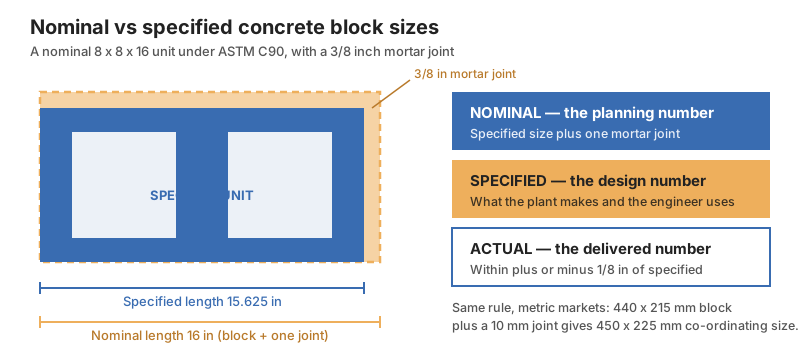
Three words describe the same block, and the Concrete Masonry and Hardscapes Association keeps them strictly apart. Mixing up nominal, specified and actual dimensions is a common source of layout error on a masonry job.
The three dimensions to keep separate
- Nominal dimensions state the unit size for planning, and equal the specified size plus one mortar joint.
- Specified dimensions are the figures the plant manufactures to and the engineer designs with.
- Actual dimensions are what a caliper reads on the day the delivery arrives. - Nominal is the number you order by. - Actual is the number that decides whether your last course fits.
How the mortar joint sets the module
A standard mortar joint is 3/8 inch thick in North American practice. Subtract it from the nominal figure and you arrive at the specified figure. Add it back on site and concrete block sizes return to the round number on the drawing.
That is how a wall holds a clean 4 or 8 inch module however many courses go up.
Why the order of dimensions matters
Concrete block sizes in North America are stated width, then height, then length, and Angelus Block warns that reversing any two describes a different unit. An 8x4x16 is eight inches wide and four high, while a 4x8x16 is four wide and eight high.
Concrete Block Sizes Under ASTM
ASTM C90 covers loadbearing concrete masonry units, and it is the rule book most North American, Gulf and export projects point at.
The nominal-to-specified table
| Nominal size (W x H x L) | Specified size (inches) | Typical use |
|---|---|---|
| 4x8x16 | 3.625 x 7.625 x 15.625 | Partitions and veneer backup |
| 8x8x16 | 7.625 x 7.625 x 15.625 | General structural workhorse |
| 12x8x16 | 11.625 x 7.625 x 15.625 | Basement and retaining walls |
| 16x8x16 | 15.625 x 7.625 x 15.625 | Heavy structural and pilaster work |
Every entry sits three eighths of an inch under its nominal figure, by design rather than accident.
The rest of the ASTM range
- Nominal concrete block sizes run 4, 6, 8, 10, 12, 14 and 16 inches thick, though not every width is a stock item.
- Typical faces are 8 inches high by 16 inches long, with 4 inch heights and 24 to 32 inch lengths also made.
Concrete Block Sizes in Metric Markets
The same logic applies outside the imperial world, with different numbers. The wording changes too, and that is where cross-border buyers get caught.
British practice under BS EN 771-3
The Concrete Block Association publishes the working figures, and two face sizes dominate the market.
| Face size (L x H) | Common widths (mm) | Joint for co-ordinating size |
|---|---|---|
| 440 x 215 mm | 75, 90, 100, 140, 190, 215 | 10 mm |
| 390 x 190 mm | 90, 100, 140, 190 | 10 mm |
Add the 10 mm joint and a 440 x 215 block fills 450 x 225 mm of wall, the co-ordinating size. Britain also flips the reading order to length, width, height, so a 440 x 100 x 215 is an American 4 inch block.
Indian practice under IS 2185
The Bureau of Indian Standards publishes a modular grid rather than one default size, which makes Indian concrete block sizes easy to mix and match.
- Nominal lengths are 400, 500 or 600 mm, with matching half-lengths of 200, 250 or 300 mm.
- Nominal heights are either 200 or 100 mm across the whole range.
- Nominal widths run 50, 75, 100, 150, 200, 250 and 300 mm. - The 100 mm width handles internal partitions. - The 200 mm width carries most loadbearing work.
The 400 x 200 x 200 mm hollow block sits at the centre of that grid. Anything off the grid is still allowed by agreement between purchaser and supplier.
Configuration groups behind identical sizes
Two blocks with the same outside concrete block sizes can behave very differently inside. Eurocode 6 sorts units into four groups by void share, from under 25% for Group 1 to the 60 and 70% bands.
- Solid units contain no formed voids at all.
- Cellular units contain voids that do not fully penetrate the block.
- Hollow units contain voids that pass right through from face to face.
How Tolerance Changes Concrete Block Sizes On Site
Standards do not promise exact blocks. They promise blocks inside a band. That band is wider than most buyers expect it to be.
What each standard allows
- ASTM lets overall width, height and length vary by plus or minus 1/8 inch from specified.
- Up to 5% of an ASTM shipment may fall outside tolerance or show a listed defect. - Chips over 1 inch and cracks wider than 0.02 inch both count as defects.
- Category D1 under BS EN 771-3 permits +3 mm to -5 mm on every dimension.
- Category D2 tightens that to +1 mm to -3 mm on length and width.
Blocks arrive as category D1 unless a tighter grade is written into the order, and D2 is worth paying for on fair-faced masonry.
The tolerance stack nobody budgets for
Ten courses at the loose end of the band can move a wall height by more than an inch. Crews absorb that drift in the mortar joints, which is why joint thickness belongs in the specification, not in a site decision.
CMHA applies the same logic to appearance, assessing objectionable imperfections from 20 feet away under diffused lighting.
Matching Concrete Block Sizes to Strength and Density
Dimensions are only half of a specification. The rest is what the block is made of. Density and strength decide whether the wall stands up and what it costs to lift.
Density classes and strength floors
- Lightweight sits under 105 lb per cubic foot, or 1,680 kg per cubic metre.
- Medium weight runs from 105 to 125 lb per cubic foot, or 1,680 to 2,000 kg per cubic metre.
- Normal weight starts at 125 lb per cubic foot, or 2,000 kg per cubic metre.
- British blocks are quoted instead across a net dry density range of 650 to 2,400 kg per cubic metre.
Strength floors travel with those classes, and both belong beside concrete block sizes on the order.
- ASTM C90 sets a minimum net area compressive strength of 2,000 psi, or 13.8 MPa.
- British blocks run from 2.9 up to 40 N per square millimetre, with 3.6 and 7.3 common.
- IS 2185 lightweight grades start at 4 N per square millimetre for non-loadbearing hollow units.
Why webs matter more than the outside size
ASTM C90 was revised in 2011 to allow configurations beyond the classic two-cell, three-web unit, and thinner webs raise the R-value of an ungrouted wall. Two blocks with identical concrete block sizes can therefore post very different energy numbers.
How to Specify Concrete Block Sizes Without Ambiguity
An order naming only an 8 inch block invites a substitution.
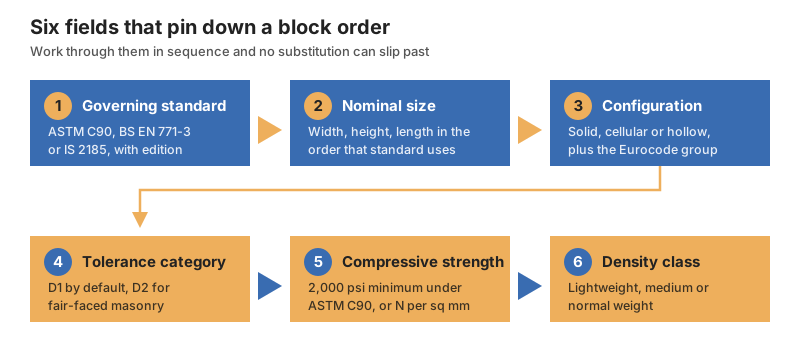
The six fields worth writing down
- Governing standard, named with the edition your project works to.
- Nominal size, in the reading order that standard uses.
- Configuration: solid, cellular or hollow, plus the Eurocode group.
- Tolerance category, a choice that exists only in the metric standards.
- Compressive strength, in whichever unit the standard uses.
- Density class, which drives handling weight, transport cost and heat flow.
Where the blocks meet everything else
Concrete block sizes only pay off if the rest of the wall agrees with them. Browse the concrete block and stone block range to compare stocked sizes side by side.
Mixed-material walls need the same discipline, so check coursing against the brick and fire brick options first. Laying them true comes down to the concrete and masonry hand tools your crew carries.
Frequently Asked Questions About Concrete Block Sizes
Why is an 8 inch block actually smaller than 8 inches?
Because the missing 3/8 inch is the mortar joint. Specified concrete block sizes sit three eighths under nominal so the finished block-plus-joint holds a true 8 inch module.
Are cinder blocks a different size from concrete blocks?
No, cinder block is an informal name for the same units. It carries no separate dimensional standard, so concrete block sizes apply to both terms.
What are the most common concrete block sizes worldwide?
There is no single global answer. The 8x8x16 unit dominates North America, the 440 x 215 mm face rules Britain and Ireland, and the 400 x 200 x 200 mm hollow block anchors the Indian grid.
Do concrete block sizes affect thermal performance?
Yes, although the internal void pattern matters rather more than the outside dimensions. Thin webs and low density both raise the R-value of an ungrouted wall.
Conclusion: Buy the Standard, Not the Nickname
Concrete block sizes only look inconsistent until you see the module underneath them. Nominal figures plan the wall, specified figures build it, and actual figures show up on the pallet.
Write the governing standard into the order and the ambiguity disappears.
Read every quote in the right order, check whether the number includes the joint, and confirm the tolerance category. Do that, and concrete block sizes stop being a translation problem.
Related Posts


Dent Puller Guide: How to Choose the Right Dent Puller