Paint Primer Guide: How to Choose the Right Primer for Every Surface
By Troy Hasslinger · 16 July 2026
Most paint failures do not start with the paint. They start with the coat underneath it, or the coat that was never applied at all.
A paint primer seals a surface, blocks old stains, and gives the finish coat something to grip. Skipping it, or picking the wrong type, turns a one-day paint job into a two-week redo.
This guide breaks paint primer down by type, substrate, and the problem each one solves. It also covers VOC rules for indoor use, and ends with a simple workflow for matching primer to any project.
Why Paint Primer Matters Before You Paint
What a Paint Primer Coat Actually Does
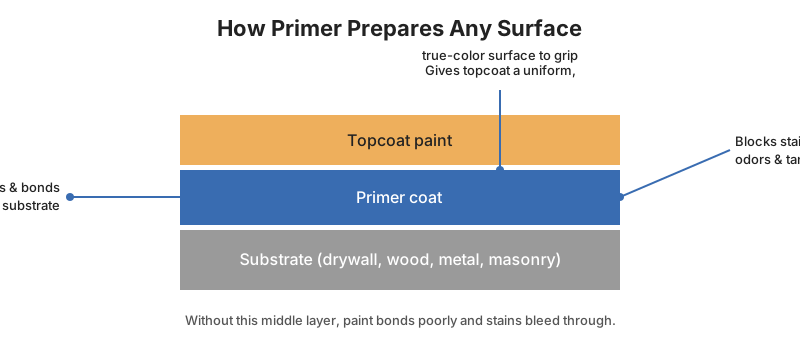
A paint primer sits between the bare or damaged surface and the topcoat. Its job is entirely functional, not decorative. Primer makers build these products to solve a short list of common problems on a job site.
- Seal porous surfaces so the topcoat spreads evenly instead of soaking in unevenly. - Applies especially to new drywall, fresh masonry, and unfinished wood.
- Block stains and odors including water marks and old smoke residue before they bleed through the topcoat.
- Create strong adhesion on slick, glossy, or chalky surfaces that paint alone will not grip.
- Reduce finish coats needed, which saves both paint and labor on large jobs.
- Stop peeling where a new coating goes over an older, different type of paint.
- Deliver true color in the fewest coats, especially over dark or bold colors.
What Happens When You Skip It
Paint applied straight onto bare drywall, fresh masonry, or a stained ceiling behaves oddly. Some areas soak up more paint than others, so the sheen looks patchy once it dries.
Stains are the bigger risk. Water damage, smoke residue, and wood tannins bleed straight through ordinary paint, sometimes months after the crew has moved on.
How VOC Regulations Shape Paint Primer Formulas
The EPA's VOC Limits for Coatings
Paint primer chemistry is not only about performance; it is regulated. The EPA's Architectural and Industrial Maintenance (AIM) Rule sets volatile organic compound limits for primers and paints sold in the United States.
Flat wall paint is capped at 250 grams of VOC per liter under the federal table, while primers and undercoaters get a higher limit of 350 grams per liter. Quick-dry primers, sealers, and undercoaters are capped even higher, at 450 grams per liter, and floor coatings carry their own separate limit under the same table.
Why This Matters for Facilities and Contractors
For a facilities team or contracting crew, VOC compliance is not paperwork to file and forget. Indoor air quality rules shape which primers can go into occupied buildings, hospitals, and schools. Choosing a compliant paint primer up front avoids the cost of redoing work that later fails inspection.
Latex Primer: The Everyday Workhorse
Where Latex Primer Works Best
Multi-purpose latex primer, often called a whole-house primer, is the default choice for interior walls, ceilings, and trim. It is water-based, low-odor, and cleans up with soap and water. Typical jobs for this paint primer include the following.
- New drywall, primed before the first coat of paint goes on.
- Previously painted walls that are already in good condition.
- Bare wood trim, sealed ahead of a water-based topcoat.
- Light color changes that do not involve heavy staining.
Where Latex Primer Falls Short
Latex primer struggles against tannin bleed, smoke damage, and grease. It also dries slowly in cold, damp conditions.
- Water and smoke stains often bleed back through within days. - This shows up as a faint yellow or brown shadow under the new paint.
- Cedar, redwood, and knotty pine tannins can still discolor the topcoat.
- Cold, humid job sites extend both dry time and recoat time.
Oil-Based and Shellac Primers for Stubborn Stains
Multi-Purpose Oil-Based Primer
Oil-based paint primer is the go-to stain blocker for a room that mixes bare wood, painted trim, and a few problem spots. Sherwin-Williams' paint primer guide groups its lineup this way. It lists oil-based primer as a uniform sealer and stain blocker that levels sanding marks and holds up under high-gloss enamel.
Good uses for this primer type include the following.
- Sealing bare or previously stained wood trim, doors, and cabinets.
- Priming over glossy oil-based paint before switching finishes.
- Blocking moderate water stains on ceilings and walls.
Shellac-Base Primer for Severe Stains
Shellac-base primer is the strongest, fastest stain and odor blocker on the market. Test data for a widely used shellac-base paint primer shows it dries to the touch in 20 minutes and recoats in 45.
Full grip and hardness build up over 1 to 3 days. That same product carries Master Painters Institute certification, a mark facilities managers often specify for guaranteed quality. This paint primer earns its price on the toughest jobs.
- Fire and smoke damage, sealed before any repainting begins.
- Pet odors and urine stains in flooring underlayment.
- Tannin bleed from cedar, redwood, and knotty pine.
- Glossy surfaces, primed without heavy sanding beforehand.
Specialty Primers for Masonry, Metal, and Glossy Surfaces
Concrete and Masonry Primer
Concrete, brick, stucco, and plaster need a paint primer built for high pH and heavy porosity. A masonry primer conditions the surface, so paint does not just soak in and disappear.
- New masonry needs weeks to cure before priming, not days. - Painting too early traps moisture behind the topcoat and causes blistering.
- Above-grade masonry primers tolerate the high pH common in fresh concrete.
Adhesion Primer for Slick Surfaces
Tile, laminate, powder-coated metal, and glass all resist ordinary paint primer. An adhesion primer grips these slick, glossy substrates without heavy sanding.
- Powder-coated metal railings and fixtures being repainted on-site. - No sanding needed if the surface is clean and free of loose coating.
- Laminate cabinets or countertops getting a full color change.
- Glazed tile backsplashes and accent walls.
Drywall and Pre-Wallcovering Primer
Drywall paint primer seals the paper facing and joint compound on new walls so the topcoat looks consistent instead of blotchy. Pre-wallcovering primer goes further, priming, sealing, and sizing a wall in one coat so wallpaper can be removed cleanly later.
Matching Paint Primer to Your Project
Match the Primer to the Substrate
The table below matches each paint primer family to its base and strongest use case.
| Paint Primer Type | Base | Best For | Typical Recoat Time |
|---|---|---|---|
| Multi-purpose latex | Water | New drywall, general walls, light stains | 1 to 4 hours |
| Multi-purpose oil-based | Solvent | Bare wood, trim, mixed-substrate rooms | About 4 hours |
| Shellac-base | Alcohol resin | Smoke, water, and odor damage | 45 minutes |
| Concrete or masonry | Water or solvent | Brick, stucco, plaster, concrete | Varies by cure |
| Adhesion primer | Solvent | Tile, laminate, glass, powder-coated metal | Varies by product |
Follow the Priming Workflow
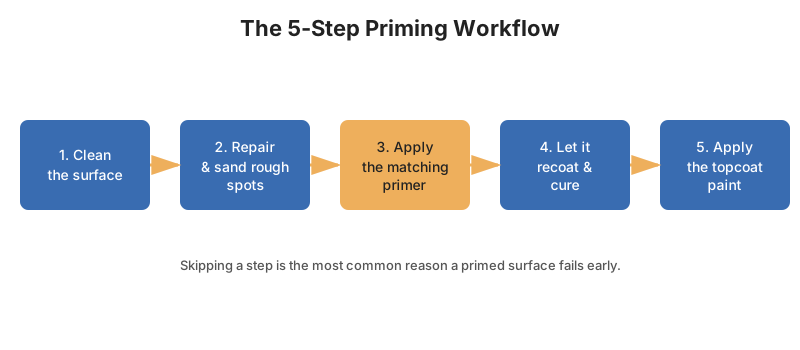
Even the right paint primer fails if surface prep is rushed. A short, repeatable sequence keeps results consistent from job to job.
- Clean the surface of dust, grease, and any loose material.
- Repair cracks and nail holes, then sand rough or glossy spots.
- Apply the paint primer that matches the substrate and the problem being solved.
- Let the primer recoat and cure for the time the manufacturer specifies.
- Apply the topcoat once the primer has fully cured.
A paint shop or job site needs only a small range of paint primers to cover most substrate problems.
Good surface-prep tools matter as much as the primer itself, since sanding and cleaning let any primer bond.
Facilities that need long-term protection on wood or masonry can pair a primer with the right stains and sealers to extend the life of the finish.
Frequently Asked Questions
Do I always need to prime before painting?
Not always. A wall in good condition, already painted with a similar type and color of paint, often needs no primer. New surfaces, stains, and color changes almost always do.
Can I skip primer if the paint can says "paint and primer in one"?
These combination products help adhesion on a previously painted wall in good shape. They do not block heavy stains the way a dedicated paint primer does.
How long should primer dry before painting over it?
It depends on the type. Latex paint primer is often ready in 1 to 4 hours.
Oil-based paint primer typically needs about 4 hours before topcoating, and shellac-base primer can be recoated in as little as 45 minutes, though full cure takes longer.
Does primer color matter?
Yes. Tinting paint primer toward the topcoat color reduces the number of finish coats needed, especially over dark or bold colors.
Is oil-based primer still legal to buy?
Yes. VOC limits under the EPA's AIM Rule cap how much solvent it can contain, pushing many oil-based formulas toward lower-VOC versions.
Conclusion
Paint primer is not an extra step before the real paint goes on. It does most of the hard work, sealing porous drywall and blocking stains that would otherwise bleed through a fresh topcoat.
Matching the primer type to the surface and the problem, whether that is bare drywall, smoke damage, or glossy tile, prevents callbacks and redo jobs later.
Stock a small, well-chosen range of paint primer types rather than one all-purpose can. Follow the five-step workflow and check VOC compliance for the market. That combination keeps a paint job looking right long after the crew has moved on.
Related Posts
What Bathroom Partitions Have to Survive
Pipe Fittings Explained: Types, Materials and How to Choose
Box Stapler Guide: Types, Staple Sizes and How to Choose One