Floor Cleaning Machines: How to Choose the Right Type for Every Facility
By Constantine Zhan · 13 July 2026
A mop and bucket only go so far. Past a few thousand square feet, the right floor cleaning machine decides whether cleaning fits inside a shift or bleeds into overtime.
Facilities teams face seven distinct machine families, not one generic product. Picking the wrong one wastes budget on capacity nobody needs, or leaves floors dirty because the machine cannot cover the space in time. This guide breaks down each type of floor cleaning machine, when walk-behind beats ride-on, and how to calculate the cleaning time a space actually requires.
What Floor Cleaning Machines Do and Why the Right Type Matters
Every floor cleaning machine solves one of three problems: removing dry debris, scrubbing wet soil off hard floors, or lifting soil out of carpet. No single machine does all three well.
Buying the wrong type costs more than a small headache:
- An undersized machine cannot finish before the space reopens to traffic. - That forces overtime or a second shift just to keep pace.
- An oversized ride-on cannot fit through standard doorways or tight aisles. - The purchase sits unused for the spaces that need it most.
- The wrong machine for the floor type damages the finish or leaves it dull. - A burnisher on carpet, or a wet scrubber on unsealed wood, both cause real damage.
How Floor Cleaning Machines Work
Sweepers use rotating brushes and a hopper to lift dry dirt off hard or soft floors. Scrubbers add water and solution, then a squeegee vacuum pulls the dirty water back up in the same pass, on hard floors only.
Burnishers spin a pad at high speed to restore gloss instead of cleaning soil. Vacuums and carpet extractors handle soft flooring, pulling dust or deep-set soil out of carpet fiber.
Why Floor Type and Soil Load Drive the Choice
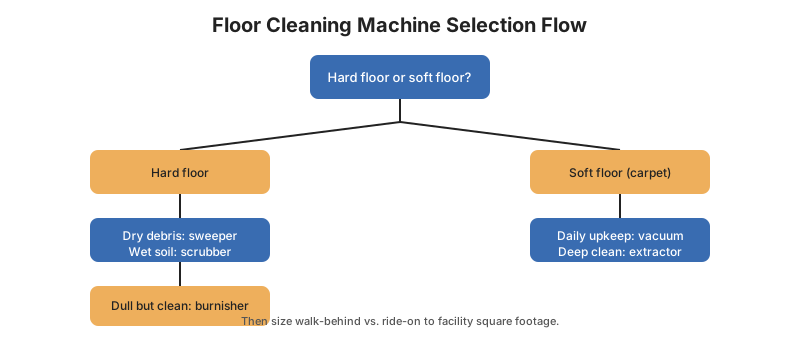
Hard floors and soft floors need different machine families. Soil type narrows the choice further within each family:
- Dry dust or debris calls for a sweeper. - Works on both hard and soft floors.
- Ground-in grime or grease calls for a scrubber. - Hard floors only, since water is involved.
- A dull but already-clean hard floor calls for a burnisher. - Burnishing does not remove soil, only restores shine.
Types of Floor Cleaning Machines and How They Work
Seven machine families cover nearly every facility, each built for a specific soil type and floor surface:
- Sweepers lift dry dirt and debris from hard or soft floors, indoors or outdoors. - Best for daily dust and debris on any floor type.
- Scrubbers apply solution, scrub, and recover water in one pass on hard floors only. - Best for ground-in soil, grease, and grime.
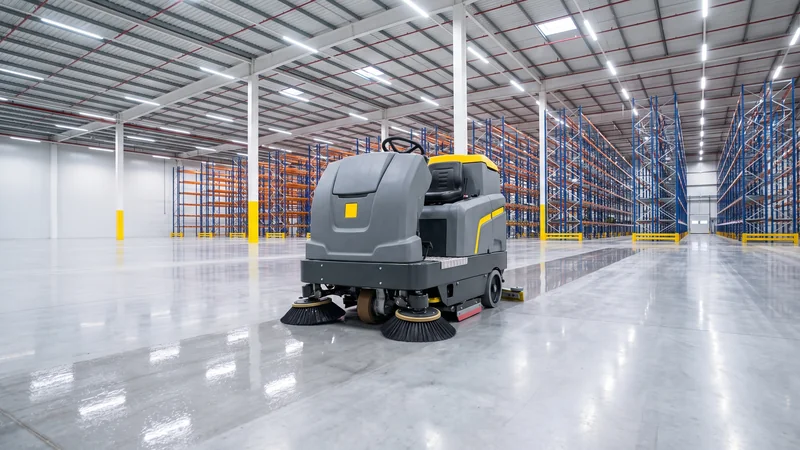
- Sweeper-scrubbers combine both actions in a single ride-on pass. - Best for large facilities with both dust and grime.
- Burnishers spin a pad at high speed to restore gloss on hard-floor finish. - Best for maintaining shine, not for actual soil removal.
- Vacuums remove dust and debris from carpeted surfaces. - Best for daily carpet upkeep in offices and lobbies.
- Carpet extractors deep-clean, remove stains, and dry carpet fiber. - Best for periodic deep cleaning, not daily use.
- Specialty machines handle restroom all-surface cleaning, grouted tile, or wet-surface drying. - Best for a specific problem a standard machine cannot solve.
Sweepers
Sweepers run indoors and outdoors in walk-behind or ride-on styles. Speed matters more than filtration here, since the job is dry debris, not scrubbing.
Scrubbers
Small walk-behind scrubbers fit bathroom stalls and tight retail aisles. Large ride-on units cover tens of thousands of square feet without a refill.
Burnishers
Burnishers exist for shine, not soil removal. Facilities run them on a maintenance schedule separate from daily scrubbing.
Vacuums and Carpet Extractors
Vacuums come in upright, canister, or backpack styles, corded or battery-powered. Carpet extractors go further, pulling embedded soil and stains out of the fiber, which makes them a periodic tool rather than a daily one.
Cost, Coverage, and Best Use Compared
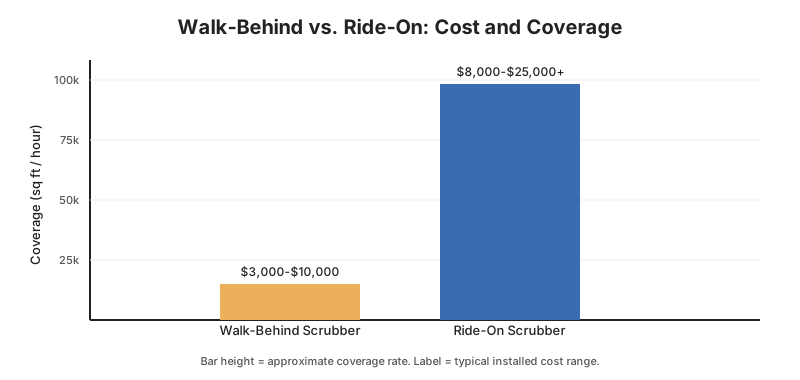
Purchase price and coverage rate vary sharply between the two most common floor cleaning machine styles:
| Factor | Walk-Behind Scrubber | Ride-On Scrubber |
|---|---|---|
| Initial cost | $3,000 to $10,000 | $8,000 to $25,000-plus |
| Coverage rate | Roughly 8,000 to 15,000 sq ft per hour | Up to about 97,000 sq ft per hour |
| Maintenance | Lower | Higher |
| Storage footprint | Compact, fits a closet | Needs a dedicated space |
| Best facility size | Under 50,000 sq ft | 50,000-plus sq ft |
A cheaper walk-behind is not always the better buy. In a large warehouse, labor hours saved by a ride-on can outweigh its higher price within months.
Treat the top coverage figure as a best case, not a daily average. Turns, refills, and layout all slow real-world runs below the published number.
Walk-Behind vs. Ride-On: Matching Machine to Facility Size
Facility size and layout decide which floor cleaning machine wins, more than budget alone. The two profiles below cover most buildings.
Small and Segmented Facilities
Retail stores, clinics, schools, and small warehouses usually run under 50,000 square feet with narrow aisles, doorways, and obstacles:
- Retail stores and clinics need tight turning in narrow aisles.
- Schools and daycares need a machine simple enough for rotating staff.
- Small warehouses often mix open runs with cluttered storage rows.
A walk-behind scrubber fits through those spaces, costs less upfront, and trains a new operator in under an hour.
Large, Open Facilities
Warehouses, distribution centers, airports, and large manufacturing floors favor ride-on scrubbers:
- Open floor plans let a wider cleaning path do more work per pass.
- Continuous daily cleaning rewards a machine that does not need constant refills.
- Trained, dedicated operators make the higher training investment pay off.
Wider cleaning paths and larger tanks mean fewer stops, and one trained operator can cover far more square footage per shift.
The 50,000-Square-Foot Rule of Thumb
Facilities with 50,000 square feet or more of open floor space are strong ride-on candidates. Below that line, a walk-behind usually covers the space within a normal shift, without the added cost and training a ride-on needs.
Calculating Cleaning Time and Staffing Needs
Choosing a floor cleaning machine type is only half the decision. Facilities also need to know how long a space actually takes to clean.
Using the ISSA Production-Rate Formula
The International Sanitary Supply Association, the cleaning industry's trade association, publishes production rates for exactly this purpose. Cleaning time in minutes equals the square footage divided by the production rate per hour, multiplied by 60.
- Example: mopping 1,000 square feet with a 14-inch flat mop at a published rate of 5,355 square feet per hour works out to about 11 minutes. - The same formula applies to any machine once its rated production rate is known.
- A faster machine changes the math directly. Doubling the production rate roughly halves the labor minutes for the same floor area. - That is the real payoff behind a ride-on's higher price tag.
Bundled Tasks and Fixture Counts
Some tasks bundle multiple actions into one production rate instead of tracking each on its own. Spot-cleaning 2,000 square feet of trash and light dusting at a published rate works out to roughly 7 minutes.
Restroom cleaning often uses a fixture count instead of square footage. Ten fixtures at 3 minutes each equals 30 minutes, regardless of the room's total floor area.
Common Floor Cleaning Machine Mistakes to Avoid
Most floor cleaning machine regrets trace back to a mismatch between the machine and the facility, not a bad product:
- Buying a ride-on for a facility under 50,000 square feet with narrow aisles. - Fix: measure aisle width and total open area before shopping.
- Running a burnisher expecting it to remove soil, not just restore shine. - Fix: scrub first, then burnish on a separate schedule.
- Using a wet scrubber on carpet or an unsealed wood floor. - Fix: match the machine family to the floor surface, every time.
- Sizing a machine to average traffic instead of peak soil load. - Fix: plan for the dirtiest day, not the cleanest one.
- Skipping the production-rate math before committing to a purchase. - Fix: run the ISSA formula against the actual floor plan first.
Frequently Asked Questions
What is the difference between a floor scrubber and a floor sweeper?
A sweeper removes dry dirt and debris with rotating brushes and no water. A scrubber applies solution, scrubs, and recovers dirty water in one pass, and works only on hard floors.
When does a facility need a ride-on scrubber instead of a walk-behind?
Facilities with roughly 50,000 square feet or more of open floor space, and wide enough aisles, usually get more value from a ride-on. The higher coverage rate pays back the added cost fastest at that scale.
Can a burnisher replace regular scrubbing?
No. A burnisher restores gloss on an already-clean hard floor. It does not remove soil, so scrubbing still has to happen on its own schedule.
How do facilities calculate how long floor cleaning will take?
The ISSA production-rate formula divides the square footage by the rated production rate per hour, then multiplies by 60. That converts any job into a minutes figure for staffing.
Do carpet extractors replace daily vacuuming?
No. Vacuums handle daily dust and debris. Carpet extractors are a periodic deep-clean tool for embedded soil and stains, not a daily-use machine.
Conclusion
Choosing among floor cleaning machines comes down to three questions: what soil are you removing, what floor surface are you cleaning, and how much square footage needs covering in a shift.
Sweepers and scrubbers handle daily dry and wet soil. Burnishers maintain shine on a separate schedule. Walk-behinds win under 50,000 square feet, and ride-ons win above it once labor savings are factored in.
A few habits keep the decision simple:
- Match machine family to floor surface and soil type first, not budget.
- Run the ISSA production-rate formula against the real floor plan before buying.
- Reserve carpet extractors and specialty machines for periodic deep cleans, not daily routines.
Get the match right once, and floor cleaning machines turn a recurring staffing headache into a predictable line item. The next purchase becomes a lookup, not a debate.
Related categories: Floor Scrubbers, Polishers & Burnishers · Vacuum Cleaners & Accessories · Carpet Extractors & Accessories
Related Posts