Cat6 vs Cat5e: How to Choose the Right Network Cable
By Peter Groothedde · 8 August 2026
Every structured cabling project runs into the same argument. Cat6 vs Cat5e looks like a minor purchasing choice, yet it sets the performance ceiling of a building for years.
In a Cat6 vs Cat5e comparison the cable itself is cheap, but the labour to pull it a second time is not.
Both categories end in the same RJ45 connector. Both are rated to the same 100 metre channel. The real gap sits in the frequency each one is certified to carry and in how tightly it controls crosstalk.
This guide splits the Cat6 vs Cat5e decision into the factors that actually move a bill of materials. Every figure below traces to the published category standards rather than to packaging claims.
Cat6 vs Cat5e: The Core Difference
Bandwidth Is the Headline Number
Cat5e is rated to 100 MHz. Cat6 is rated to 250 MHz, and that extra headroom is what carries faster signalling.
Nothing else in the Cat6 vs Cat5e debate follows from one number this cleanly.
Cat6 vs Cat5e Speed in Plain Terms
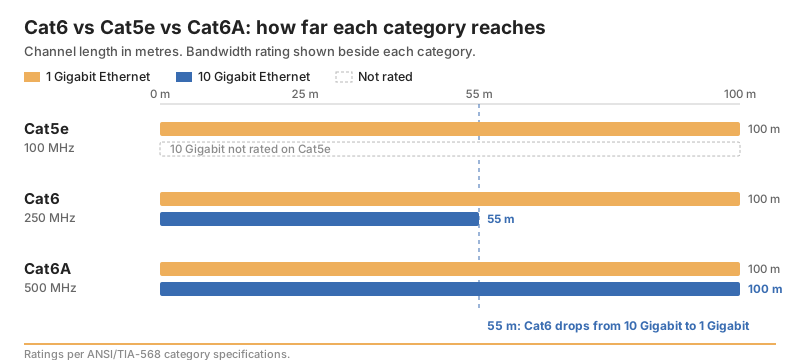
Cat5e carries Gigabit Ethernet across a full 100 metre channel. Cat6 carries the same Gigabit link and adds 10 Gigabit support over shorter distances.
- Cat5e: 1 Gigabit Ethernet to 100 m, and no rated 10 Gigabit speed.
- Cat6: 1 Gigabit to 100 m, plus 10 Gigabit on runs up to 55 m.
- Cat6a: 10 Gigabit across the full 100 m channel.
Crosstalk Is the Hidden Story
Twisted pairs cancel their own magnetic fields. Tighter twists and wider spacing cancel more of that noise, which is what lets a higher category run at a higher frequency. Cat6 adds a plastic spline down the centre of the cable to hold its four pairs apart.
Cat5e earns its Gigabit rating through tighter near-end crosstalk limits than plain Cat5. Both share the same 100 MHz bandwidth, so crosstalk control is the genuine difference between those two.
| Rating | Cat5e | Cat6 | Cat6a |
|---|---|---|---|
| Rated bandwidth | 100 MHz | 250 MHz | 500 MHz |
| Gigabit Ethernet | 100 m | 100 m | 100 m |
| 10GBASE-T | Not rated | 55 m | 100 m |
| Multi-Gig (2.5GBASE-T) | 100 m | 100 m | 100 m |
| Multi-Gig (5GBASE-T) | Not rated | 100 m | 100 m |
| Pair separator | None | Central spline | Central spline |
| Standards body | ANSI/TIA-568.2-D | ANSI/TIA-568.2-D | ANSI/TIA-568.2-D |
Speed and Distance: Where Cat6 vs Cat5e Diverges
The 55 Metre Rule
Cat6 supports 10 Gigabit Ethernet up to 55 metres. Past that length, alien crosstalk from neighbouring cables overwhelms the signal and the link falls back to 1 Gigabit.
A 70 metre Cat6 run between two 10 Gigabit switches will negotiate at Gigabit speed. Installers meet this on site far more often than they expect.
When Cat6 vs Cat5e Becomes Cat6a
Cat6a doubles the rated bandwidth again and holds 10 Gigabit across the full 100 metres.
Plenty of buyers open with a Cat6 vs Cat5e question and close the order with Cat6a. That is the right call for data halls, riser links and floors with long horizontal runs. The Cat6a cable range covers both shielded and unshielded builds.
Multi-Gig Rescues Old Cabling
Multi-Gig Ethernet was written to lift the speed of cabling already in the walls. It raises clean Cat5e above Gigabit and pushes Cat6 higher still, both at the full channel length.
- Existing Cat5e: carries 2.5GBASE-T to 100 m without a rewire.
- Existing Cat6: carries 5GBASE-T to 100 m without a rewire.
- Either category: needs a Multi-Gig switch port at each end.
Cat6 vs Cat5e: Construction, Shielding and Size
Diameter and Conduit Fill
Physically, Cat6 vs Cat5e is a question of diameter and stiffness.
That matters long before anyone tests a link. A conduit sized for Cat5e holds noticeably fewer Cat6 runs, so tray and basket fill must be worked out again.
Shielded or Unshielded
Most commercial floors run unshielded twisted pair and have no reason to change. Shielding earns its cost near lift motors, welding bays, large drives and similar heavy plant. A shield only works when it is bonded to earth at both ends, through shielded jacks and shielded patch panels.
- Unshielded (U/UTP): the default for offices, schools and retail. - Cheapest to buy and fastest to terminate. - No earthing continuity to maintain later.
- Foiled (F/UTP): an overall foil around all four pairs. - Common for Cat6a in moderate interference.
- Shielded and foiled (S/FTP): braid plus foil on each pair. - Reserved for industrial routes and dense data halls.
Termination Matters
An untwisted pair at the connector is the most common reason a certified link fails. The cabling standard allows barely 13 mm of untwist at the plug or jack, and Cat6 is less forgiving than Cat5e.
Power over Ethernet Changes the Cat6 vs Cat5e Maths
Heat Rises With Wattage
Power over Ethernet pushes current down the same pairs that carry data. That current becomes heat, and a bundled cable in a full conduit sheds heat slowly.
A hot bundle raises resistance, which raises loss, which shortens the usable link.
Conductor Gauge Matters
Thicker copper carries the same power with less heating. Cat6a builds commonly use a heavier conductor than budget Cat5e, which is why they suit dense access point and camera roll-outs.
Access points, pan-tilt-zoom cameras and desk phones all draw more power than the first generation did. The higher power classes were written to run over Cat5e and better. Cable choice still decides how warm the bundle gets.
- 802.3af: 15.4 W at the source, for phones and basic cameras.
- 802.3at: 30 W at the source, for enterprise access points.
- 802.3bt Type 3: 60 W at the source, for high-power radios and signage. - Bundle size and ambient temperature start to matter here.
- 802.3bt Type 4: 100 W at the source, for displays and lighting. - Heavier conductors are strongly preferred at this level.
Cat6 vs Cat5e: Cost and Installation Reality
Material Cost Is the Small Part
Cable is rarely the largest line on a structured cabling invoice.
Labour, containment, patch panels, outlets and testing usually dominate the total. Measured against that total, the Cat6 vs Cat5e price gap is a modest percentage.
Testing the Finished Link
Every category has to be tested with a field tester, not merely checked for continuity. A continuity tester proves the pins are wired correctly and nothing more.
A Cat6 test measures performance all the way to 250 MHz, so it needs a tester rated for that band. An older tester limited to 100 MHz can only pass Cat5e. Hiring the wrong one is a common and avoidable project delay.
- Channel limit: 90 m of horizontal cable plus 10 m of patch cords.
- Bend radius: never tighter than four times the cable diameter.
- Separation: keep copper data runs clear of power cabling, crossing at right angles.
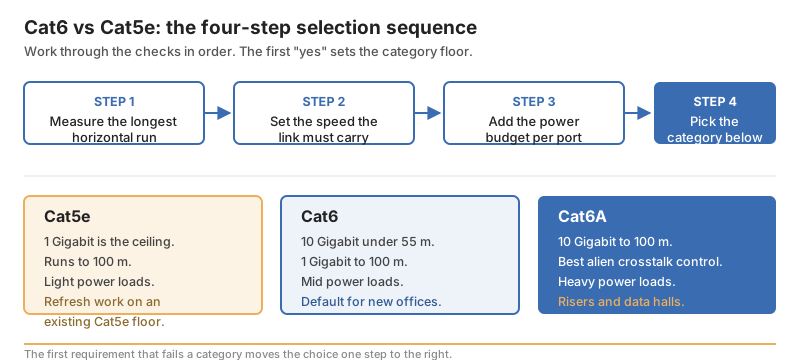
How to Choose Between Cat6 vs Cat5e
Choose Cat5e When
Cat5e still wins the Cat6 vs Cat5e call in narrow and well-defined situations.
- Short refresh work: replacing a handful of failed outlets on an existing Cat5e floor.
- Gigabit ceilings: sites where the internet feed and switches will stay at 1 Gigabit.
- Tight containment: routes where a fatter cable will not physically fit.
Choose Cat6 When
In the Cat6 vs Cat5e decision, Cat6 is the default for most new commercial work today. It delivers Gigabit everywhere, 10 Gigabit on short links, and better behaviour under heavy power loads.
- New office fit-outs: the Cat6 cable range suits typical floor plates.
- Access point density: headroom for the next generation of radios.
- Short 10 Gigabit hops: switch to server links inside one comms room.
Choose Cat6a When
Skip the Cat6 vs Cat5e question when 10 Gigabit has to reach the far end of a long run.
- Long horizontal runs: anything beyond 55 m that needs 10 Gigabit.
- Data halls and risers: where alien crosstalk is worst.
- High-wattage power budgets: dense deployments drawing the upper power classes.
Frequently Asked Questions About Cat6 vs Cat5e
Is Cat6 backward compatible with Cat5e?
Yes. Both use the same RJ45 interface, and a mixed link simply runs at the speed of its weakest element.
Does Cat6 make home broadband faster?
Only when the broadband service is already faster than the cable it runs over.
Can I mix Cat6 vs Cat5e in one building?
Mixing is common and fine during a phased upgrade. Label every run clearly, because an unlabelled mixed floor turns every future fault into guesswork.
Do I need shielded cable?
Most commercial floors do not. Choose shielded cable where heavy machinery sits close to the route, and only where the earthing can be done properly.
How long should structured cabling last?
Plan for the cabling to outlive several generations of switches and access points.
Conclusion
The Cat6 vs Cat5e choice comes down to one honest question about distance and speed.
If every run is short and Gigabit is the ceiling, Cat5e still does the job. If the building has to carry 10 Gigabit anywhere at all, Cat6 is the floor and Cat6a is the safer answer.
Buy the cable for the building, not for this year's switch. Recabling costs many times what the extra category costs today. Compare the Cat5e cable range against the higher categories before the next order goes out.
Related Posts
Caster Wheels: How to Specify Load, Material and Brakes

Anti-Seize Guide: Types, Torque Effects and Where Not to Use It
Fluorescent Light Ballast Guide: Types, Faults and LED Retrofits