
Showing 0 products
Frequently Asked Questions
What is a Miniature Circuit Breaker (MCB)?
A Miniature Circuit Breaker (MCB) is an electromechanical device designed to protect electrical circuits from overloads and short circuits. Unlike traditional fuses, which need to be replaced after they blow, MCBs can be reset after tripping, making them more convenient and efficient for circuit protection.
MCBs operate by automatically disconnecting the electrical circuit when they detect a fault condition, such as excessive current flow. They are typically rated for specific current levels, commonly ranging from 0.5 A to 125 A, and are designed to trip at predetermined thresholds. MCBs utilize two primary mechanisms for tripping: thermal and magnetic. The thermal mechanism responds to overload conditions by using a bimetallic strip that bends with heat, while the magnetic mechanism reacts to short circuits by using an electromagnet that trips the circuit almost instantaneously.
MCBs are available in various types, including Type B (for residential applications), Type C (for commercial and industrial applications), and Type D (for high inrush current applications). They are also categorized by their breaking capacity, which indicates the maximum fault current they can safely interrupt.
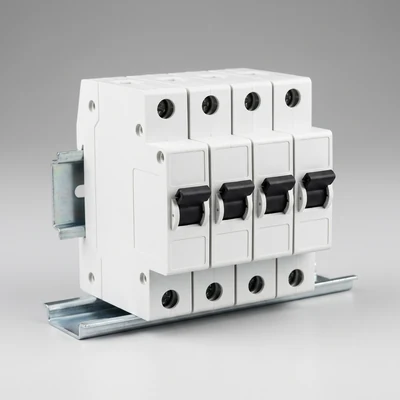
In addition to their protective functions, MCBs contribute to the overall safety and reliability of electrical systems. They are compact, easy to install, and can be mounted on standard DIN rails, making them suitable for both new installations and retrofitting existing systems. Overall, MCBs are essential components in modern electrical distribution systems, providing effective protection against electrical hazards while enhancing user convenience.
How does an MCB work?
A Miniature Circuit Breaker (MCB) is an electromechanical device designed to protect electrical circuits from overloads and short circuits. It operates by automatically disconnecting the circuit when it detects a fault condition, thereby preventing damage to the wiring and connected devices.
The MCB consists of two main components: a bimetallic strip and an electromagnetic mechanism. Under normal operating conditions, current flows through the MCB without interruption. However, when the current exceeds the rated capacity due to an overload, the bimetallic strip heats up and bends. This bending action triggers a mechanical latch that opens the circuit, stopping the flow of electricity.
In the case of a short circuit, the current surge is much higher and occurs almost instantaneously. The electromagnetic mechanism within the MCB responds to this rapid increase in current by generating a magnetic field strong enough to pull a lever that opens the circuit immediately. This quick response is crucial for preventing damage to the electrical system.
MCBs are rated for specific current levels and are available in various types, such as Type B, C, and D, which correspond to different trip characteristics based on the nature of the load. They are resettable, meaning once the fault is cleared, the MCB can be manually reset to restore power.
Overall, MCBs enhance safety in electrical installations by providing reliable protection against overloads and short circuits, ensuring that electrical systems operate safely and efficiently.
What are the advantages of using MCBs over fuses?
Miniature Circuit Breakers (MCBs) offer several advantages over traditional fuses in electrical systems.
Firstly, MCBs provide automatic reset functionality. When an overload or short circuit occurs, MCBs trip and disconnect the circuit, but they can be easily reset by switching them back on. In contrast, fuses must be replaced after they blow, which can be inconvenient and time-consuming.
Secondly, MCBs offer better protection. They can detect both overloads and short circuits more effectively, providing a quicker response time. This reduces the risk of damage to electrical appliances and wiring, enhancing overall safety.
Additionally, MCBs are more reliable and have a longer lifespan compared to fuses. Fuses can degrade over time and may not provide consistent protection, while MCBs maintain their performance over many cycles of operation.
MCBs also allow for selective tripping, meaning that only the affected circuit will be disconnected in the event of a fault. This minimizes disruption to the entire electrical system, unlike fuses, which can lead to complete power loss in a larger area.
Furthermore, MCBs are easier to install and maintain. They are compact and can be mounted on standard DIN rails, making them suitable for modern electrical panels. Their design also allows for easy identification of the tripped circuit, facilitating quicker troubleshooting.
Lastly, MCBs are more environmentally friendly. Since they do not require replacement like fuses, they generate less waste and reduce the need for additional materials.
In summary, MCBs provide automatic reset, better protection, reliability, selective tripping, ease of installation, and environmental benefits, making them a superior choice over fuses in many applications.
How do you reset an MCB?
To reset a Miniature Circuit Breaker (MCB), follow these steps:
Identify the Issue: Before resetting, determine why the MCB tripped. Common reasons include overload, short circuit, or a fault in the connected circuit. Inspect appliances and wiring for any visible issues.
Turn Off Appliances: Ensure that all appliances connected to the circuit are turned off. This prevents a sudden surge when the MCB is reset.
Locate the MCB: Find the MCB in your electrical panel. It will typically be a switch that is in the 'off' position or in a tripped state (between 'on' and 'off').
Reset the MCB: Firmly push the MCB switch to the 'off' position first. Wait a moment, then push it back to the 'on' position. You should hear a click, indicating that it has reset.
Check for Functionality: After resetting, turn on the appliances one by one to ensure the circuit is functioning properly. Monitor for any signs of tripping again.
Seek Professional Help: If the MCB trips again immediately or frequently, it may indicate a more serious electrical issue. In such cases, consult a qualified electrician for further diagnosis and repair.
Always prioritize safety when dealing with electrical systems. If unsure, it’s best to seek professional assistance.
What are the different types of MCBs?
Miniature Circuit Breakers (MCBs) are essential components in electrical systems, designed to protect circuits from overloads and short circuits. There are several types of MCBs, categorized based on their characteristics and applications:
Type B MCBs: These are designed to trip between 3 to 5 times the rated current. They are suitable for residential and light commercial applications where the load is primarily resistive, such as lighting and heating.
Type C MCBs: These trip between 5 to 10 times the rated current and are ideal for circuits with moderate inrush currents, such as motors and transformers. They are commonly used in commercial and industrial settings.
Type D MCBs: These trip between 10 to 20 times the rated current, making them suitable for high inrush current applications, such as large motors and inductive loads. They are typically used in industrial environments.
Type K MCBs: These are designed for circuits with high inrush currents, like transformers and capacitors, and trip between 8 to 12 times the rated current. They are less common but useful in specific applications.
Type Z MCBs: These trip at lower levels, between 2 to 3 times the rated current, and are used for sensitive electronic equipment that requires protection from even minor overloads.
Dual Function MCBs: Some MCBs combine the functions of overcurrent protection and earth leakage protection, providing enhanced safety in circuits where ground faults are a concern.
Each type of MCB serves a specific purpose, ensuring that electrical systems operate safely and efficiently while minimizing the risk of damage from electrical faults.
How do you choose the right MCB for your application?
Choosing the right Miniature Circuit Breaker (MCB) for your application involves several key considerations:
Current Rating: Determine the total load current of the circuit. The MCB should have a rating slightly higher than the maximum load to prevent nuisance tripping. Common ratings range from 6A to 63A.
Type of Load: Identify the type of load (resistive, inductive, or capacitive). For inductive loads like motors, consider using Type C or D MCBs, which can handle higher inrush currents.
Tripping Characteristics: MCBs come in different types based on their tripping characteristics:
- Type B: Suitable for residential applications with low inrush currents.
- Type C: Ideal for commercial applications with moderate inrush currents.
- Type D: Used for heavy industrial applications with high inrush currents.
Number of Poles: Choose the number of poles based on the circuit configuration. Single-phase circuits require single or double-pole MCBs, while three-phase circuits need three or four-pole MCBs.
Voltage Rating: Ensure the MCB’s voltage rating matches or exceeds the system voltage. Common ratings include 230V for single-phase and 400V for three-phase systems.
Breaking Capacity: Select an MCB with an appropriate breaking capacity to handle potential fault currents. This is crucial for safety and reliability.
Standards and Certifications: Ensure the MCB complies with relevant standards (e.g., IEC, UL) for safety and performance.
Environmental Conditions: Consider the installation environment (temperature, humidity, dust) and choose an MCB rated for those conditions.
By carefully evaluating these factors, you can select the right MCB that ensures safety, reliability, and efficiency for your specific application.
What are the common causes of MCB tripping?
Common causes of MCB (Miniature Circuit Breaker) tripping include:
Overload: This occurs when the electrical load exceeds the rated capacity of the MCB. Appliances drawing more current than the MCB can handle will cause it to trip to prevent overheating and potential fire hazards.
Short Circuit: A short circuit happens when there is a direct connection between the live and neutral wires, leading to a sudden surge of current. This can be caused by damaged insulation, faulty wiring, or malfunctioning appliances, prompting the MCB to trip immediately.
Earth Fault: An earth fault occurs when there is an unintended path between the live conductor and the earth. This can happen due to insulation failure or moisture ingress. The MCB trips to protect against electric shock and equipment damage.
Faulty Appliances: Malfunctioning or damaged appliances can draw excessive current or create short circuits, leading to MCB tripping. Regular maintenance and inspection of appliances can help mitigate this issue.
Incorrect MCB Rating: Using an MCB with an inappropriate rating for the circuit can lead to frequent tripping. An MCB rated too low for the load will trip under normal operating conditions.
Temperature Fluctuations: High ambient temperatures can affect the performance of the MCB, causing it to trip under normal load conditions.
Loose Connections: Loose or corroded connections can increase resistance, leading to overheating and tripping of the MCB.
Aging Equipment: Over time, electrical components can degrade, leading to increased risk of faults and tripping.
Understanding these causes can help in troubleshooting and maintaining electrical systems effectively.