
Showing 0 products
Frequently Asked Questions
PSA or membrane - which suits the duty?
By the purity required first, then by the duty pattern.
PSA reaches substantially higher purities and is the only option once the requirement climbs towards the very high figures used in electronics, laser cutting and some chemical processes. It is more complex - two vessels, switching valves, a cycle to control - and it takes a period after startup to reach specification.
Membrane systems are simple, compact, silent and have no moving parts, which makes them attractive for remote installations, for skid-mounted and mobile use, and for duty that starts and stops frequently - a membrane comes on specification almost immediately, where a PSA machine needs to stabilise.
So: high purity, continuous duty, large volumes point to PSA. Moderate purity, intermittent duty, simplicity and low maintenance point to membrane.
Cost crosses over depending on volume and purity, so both should be quoted for a real duty rather than assumed.
How does purity affect the size of machine needed?
Sharply - and not proportionally, which is why over-specifying purity is so expensive.
Higher purity means rejecting more of the feed. To produce very pure nitrogen the machine must take a smaller fraction of the air passing through it, venting the rest. So as the purity setting rises, the flow the same machine delivers falls, and the compressed air consumed per unit of nitrogen produced climbs steeply.
The effect compounds: a higher purity requirement means a larger generator AND a larger compressor to feed it AND more electricity for the whole life of the installation.
The practical consequence is that the required purity should be established from the process, not chosen with a safety margin for comfort. Moving a food packaging application from a genuinely required moderate purity to a specified high one can multiply the installed and running cost several times over for no process benefit at all.
What happens if demand exceeds the generator's output?
Purity falls - the machine does not simply run out, which is what makes the failure mode insidious.
A generator produces at a designed rate. If product is drawn off faster than that, the machine cannot increase production; instead the gas leaving it has spent less time being separated, and the purity drops.
So an overloaded nitrogen system does not announce itself by stopping. It quietly delivers gas that is out of specification, and unless purity is being monitored continuously, the first indication may be a quality problem in the process - oxidised product, a bad weld, a failed batch.
That is why continuous purity monitoring with an alarm, and an interlock where the process demands it, are standard rather than optional. It is also why buffer storage is sized from the actual demand profile including peaks, not from the average.
When demand grows over time, re-check the sizing rather than assuming the existing machine still covers it.
What is the payback compared with cylinders?
Usually short where consumption is regular, but it must be calculated on the delivered total rather than the gas price.
The honest comparison includes cylinder or bulk gas cost, rental or facility charges, delivery charges, handling labour, storage space, and the cost of the occasional run-out. Against that sits the generator capital, its installation including any air treatment upgrade, the electricity for the compressed air it consumes, and maintenance.
The compressed air is the item most often omitted, and it is not small - the air consumed per unit of nitrogen rises steeply with purity, so a high-purity installation has a materially higher running cost than a moderate one.
With a full calculation, sites with substantial steady consumption typically see payback measured in a small number of years and often considerably less. Sites with low or very intermittent use often find delivered gas remains cheaper, because the capital sits idle.
How pure is 'high purity' in practice, and how is it stated?
Purity is quoted either as a percentage of nitrogen or as residual oxygen content, and the second is more useful at the high end.
At moderate purities the percentage figure is convenient. At high purities it becomes clumsy - the difference between two figures with several decimal places is hard to read - so the specification is usually expressed as parts per million of residual oxygen instead, which states directly what the process actually cares about.
When comparing quotations, make sure both are quoting the same measure at the same flow, because a machine's purity and its flow are linked. A headline purity figure quoted at a flow far below your requirement is not a comparable number.
Also confirm whether the figure is guaranteed at the outlet under all rated conditions, including at the extremes of inlet air temperature - performance falls off as the feed air gets warmer, which matters in a hot plant room or in summer.
What does a nitrogen generator installation include?
More than the generator: the air treatment ahead of it, receivers on both sides, and monitoring.
Upstream, the feed air must meet the manufacturer's specification for oil, water and particulate - normally coalescing filters, a dryer and often carbon filtration. If the site's air does not already meet it, that upgrade is part of the project.
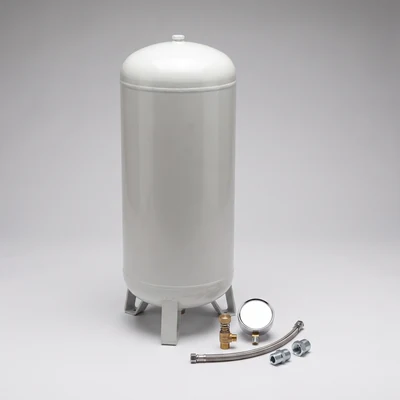
An inlet receiver smooths the generator's cyclic air demand so it does not disturb the plant air system. A product receiver on the outlet buffers the mismatch between steady production and bursty consumption, and is what allows the system to meet peaks without losing purity.
Monitoring means a purity analyser with an alarm and, commonly, an automatic vent that dumps off-specification gas rather than letting it reach the process during startup or upset.
Budget for the whole train. The generator price alone routinely understates the installed cost by a substantial margin.
Can a nitrogen generator supply more than one process?
Yes, and that is common - but the purity must satisfy the most demanding user, which can make it uneconomic.
A single generator feeding a distribution network is simpler and cheaper than several small ones, and it consolidates the buffer storage. Where all the users need broadly similar purity, that is clearly the right arrangement.
The difficulty arises when one user needs much higher purity than the others. Because purity is set at the generator, everyone gets the highest specification, and the site pays the steep flow and air-consumption penalty of that purity for gas that is mostly going to applications which did not need it.
In that situation two machines - or one generator for the bulk requirement plus cylinders for the small high-purity demand - is frequently cheaper.
Map the users and their genuine purity requirements before sizing. It is the analysis that most often changes the answer.