Door Stopper Guide: Types, Placement and When a Door Must Close
By Mohamed Azam · 14 September 2026
A door stopper is one of the least expensive components of a door. Yet it is also one of the easiest to get wrong.
Install the wrong type and the handle still damages the wall, and a wedge under the wrong door can break fire safety rules.
This guide compares the main door stopper types, shows where to install each one and explains when a door must never be held open.
What a Door Stopper Does
A door stopper controls how far a hinged door swings, protecting the surrounding walls, trim, furniture and fixtures.
Stop, Limit or Hold
- Stop the door just before the handle reaches a wall or another surface.
- Limit the opening angle so that the door never swings further than you want.
- Hold the door open in one position until someone deliberately releases it.
Door Stop or Door Holder?
Suppliers often use both names for the same product. A stop only protects surfaces, while a holder also keeps the door open, which matters most on fire doors.
The Five Main Door Stopper Types
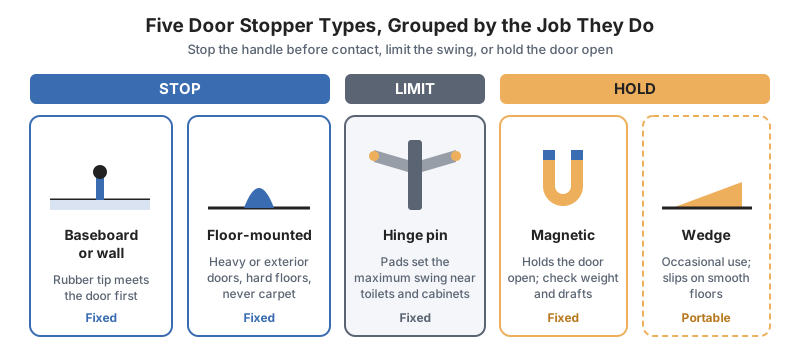
Hardware suppliers group door stoppers into five common types, and the table below sums up what each one is good at.
| Type | Best for | Holds door open | Fitting |
|---|---|---|---|
| Baseboard or wall-mounted | Protecting walls from handle impact | No | Fixed |
| Floor-mounted | A fixed stop point on hard floors | No | Fixed |
| Hinge pin | Limiting how far the door opens | No | Fixed |
| Magnetic | Keeping a door open | Yes | Fixed |
| Wedge | Occasional, no-drill use | Sometimes | Portable |
Baseboard and Wall-Mounted Stops
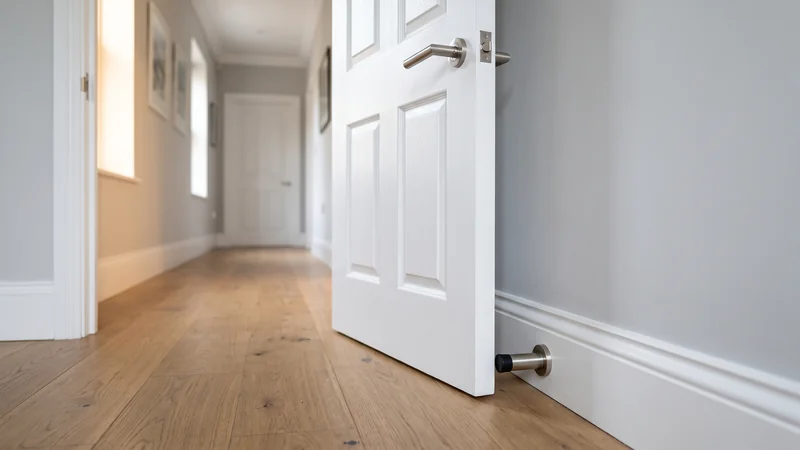
A baseboard door stopper screws into the skirting at the point where the handle would otherwise strike the wall. Suppliers sell two main styles:
- Spring stops are inexpensive and quick to install on most interior doors.
- Solid stops look sleeker and suit heavier solid-core doors. - Where there is no baseboard, a wall bumper mounted at handle height does the same job. - Wall bumpers are common in commercial spaces, where skirting is often missing.
Floor-Mounted Stops
A floor-mounted door stopper sits in the swing path of the door. It suits heavy or exterior doors that do not open against a wall.
- Good floors include wood and concrete, which hold an anchor securely.
- Tile and stone can work with the right drill bit. - Suppliers advise against fitting a floor stop on carpet, because it will not hold firmly.
Hinge Pin Stops
A hinge pin door stopper slides onto a hinge pin and uses adjustable pads to set the maximum swing. It fits doors near toilets, vanities, counters and cabinets, where there is no wall to stop against. Light-duty versions suit hollow-core doors, whereas heavy-duty versions are designed for solid-core and exterior doors.
Magnetic Holders
A magnetic door stopper uses a magnet to keep the door open. That helps when you want ventilation or easy movement between rooms.
- Check the door weight before buying, because the magnet must suit the door's weight.
- Watch for drafts, since strong airflow can pull a door away from the magnet.
Wedges
A wedge slides underneath the door and holds it using friction. Because it requires no installation, it suits occasional use. However, it slips on smooth floors and struggles in busy doorways.
How to Choose the Right Door Stopper
Start With the Job
- When the door must stay open, choose a magnetic holder.
- When the handle would hit a wall, choose a baseboard or wall-mounted stop.
- When the door swings towards a fixture, choose a hinge pin stop.
- When you need something portable, choose a wedge.
Check the Floor and Wall
Check what the door stopper will fix into. A wall stop requires a stud or appropriate drywall anchors, while a floor stop on tile or concrete needs masonry bits and anchors.
Match the Duty to the Door
Heavier doors and high-traffic doorways perform better with permanently fixed types.
- Hollow-core interior doors suit spring stops or light-duty hinge pin stops.
- Solid-core and exterior doors need solid or heavy-duty models. - Busy corridors should never rely on a portable wedge. - High-traffic doorways benefit from a fixed floor or wall stop.
Where to Place a Door Stopper
Find the Impact Point
Open the door slowly and mark where the handle first meets the wall. That mark is where your door stopper should do its work.
For a baseboard stop, angle it so the rubber tip meets the door before the handle does.
Allow a Stopping Distance
Suppliers recommend that the door should stop roughly 50 to 100 millimetres, or about two to four inches, before it reaches the surface. Less clearance risks damage, while additional clearance wastes usable opening width.
Fix It Firmly
- Mark the impact point while opening the door slowly.
- Choose the mounting surface, whether baseboard, wall or floor.
- Check the stopping distance before you drill anything.
- Drill with the correct bit for wood, drywall, tile or concrete.
- Fix the stop with the supplied screws or suitable anchors.
- Test the swing and adjust the rubber tip or pads.
For a hinge pin stop, remove one hinge pin, usually the top one, then slide the stop onto the pin below its cap, tap the pin back in and adjust the pads.

Door Stoppers on Fire Doors
Why Wedges Are Banned
The London Fire Brigade warns that a fire door only works when it is closed. It calls a fire door completely useless if it is wedged open or cannot close fully.
- Never hold a fire door open with a wedge, a chair or any other object.
- Never drill into a fire door or cut it to fit extra hardware.
- Report any fire door that sticks, drags or will not latch properly to the building owner.
Approved Hold-Open Devices
If a fire door has to stay open for daily traffic, install an approved automatic device instead of a standard door stopper. Common options include:
- Electromagnetic holders wired to the fire alarm, which release the door when the alarm activates.
- Closer-holder units that combine the door closer and the hold-open function in one device. - Installation usually needs approval from the local authority having jurisdiction. - The device must release the door if the power fails.
NFPA 101, the Life Safety Code, requires these devices to release on smoke detection and on loss of power, and to allow manual release. The International Building Code adds that smoke-activated doors must begin closing within 10 seconds of detection.
Doors That Are Not Fire Doors
Ordinary doors fitted with a closer can be held open in other ways. A delayed-action closer keeps the door open for a set time before it starts closing. A hold-open arm, by contrast, keeps it open until someone deliberately pulls it shut.
Common Door Stopper Mistakes
| Problem | Likely cause | Fix |
|---|---|---|
| Wedge slides away | Smooth floor | Fit a fixed door stopper |
| Handle still hits the wall | Too little stopping distance | Re-check the stopping distance |
| Magnet will not hold | Heavy door or strong draft | Check door weight and airflow |
| Wall or trim is marked | Hard contact tip | Use a soft rubber tip |
| Door sags or drifts | Hinge or alignment fault | Repair the hinges |
A door stopper will never fix a sagging door, so treat hinge and alignment problems as a separate repair.
Frequently Asked Questions About Door Stoppers
Which door stopper suits a bathroom door?
A hinge pin stop usually works best. It limits the swing before the door hits a toilet, vanity or cabinet.
Can I fit a floor stop on carpet?
A floor stop is unsuitable for carpet, because it needs a solid surface to anchor into. Use a baseboard or hinge pin stop instead.
What is the best door stopper for holding a door open?
A magnetic holder keeps an ordinary door open, but a fire door needs an approved automatic hold-open device.
Are wedges safe to use?
They suit light, occasional use on doors that are not fire doors, although they are unreliable on smooth floors and in busy doorways.
How far from the wall should a door stop?
Aim for approximately two to four inches of clearance before the handle reaches the surface.
Conclusion: Choose the Door Stopper for the Job
The right door stopper depends on whether you need to stop, limit or hold the door. Match the type to the door's weight and the surface behind it, then place it a little before the impact point.
Leave fire doors to approved hold-open devices. Never wedge them open, whatever the circumstances. Browse door stops and holders, door closers and operators and door knob wall guards to find the right door stopper for every opening.