Tap and Die Set: How to Choose the Right Type for Every Job
By Dan Dormani · 20 July 2026
Every machinist strips a bolt hole eventually. A tap and die set is what saves the part instead of the trash bin, and a good one earns its spot in the toolbox fast.
A tap cuts internal threads inside a hole, a die cuts external threads on a rod, bolt, or stud, and a matched tap and die set keeps both jobs covered. Picking the right tap and die set comes down to three questions.
- Chamfer style: does the hole need a starter tap or a bottoming tap.
- Material: what are you cutting threads into.
- Fit class: how tight does the finished thread need to be.
A good tap and die set makes all three decisions easy by grouping compatible taps, dies, and drills together.
What a Tap and Die Set Actually Does
A tap and die set bundles taps, dies, drill bits, and turning handles into one case. Most sets also include a drill-and-tap size chart, and some add screw extractors or twist-lock guides.
- Taps: cut female threads inside a pre-drilled hole.
- Dies: cut male threads on the outside of a rod or bolt.
- Handles: turn the tap or die with even, controlled pressure.
- Charts: match drill size to thread size and pitch.
The Three Main Tap Chamfer Styles
Every tap in a tap and die set has a chamfer: the tapered cutting threads at its tip. The chamfer length decides whether a tap can start a hole, finish one, or both.
Taper Taps (Starter Taps)
Taper taps carry 7 to 10 chamfered threads, the longest lead of any style in a tap and die set. That long, gradual taper needs less cutting force and centers the tap easily. It is the right choice for starting a fresh hole.
Plug Taps
Plug taps carry 3 to 5 chamfered threads. This is the most commonly used tap style, and it works for both through holes and blind holes.
Bottoming Taps
Bottoming taps carry just 1 to 2 chamfered threads and cut threads as close to the bottom of a blind hole as possible, though they cannot start a hole on their own.
| Chamfer Style | Chamfered Threads | Best For |
|---|---|---|
| Taper | 7 to 10 | Starting a fresh hole |
| Plug | 3 to 5 | General-purpose, through or blind holes |
| Bottoming | 1 to 2 | Finishing threads near the bottom of a blind hole |
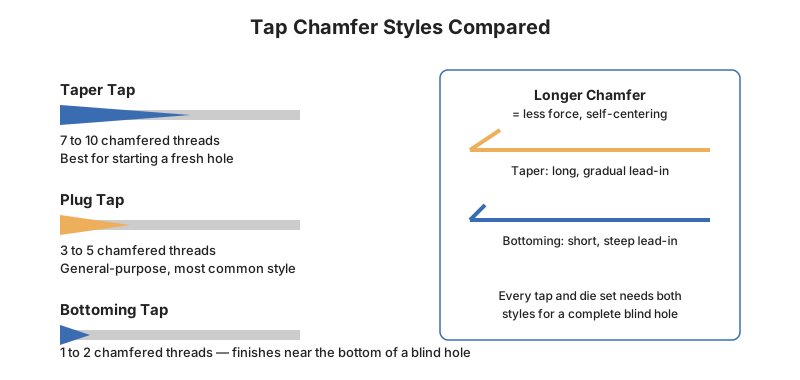
A tap's diameter is also slightly larger just behind the chamfer than at the shank. That small step, called back taper, gives the tap clearance in the hole as it cuts.
Tap and Die Set Materials
Material choice for your tap and die set depends entirely on what you are threading and how many holes you need to cut.
High-Speed Steel (HSS)
- Best for: general-purpose work on both ferrous and nonferrous metals.
- Trade-off: good wear resistance at a moderate price point.
Cobalt
- Best for: high-tensile alloys and tougher materials than HSS handles well. - Cobalt taps run harder than HSS and hold an edge longer under heat.
- Trade-off: higher cost than standard HSS.
Solid Carbide and Powdered Metal
- Solid carbide: more rigid than HSS, suited to high-speed work on cast iron, nonferrous metals, and plastics.
- Powdered metal (PM): tougher and more cost-effective than carbide, a strong pick for abrasive materials.
Matching Tap Drill Size and Class of Fit
Calculating Tap Drill Size
Getting the drill size wrong ruins the thread before the tap ever touches the hole. For a cutting tap, drill diameter roughly equals the thread's major diameter minus its pitch. Forming taps use a shallower cut, so their drill diameter equals the major diameter minus about half the pitch.
- 1/4-20 thread: pairs with a number 7 drill for a standard 75 percent thread.
- 3/8-16 thread: pairs with a 5/16-inch drill.
- 1/2-13 thread: pairs with a 27/64-inch drill.
Every tap and die set worth buying ships with a full chart like this one, so you rarely need to calculate it by hand.
Class of Fit Explained
Class of fit describes how tightly the tap in your tap and die set and its finished thread mate together. Picking the right class avoids threads that strip under load or bind before full engagement.
- Class 1: loose, for quick and frequent assembly.
- Class 2: medium-loose, the standard for ordinary screws, bolts, and nuts.
- Class 3: tight, requiring gauges to confirm accuracy.
Dies and Threading Technique
Cutting external threads with a tap and die set follows the same core principles as tapping, just in reverse.
- Workholding: clamp the rod or bolt securely before threading.
- Alignment: keep the die square to the workpiece from the first turn. - A crooked start on a tap and die set produces a crooked thread for the rest of the cut.
Solid vs. Adjustable Dies
The die half of a tap and die set comes in two styles.
- Solid die: cuts one fixed thread depth. - Accuracy depends on how precise and how worn the die already is.
- Adjustable die: can be compressed or opened slightly through built-in screws. - This lets you fine-tune the class of fit on the fly.
The Two-Turns, Half-Turn-Back Technique
Cutting a clean thread by hand comes down to controlling chip breakage. Rushing this step is the fastest way to snap a tap in half.
- Clamp the workpiece securely in a vice.
- Center the tap or die and turn it clockwise two full rotations. - Keep the tool level and centered the entire time.
- Reverse a half turn counterclockwise to snap the chip free.
- Repeat the forward-and-back motion until the thread is complete.
- Apply cutting fluid throughout to control heat and clear chips.
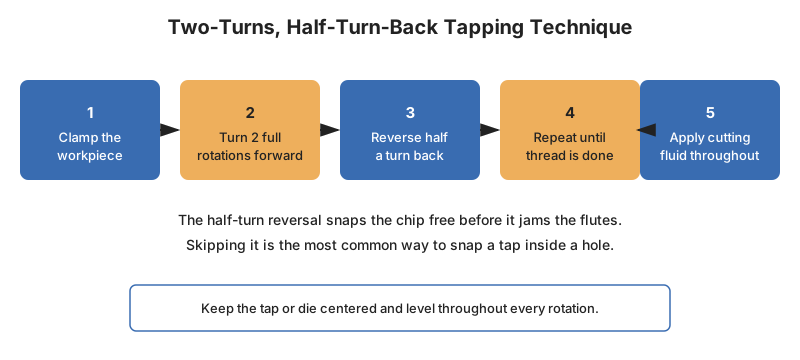
Skipping the half-turn reversal is the single most common way to snap a tap off inside a hole, which usually means drilling it out or scrapping the part entirely. Every tap and die set works better when this one habit becomes automatic.
Choosing and Buying a Tap and Die Set
What to Check Before You Buy
- Material match: HSS covers most jobs; step up to cobalt or carbide for hard alloys.
- Size range: confirm the tap and die set covers every thread size your shop actually uses. - Check both coarse and fine thread coverage if your shop runs both.
- Included extras: a good chart and a sturdy case save time on every job after the first.
- Corrosion resistance: matters most for a tap and die set stored in humid shops or mobile toolboxes.
Common Mistakes to Avoid
- Skipping the tap drill chart and guessing at hole size.
- Forcing a tap that binds instead of backing off to clear the chip.
- Mixing coarse and fine threads without double-checking the pitch first.
- Storing a tap and die set loose in a drawer, where dropped taps chip their cutting edges.
Related categories: tap and die sets, taps, and dies.
FAQ
What is the difference between a tap and a die? A tap cuts internal threads inside a pre-drilled hole. A die cuts external threads on the outside of a rod, bolt, or stud.
Which tap chamfer style should I use to start a new hole? A taper tap, with its 7 to 10 chamfered threads, centers easily and needs the least cutting force to start a fresh hole.
How do I find the right drill size for a tap? Check the drill-and-tap chart included with most sets. A 1/4-20 tap, for example, pairs with a number 7 drill for a standard 75 percent thread.
Is a cobalt tap better than a high-speed steel tap? Cobalt taps run harder and hold an edge longer on high-tensile alloys, but they cost more. High-speed steel handles most general-purpose jobs just fine.
Why does my tap keep breaking? Skipping the half-turn reversal that clears chips is the most common cause. Turn the tap forward two rotations, then back it off half a turn before continuing.
Conclusion
Choosing a tap and die set comes down to matching chamfer style, material, and fit class to the job ahead.
A taper tap starts a hole, a plug tap handles most general work, and a bottoming tap finishes threads near the base of a blind hole. Pair that with the right material for what you are cutting, and a quality set pays for itself on the very first stripped bolt it saves.
Related Posts