Bearing Types: How to Choose the Right Bearing for Every Application
By Geoff Lord · 25 July 2026
Every rotating machine relies on a bearing somewhere inside it, from a small kitchen fan to a heavy mining conveyor. The right bearing keeps shafts turning smoothly for years, while the wrong one fails early and drags the whole machine down.
Bearings exist for one reason, which is to cut the friction between parts that move against each other. According to SKF, reducing that friction delivers longer service life, quieter running, and lower maintenance cost. This guide turns the choice between the many bearing types into a few simple steps.
Why Bearing Types Matter for Every Machine
A bearing supports a moving part and guides its motion, so matching the bearing types to the work keeps equipment running longer on less energy. The wrong bearing does the opposite, raising heat, noise, and wear until it finally stops the machine.
Good selection really comes down to three questions you can answer on the shop floor:
- Load — the size and direction of the force the bearing must carry.
- Speed — how fast the shaft turns during normal work.
- Environment — the heat, dirt, and misalignment around the machine.
The Cost of the Wrong Choice
A poorly matched bearing rarely fails on your schedule, and it usually breaks during a busy production run. Early failure also damages the shaft and the housing around it, so a cheap part turns into an expensive repair. Sound knowledge of bearing types prevents most of this avoidable waste.
The Two Main Bearing Types: Ball and Roller
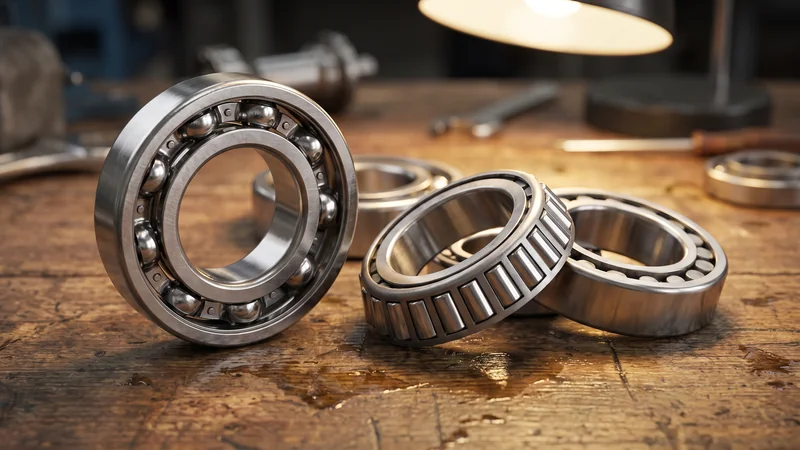
Most rolling bearing types fall into two broad families that cover the majority of industrial machines. SKF sorts its own rolling bearings into ball bearings and roller bearings, and that split is where selection begins.
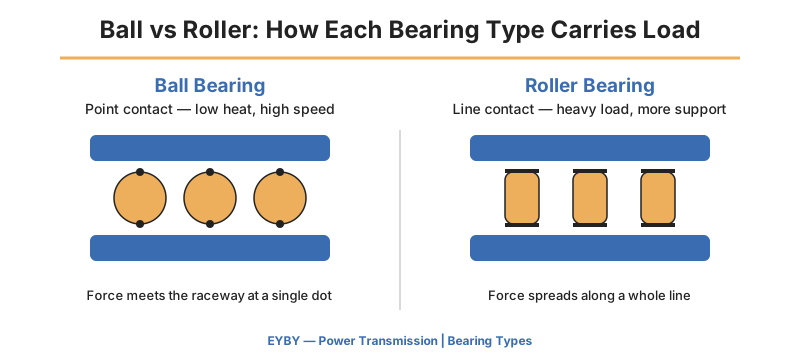
Ball bearings use small spherical balls that sit between an inner and an outer ring. The balls touch the raceway at a single point, which the GMN bearing guide describes as point contact.
Roller bearings use cylinders, needles, or tapered rollers instead. These rollers touch the raceway along a line, so they spread the same force over a wider area. Point contact makes less heat than line contact, which is why ball bearings suit higher running speeds.
When Ball Bearings Win
Ball bearings are the most common bearing types on the market, and you meet them in motors, fans, and small pumps every day. They handle light to medium loads while running fast and staying quiet.
A ball bearing is usually the natural first choice in these jobs:
- Electric motors that need speed and quiet running.
- Office and home machines with light moving parts.
- Precision spindles that must hold tight tolerances.
When Roller Bearings Win
Roller bearings shine under heavy load because their larger contact area carries weight that would crush a ball bearing. They also absorb sudden shock, which protects the machine during rough starts and stops.
A roller bearing tends to be the better pick in these settings:
- Gearboxes that transmit strong torque under load.
- Conveyors that move heavy material all day.
- Rolling mills that face constant shock and weight.
Choose a roller bearing whenever load capacity matters more than raw speed, and compare ball bearings and roller bearings side by side to weigh the trade-offs.
Matching Bearing Types to Load Direction
Load direction is the single most important factor when you narrow down the bearing types for a job. The GMN guide defines load capacity as the amount of force a bearing can safely carry over its life.
In practice, the force on a bearing acts in one of three clear directions:
- Radial load pushes across the shaft at a right angle. - Example: weight hanging from a spinning axle.
- Axial load pushes straight along the shaft line. - Example: the thrust on a vertical pump shaft.
- Combined load mixes both directions at the same time. - Example: most real, working machines in the field.
The table below maps each load direction to the bearing types that handle it best. Treat it as a quick starting point rather than a final answer.
| Load direction | Best ball bearing type | Best roller bearing type |
|---|---|---|
| Radial (across the shaft) | Deep groove ball bearing | Cylindrical roller bearing |
| Axial (along the shaft) | Thrust ball bearing | Cylindrical thrust bearing |
| Combined (both at once) | Angular contact ball bearing | Tapered roller bearing |
Radial Load Choices
Radial load is the most common force in ordinary rotating machines. For light radial work, a deep groove ball bearing is the usual answer because it is versatile and low in cost.
For heavy radial load, a cylindrical roller bearing carries far more weight than a ball design. It keeps the shaft steady under strong side force, so the machine holds its alignment.
Axial and Thrust Load Choices
Pure axial load, which pushes straight along the shaft, calls for a dedicated thrust bearing. Thrust ball bearings suit lighter axial jobs, while thrust roller bearings take the heavier ones. These bearing types are built to resist force along the shaft rather than across it.
Never fit a thrust ball bearing where heavy radial load acts, because it will fail fast in the wrong direction.
Combined Load Choices
Combined load mixes radial and axial force at once, so it needs a bearing angled to meet both. A tapered roller bearing is the classic pick for heavy combined jobs, and car wheel hubs use these bearing types because they meet both forces at once. Angular contact ball bearings handle the same mix at lighter loads and higher speeds.
Spherical roller bearings add real value on tough sites because they tolerate shaft misalignment as well as heavy load.
Bearing Types by Application
Real machines rarely read the textbook, yet clear patterns still appear across the most common jobs. Certain bearing types show up in the same applications again and again, which makes a shortlist easy to build:
- Gearboxes and drives lean on cylindrical or tapered roller bearings. - Reason: heavy load combined with steady shock.
- Vehicle wheel hubs almost always use tapered roller bearings. - Reason: combined load inside a tight space.
- Pumps and turntables often need thrust bearings. - Reason: strong force acting along the shaft.
High-Speed Applications
Speed changes the rules of selection more than any other single factor. Ball bearings win at high speed because point contact creates less heat and drag. Roller elements carry more mass, and that mass raises centrifugal force as the shaft spins faster.
For grinding spindles and fast electric motors, precision ball bearings are the accepted standard.
Heavy-Duty Applications
Heavy machines put load capacity first and speed a distant second. Roller bearing types spread force along a line, so they resist crushing under enormous weight.
Mining, construction, and steel plants lean on these rugged designs. Sealed and mounted units add protection on dirty sites, and a plain bearing can handle slow, heavy jobs where rolling parts are not needed.
How to Choose Between Bearing Types: A Step-by-Step Guide
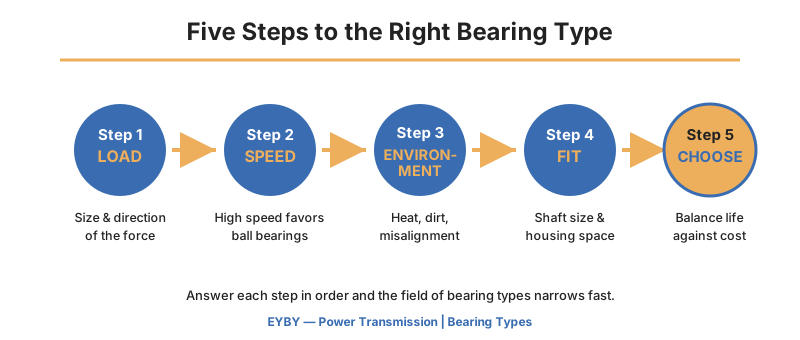
A clear process removes the guesswork from bearing selection and gives you a repeatable result. SKF publishes a formal selection method, and the numbered steps below follow the same underlying logic.
Work through the five steps in order, and let each answer narrow the field of bearing types:
- Load — measure the size and direction of the force. - Note whether it is radial, axial, or combined.
- Speed — record how fast the shaft turns. - High speed favors ball bearing types over roller ones.
- Environment — weigh the heat, dirt, and misalignment.
- Fit — check the shaft diameter and housing space.
- Life and cost — balance price against the service life you need.
Confirm the Standards
Bearing dimensions follow shared industry rules so that parts stay interchangeable across brands. The American Bearing Manufacturers Association, known as ABMA, sets the tolerance standards used across the industry. ISO defines the precision classes that grade how tightly each bearing is made.
Sticking to standard sizes means a replacement bearing will drop straight into the same seat years later.
Check Speed and Temperature Limits
Every bearing carries a speed rating you must respect, and running past that limit builds heat that destroys the grease and the metal. High temperature also thins the lubricant and shortens the life of most bearing types.
When conditions turn extreme, tougher materials help the bearing survive:
- Stainless steel resists rust in wet or washdown areas.
- Ceramic hybrids handle higher heat and speed than steel.
- Special cages hold the elements steady at extreme speed.
Bearing Materials, Seals, and Maintenance
The material inside a bearing shapes both its strength and its lifespan. Most rolling bearings use hardened chrome steel because it balances cost against durability. Tougher settings call for stainless steel or ceramic elements that survive heat and corrosion.
Seals and shields keep dirt out of the bearing and hold the grease inside. Sealed bearing types need very little care, which makes them popular in remote or hard-to-reach machines.
Lubrication Basics
Lubrication is the lifeblood of any bearing, and the wrong amount causes more failures than most people expect. Grease suits most sealed units, while thin oil suits high-speed or high-heat work.
Too little grease starves the bearing and lets friction build. Too much grease traps heat inside and pushes the seals out of place. Following the maker's schedule protects the bearing better than any guesswork.
Simple Maintenance Habits
A few simple habits stretch bearing life at very little cost, and they catch trouble while it is still cheap to fix:
- Listen for new noise, since a rough sound often warns of wear.
- Feel for heat and vibration as early signs of trouble.
- Stock spares of your common bearing types for fast swaps.
Frequently Asked Questions About Bearing Types
What are the two main bearing types?
The two main bearing types are ball bearings and roller bearings. Ball bearings suit speed and lighter load, while roller bearings suit heavier load and shock.
Which bearing types handle the heaviest loads?
Roller bearing types handle the heaviest loads, because their rollers spread force along a line instead of a single point.
How do I choose a bearing for high speed?
For high speed, choose a ball bearing rather than a roller design. Point contact creates less heat, so ball bearing types run faster than roller types of the same size.
What bearing type is best for combined loads?
For combined loads, an angular contact ball bearing or a tapered roller bearing works best. Both meet radial and axial force at an angle, so they share the load safely.
Do sealed bearings need lubrication?
Sealed bearing types arrive packed with grease and need little extra care. Open bearings, by contrast, rely on lubrication that you add and maintain yourself.
Why do ABMA and ISO standards matter?
Standards from ABMA and ISO fix the sizes and precision classes of bearings. They let you swap a worn bearing for a new one from almost any brand.
Conclusion: Selecting the Right Bearing Types with Confidence
Choosing among bearing types no longer needs to feel like guesswork once you follow a set order. Start with the load, move on to the speed, and finish with the environment around the machine. Ball bearing types give you speed for lighter jobs, while roller bearing types give you strength and shock resistance for heavier ones.
Match the bearing to the direction of the force and the demands of the site, and it will protect the whole assembly. When you are ready to compare, explore the full range of bearings built for every load and speed.
Related Posts

Welding Helmet Guide: How to Choose the Right One for Every Job
Torque Wrench Guide: How to Choose the Right One for Every Job
Test Instruments - Sound Meter