
Showing 0 products
Frequently Asked Questions
Which parts of a valve actually fail?
The coil, the connector and the override, far more often than the valve body or its internals.
The valve body and spool are mechanical components running in clean, lubricated air, and on a properly filtered supply they last a very long time - millions of cycles is normal.
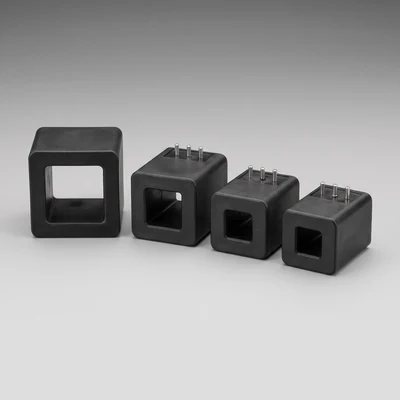
The coil is an electrical component. It carries current continuously whenever the valve is energised, runs warm by design, and is subject to voltage spikes, vibration and moisture. It is the item that most often ends a valve's service.
The connector is next: a small plug in an industrial environment, subject to being pulled, knocked, washed and vibrated loose. Intermittent faults frequently trace to it.
Manual overrides are small plastic or metal parts that get pushed with screwdrivers and broken.
So the sensible spares holding is coils and connectors, not complete valves - which is cheaper, takes less shelf space, and covers the failures that actually occur.
Why hold spares rather than complete valves?
Because the failing components are cheap and small, and the valve body rarely needs replacing.
A complete valve costs several times what a coil does and occupies more space on a shelf. If the coil is what fails, a stock of complete valves is an expensive way to hold coils.
Replacing a coil is also quicker and less disruptive than replacing a valve. On most designs the coil slides off the armature tube and a new one slides on, with no need to isolate the pneumatics at all in some cases - certainly no need to disturb tubing.
There is a case for holding one complete valve of each type on a critical machine, as insurance against damage to the body itself. But the routine stock should be the wearing parts.
The important part is identification: coils differ by voltage, connector style and valve family, and a coil that physically fits may be the wrong voltage. Record what is fitted before you need it.
What information is needed to order the right parts?
The valve manufacturer and model, the coil voltage and connector type, and the mounting interface - all of which should be recorded while the machine is working.
Valve model numbers are printed on the body, and coil details on the coil itself. Photographing both at commissioning takes seconds and is the single most useful thing anyone can do for future maintenance.
Without it, identification means removing a component to read it - which requires the machine to be stopped, which is the situation you were trying to avoid.
Coil voltage is the detail most often got wrong, because coils of different voltages are physically identical. Fitting the wrong one either fails to operate or burns out immediately.
Connector style matters equally: several standard sizes exist and they are not interchangeable.
Build the list into the machine documentation, with part numbers, and keep it with the station schedule for any valve terminal.
Can accessories be mixed between manufacturers?
Coils and connectors generally not; some mounting hardware and connector standards yes.
A solenoid coil is matched to its valve's armature tube diameter, length and magnetic circuit. A coil from a different range may slide on and will not develop the correct force - so the valve either fails to shift or shifts unreliably, and the coil may overheat.
Connectors are more standardised. Several common connector form factors are used across manufacturers, so a cable assembly from one supplier frequently fits another's coil - which is useful, but should be confirmed rather than assumed, particularly where suppression components are built into the connector.
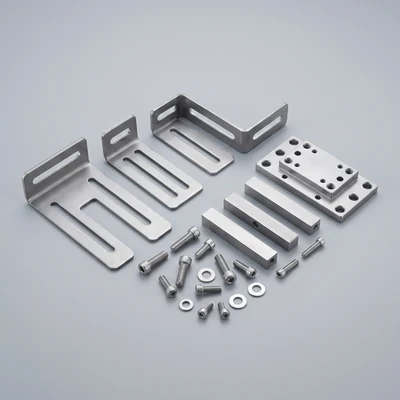
Mounting brackets and sub-plates are specific to the valve's mounting interface, though certain valve interface dimensions are standardised across the industry.
The rule: mechanical mounting and connectors may cross over, the coil should not. Where second-sourcing matters, confirm the interface designation rather than the physical appearance.
What are conversion and override kits for?
Changing how a valve is actuated or configured after it has been installed.
Override kits replace or add a manual override - converting a momentary override to a detented one or the reverse, or replacing one that has been broken. Since the override is what a fitter uses to move a machine with the control system off, having it working matters.
Pilot conversion parts change a valve between internal and external pilot supply, usually by moving a small plug or screw. That is the fix for a valve that will not operate at low system pressure, and it is worth knowing about because it is far cheaper than replacing the valve.
Other kits convert between spring-return and double-solenoid operation on some ranges, change the centre condition on three-position valves, or add manual actuators.
These are the parts that let an installation be adjusted rather than rebuilt when a requirement turns out to be different from what was assumed.
How should coil spares be stored?
Dry, labelled by valve type and voltage, and rotated - coils are electrical components and do deteriorate on a shelf in a damp store.
Label by valve family, voltage and connector type rather than by part number alone, because part numbers mean nothing to someone looking for a spare at short notice. Marking which machine and which station uses each type is more useful still.
Store in a dry place. Moisture reaching a coil's windings before it is ever fitted causes failures that are blamed on the new part.
Check stock periodically against the machines actually installed. Machines get modified, valves get changed, and a store can accumulate coils for equipment that no longer exists while lacking any for what is running.
And replenish immediately after use rather than adding it to a list - the same discipline that applies to any emergency spare.
What suppression components are needed and why?
Diodes, varistors or RC networks across the coil, to absorb the voltage spike produced when an inductive load is switched off.
A solenoid coil is an inductor. When its current is interrupted, the collapsing magnetic field generates a voltage spike that can be many times the supply voltage. That spike damages relay contacts, degrades PLC output transistors, and generates electrical noise that upsets nearby electronics.
Suppression absorbs it. On DC coils a reverse-connected diode is the usual arrangement; on AC, an RC network or varistor.
Many connectors have suppression built in, and many valves include it - but not all, and it is worth confirming rather than assuming, particularly when replacing a connector with a plain one.
Note the trade-off on DC: a simple diode slows the valve's release, because it lets the collapsing current circulate. Where fast release matters, a different suppression arrangement is used - so a valve that has become slow to release may have had its connector changed for one with different suppression.