Peel and Stick Wallpaper: How to Prep the Wall, Hang It and Remove It
By Nikhil Singh · 13 September 2026
Peel and stick wallpaper promises a new room in an afternoon, and most of the time it delivers. When it fails, the cause is rarely the print on the roll. It is usually the wall underneath, where a flat paint, a fresh coat that has not cured or a heavy texture can undo the job within days.
This guide covers the wall checks, how much peel and stick wallpaper to order, how to hang it and how to remove it cleanly.
What Peel and Stick Wallpaper Is
Peel and stick wallpaper is a wallcovering with a self-adhesive backing. You remove a release liner and press the sheet straight onto the wall.
How It Differs From Traditional Wallpaper
Traditional rolls need paste, either brushed on or activated with water. Peel and stick wallpaper needs none, and Tempaper, a specialist maker, states that no additional adhesive is required. That removes the paste cleanup from the job.
Why Renters and Facility Teams Use It
The main draw is that it comes off again. Home Depot rates hanging peel and stick wallpaper as a beginner project that takes two to four hours.
- Renters can decorate without making a permanent change to the wall.
- Offices and hotels can refresh a feature wall between seasons.
- Retail fit-outs can swap a pattern when a campaign ends.
The Formats You Will Find
Home Depot's guide points to three formats:
- Full rolls cover whole walls and match a repeating pattern across strips.
- Borders run along the edges of a wall as an accent.
- Three-dimensional panels imitate materials such as brick or stone.
Check the Wall Before You Buy Peel and Stick Wallpaper
Adhesion depends on the paint film as much as on the wallpaper itself.
Paint Sheen Matters Most
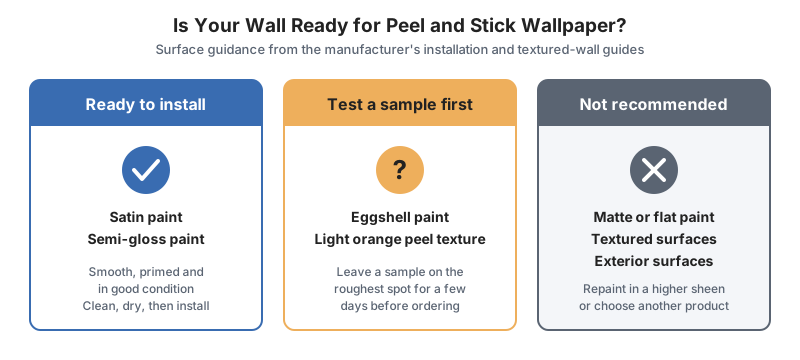
Tempaper recommends its product for smooth, primed and painted surfaces in good condition. Its installation guide names satin and semi-gloss finishes, and its textured-wall guide adds eggshell. The installation guide also lists surfaces to avoid.
| Wall surface | Manufacturer guidance | What to do |
|---|---|---|
| Satin or semi-gloss, smooth | Recommended | Clean and install |
| Eggshell, smooth | Listed in the texture guide | Test a sample first |
| Matte, flat or low sheen | Not recommended | Repaint in a higher sheen |
| Textured wall | Not recommended | Test on the roughest spot |
| Exterior surface | Not recommended | Choose an exterior product |
Freshly Painted Walls
Published advice varies here. Home Depot says to wait three days after painting, while Tempaper asks you to wait for a full cure, following the time printed on the paint can. When the two sources disagree, follow the paint maker's cure time.
Cleaning the Surface
Clean the wall before you measure anything:
- General walls: Home Depot suggests a gentle cleanser with a sponge or cloth.
- Kitchen walls: it suggests a mild degreaser or dish soap instead.
- Final wipe: Tempaper suggests equal parts isopropyl alcohol and water. - Let the wall dry completely before the first strip goes up. - Remove pictures, hooks and nails at the same time.
How Much Peel and Stick Wallpaper to Order
Order by strips rather than by area alone, because pattern matching uses extra material.
Count the Strips
Divide the wall width by the roll width and round up. A roll 20½ inches wide covers a 12-foot wall in eight strips, because seven fall just short.
Add Length for Trimming
Tempaper and Home Depot both recommend adding two to three inches to each strip. That allowance absorbs an uneven ceiling or floor and leaves room to match the pattern.
- Measure the wall height at several points.
- Add the trimming allowance to the tallest reading. - Busy repeats may need more length to reach a clean match. - Label each strip on the back as you cut it.
- Check that every roll carries the same batch number so the colour matches.
How to Hang Peel and Stick Wallpaper
Hanging peel and stick wallpaper rewards patience more than skill. Work slowly and keep the liner on until each strip is aligned.
Tools to Gather
Tempaper's tool list is short:
- A craft knife and a cutting surface.
- A level, a pencil and a tape measure.
- A ruler or straight edge.
- A plastic squeegee and a step stool.
Mark a Plumb Line
Home Depot notes that ceilings are not perfectly straight, so never align the first strip to the ceiling. Tempaper says to measure out from the corner by the roll width minus half an inch and draw a vertical line with a level. Mark a fresh line at every corner or new wall.
Hanging Strip by Strip
Switch off the power before removing switch plates, then work in this order:
- Peel back the top section of the liner.
- Align the top edge with the plumb line, leaving excess at the ceiling.
- Smooth from the centre outwards with the squeegee.
- Peel the next section and keep smoothing down the wall.
- Match the pattern on the next strip before you press it down.
- Trim the excess at the ceiling and floor with a sharp knife.
Tempaper suggests peeling three to four feet of backing at a time, while Home Depot suggests about twelve inches. Shorter sections are easier to control on your first wall.

Avoid Stretching the Sheet
Both guides warn against pulling the strip too firmly, because a stretched sheet will not line up. If a bubble appears, lift the strip and reposition it. Tempaper suggests releasing a stubborn bubble with a tiny pinhole at its centre.
Peel and Stick Wallpaper on Textured Walls, Bathrooms and Kitchens
These are the places where peel and stick wallpaper most often disappoints.
Textured Walls
Tempaper says its peel and stick wallpaper is generally not recommended for textured walls, because air trapped behind the backing stops it sticking. A light orange peel finish is easier than heavy popcorn texture, where the paper may not adhere at all.
If you still want to try:
- Test first: leave a sample over the roughest area for a few days.
- Flatten peaks: scrape off any large bumps before installing.
- Go thicker: heavier peel and stick wallpaper hides more imperfections. - A dark colour shows texture less than a pale one. - A busy print disguises bumps better than a plain design.
Bathrooms and Kitchens
Home Depot advises choosing a moisture-resistant product for bathrooms and kitchens. Read the product sheet before you buy, because not every peel and stick wallpaper is rated for steam.
Rooms With Temperature Swings
Some rooms heat up and cool down through the day. For these, Tempaper recommends a slight overlap at the seams so joints do not split. Plan for that overlap when counting strips.
Removing Peel and Stick Wallpaper Without Damage
The Removal Method
Tempaper's instruction is to start at any corner and peel slowly. Pull parallel to the wall rather than straight out towards you.
When Paint Comes Away
If paint lifts, look first at the earlier risks:
- Wrong sheen: flat or matte paint was under the wallpaper.
- Uncured paint: the coat had not reached its full cure. - Stop peeling and work in from a different corner. - Pull even more slowly, keeping the sheet close to the wall.
- Repairs: touch up any damaged patch with primer and matching paint.
Frequently Asked Questions About Peel and Stick Wallpaper
Does peel and stick wallpaper damage walls?
It is designed to be removable from a suitable surface. Damage is more likely on flat, uncured or unprimed paint.
Can you put it on textured walls?
Manufacturers generally advise against it, but a light texture may work after a sample test.
How long should paint dry before applying it?
Home Depot suggests three days, while Tempaper asks you to wait for a full cure. Follow the cure time on your paint can.
Does it need extra glue?
No, the backing is self-adhesive.
Can I use it in a bathroom?
Yes, if the product is rated moisture resistant and the wall is clean and dry.
Do I need a professional installer?
Usually not. If you hire help, Tempaper suggests an installer experienced with vinyl, signs and decals.
Conclusion: Get the Wall Right First
Most peel and stick wallpaper failures are decided before the first strip goes up. A smooth, primed and fully cured wall in satin or semi-gloss does most of the work for you.
Check the sheen, clean the surface, order enough strips and hang each one against a plumb line. When it is time for a change, peel slowly and keep the sheet parallel to the wall.
Before you start, stock up on paint primers, interior paint and paint preparation supplies so every wall is ready for peel and stick wallpaper.
Related Posts