Paper Bags: How to Choose Construction, Basis Weight and Handles
By Andrew Lee · 12 August 2026
Paper bags almost never tear across the middle. They fail at the handle, or they split along the bottom seam.
Both failures trace back to one number that most buyers never look at. That number is basis weight. It sets how much a bag can carry, and it is printed nowhere on the bag itself.
This guide covers the two base constructions, the weight bands that go with each job, and the handle styles that decide where the load lands.
Why Paper Bags Are Back in the Supply Chain
What the Recycling Data Shows
Paper is the most recycled material in the waste stream, and that is the commercial argument for paper bags. The US Environmental Protection Agency put paper and paperboard at about 67 million tons of municipal solid waste in 2018, or just over 23 percent of everything generated.
About 46 million tons of it were recycled.
That is a rate of 68.2 percent, the highest of any material the agency tracks.
- Paper and paperboard: 68.2 percent recycled, the top rate in the waste stream.
- Paper packaging overall: 80.9 percent recycled in 2018.
- Corrugated boxes: 96.5 percent, the single strongest product category.
The Reuse Rule Nobody Quotes
Recyclability is not the whole story. The UK Environment Agency compared carrier bags across their full life cycle and found that paper bags need at least three uses to beat a conventional HDPE bag that is thrown away after one.
That is a low bar, and it is still a bar. A paper bag handed out and binned once has not earned its footprint.
- Paper: three uses to beat a single-use HDPE bag.
- Non-woven polypropylene: eleven uses.
- Cotton tote: 131 uses. - Reuse beats recycling on impact, for every bag material in the study. - A bag that gets used as a bin liner still counts as reuse.
The Two Base Constructions
Pinch Bottom Bags
A pinch bottom bag is glued shut at one end, which leaves a seam running the length of the back. It lies flat when empty and opens out when loaded.
These are the flat merchandise and sandwich paper bags.
They suit small and medium items, and they stack in a dispenser without taking counter space.
- Also called: envelope bag, flat bag, card bag, merchandise bag.
- Best for: light to medium items, or as a separator inside a larger bag.
- Weakness: the back seam is the failure line under weight.
Flat Bottom Bags
A flat bottom bag joins four sides to make side gussets and a square base. In the trade it is the self-opening sack, usually shortened to SOS.
This is the grocery and carryout shape.
It stands up on its own, which is why every takeaway counter uses it.
- Also called: SOS, square bottom bag, sack, carryout bag.
- Best for: medium to heavy items that need to stand upright.
- Weakness: it needs more paper, so it costs more per bag.
What a Gusset Actually Does
The gusset is the folded panel down each side.
It lies flat in storage and expands under load.
Gussets are the difference between a bag that holds a box and a bag that only holds an envelope. Bags without them carry noticeably less.
- Gusset: the total side measurement when fully open.
- No gusset: flat capacity only, and no standing shape.
- Trade-off: more gusset means more paper per bag.
Basis Weight Sets the Capacity
How Basis Weight Is Measured
Basis weight is the weight in pounds of a 500-sheet ream cut to a standard size. Higher basis weight means a heavier, stronger sheet.
That definition hides a trap. Different paper grades use different ream sizes, so two paper bags quoted at the same pound figure are not always the same paper. Ask for the ream basis if the quote does not state it.
Why GSM Is the Honest Number
Grams per square meter is the only universal comparison, because it does not change with sheet size. Ask any supplier for gsm and the comparison becomes direct.
Quote both numbers on the purchase order. Pounds keep the conversation familiar, and gsm keeps it accurate.
- Basis weight (lb): ream-based, and grade-dependent.
- GSM: area-based, and comparable across every supplier.
- Caliper: the thickness of one sheet, quoted separately. - Two bags at the same gsm can still differ in caliper and feel. - Caliper affects stiffness and print quality more than strength.
Matching Weight to the Job
Published weight bands for paper bags line up closely with the job the bag does. Use them as the starting shortlist, then confirm capacity with the supplier.
| Bag type and use | Basis weight (lb) | Basis weight (gsm) |
|---|---|---|
| Pinch bottom, prescription | 20 to 33 | 33 to 55 |
| Pinch bottom, food, merchandise, OTC | 30 to 35 | 50 to 60 |
| Flat bottom, food, carryout, delivery, retail | 30 to 40 | 50 to 65 |
| Flat bottom, carryout, food, grocery | 50 to 70 | 80 to 115 |
| Flat bottom with handles, carryout, delivery, retail | 60 to 70 | 100 to 115 |
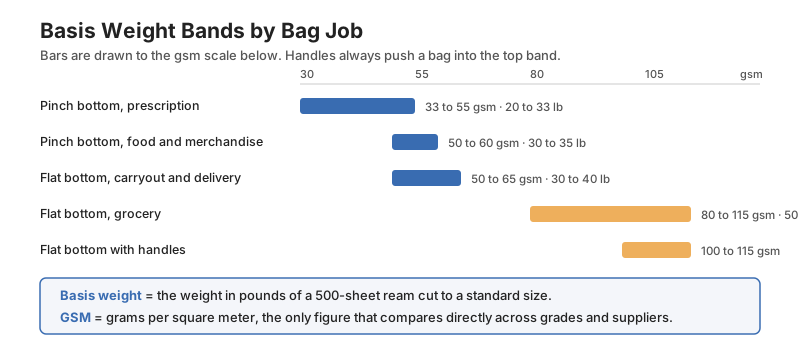
- Under 60 gsm: light merchandise, single items, no handles.
- 80 to 115 gsm: groceries, takeaway orders, anything carried by hand.
- Rule of thumb: if the bag has handles, it needs the top band.
Handles and Where They Fail
Twist Handles
A twist handle is made from twisted paper fibres, machine glued to the inside of the bag.
It is the strongest of the three common styles on paper bags, and the one that looks premium. Specify twist handles whenever the load is heavy or the bag has to survive a walk home.
Flat Handles
A flat handle is a folded paper strip, glued inside or outside the bag wall. It costs less and stacks flatter, which matters at a busy counter.
It is a short-carry handle.
For a long carry with weight in the bag, it is the wrong choice.
Die Cut Handles
A die cut handle is a hole punched through both walls near the top. Nothing is glued on, so nothing can peel off.
That integration is the strength. It is also the limit, because the load pulls directly on the paper around the hole. Heavier stock is the only fix.
- Twist: highest strength, premium look, highest cost.
- Flat: economical, compact, short carries only.
- Die cut: no glued parts, strength depends on the paper grade. - Glued handles fail by peeling, usually at one end first. - Die cut handles fail by tearing the paper at the hole.
Sizing and Specifying Paper Bags
The Three Measurements
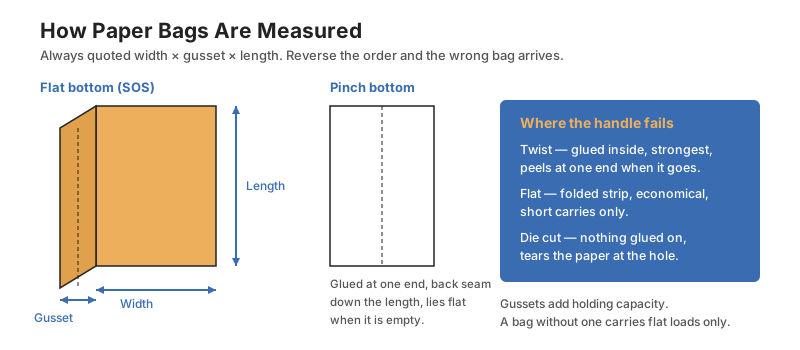
Paper bags are quoted as width by gusset by length, in that order. Get the order wrong on a purchase order and the wrong bag arrives.
- Width: the horizontal measurement across the face.
- Gusset: the full side panel when the bag is open.
- Length: face bottom to the top lip, not including handles.
Paper Type and Print
Paper bags run from 100 percent virgin stock to 100 percent recycled, in bleached white or unbleached kraft. Smooth white takes vibrant print. Unbleached kraft looks natural and disguises handling marks.
Decide print before size. A large print area is one of the reasons buyers move up to a flat bottom bag in the first place.
- Kraft brown: natural look, forgiving of scuffs.
- Bleached white: the best surface for bright graphics.
- Recycled content: widely available, and worth stating on the bag.
Compare the paper bags range against reusable shopping bags before committing to a format, because the right answer depends on how many trips each bag will make.
Food Contact, Grease and Storage
Food-Safe Grades
Paper bags in direct contact with food are a separate specification, not a variant of the retail bag.
They must be made from food-safe paper and meet stricter rules.
Grease resistance is the usual specification failure. Hot or oily food needs a grease-resistant grade, and some applications need a foil lining. Plain kraft will darken and then give way.
- Grease-resistant: for pastries, fried food and anything warm.
- Foil-lined: holds heat and blocks oil migration.
- Plain kraft: dry goods only, unless it is rated for food.
Storage Kills More Stock Than Use
Paper bags absorb atmospheric moisture, and damp paper loses considerable strength before anyone notices. A pallet stored against an outside wall can weaken quietly for weeks.
Keep stock off the floor, away from external walls, and rotate it. Paper bags are cheap enough that nobody audits them, which is exactly why the failures surprise people.
- Off the floor: pallets or shelving, never bare concrete.
- Away from walls: outside walls carry damp.
- Rotate stock: oldest out first, same as any consumable.
Frequently Asked Questions About Paper Bags
How much weight can paper bags hold?
There is no single answer, because capacity comes from basis weight, construction and handle style together. A handled grocery bag sits in the 100 to 115 gsm band for that reason. Ask the supplier to confirm a rated capacity in writing.
Are paper bags better for the environment than plastic?
Only with reuse. The UK Environment Agency found paper bags need at least three uses to beat a conventional HDPE bag used once, so a bag binned after one trip has not paid its way.
What does SOS mean on paper bags?
It stands for self-opening sack, the flat bottom construction with side gussets. It stands up on its own once shaken open. That is why it is the standard grocery and carryout shape.
Which handle is strongest on paper bags?
The twist handle, made from twisted paper fibres glued inside the bag. Flat handles are cheaper and suit short carries, while die cut handles have nothing glued on but pull directly against the paper.
Can paper bags be recycled after food use?
Clean paper bags recycle easily, but grease-soaked or foil-lined bags usually cannot, because the contamination or the liner breaks the paper stream.
Conclusion
Specify paper bags in three steps. Pick the construction from the shape of the goods, pick the basis weight from the load, then pick the handle from how far the bag has to travel.
Everything else is colour, print and recycled content.
If a bag is going to be carried once and binned, a lighter grade does the job. If it will be reused, buy the top weight band and the twist handle, because reuse is where plastic shopping bags and paper bags actually separate.
Related Posts

3 Ring Binder Sizes and Ring Types: A Buyer's Guide

AC Motor Types Explained: How to Choose the Right AC Motor