Types of Pumps: How to Choose the Right Pump for Every Application
By Lu Chan · 25 July 2026
Almost every building, farm, and factory moves liquid with a pump of some kind, from a basement sump to a chemical dosing line. The right pump moves the fluid reliably for years, while the wrong one wastes energy and wears out fast.
Bearings and belts get the attention, yet the pump is often the heart of the whole system. Grundfos notes that the centrifugal pump alone is the most used pump in the world today. This guide turns the choice among the many types of pumps into a few simple steps.
Why Types of Pumps Matter for Every System
A pump adds energy to a liquid so it can travel where you need it. When you match the types of pumps to the fluid and the flow, the system runs longer on less power.
The wrong pump cavitates, overheats, or simply cannot shift the liquid. Good selection among the types of pumps comes down to three questions you can answer up front:
- Fluid — is it thin like water or thick like oil or slurry.
- Flow and pressure — how much liquid, and against how much resistance.
- Setting — is the pump submerged, dry-mounted, or moving a harsh chemical.
The Cost of the Wrong Choice
A poorly matched pump rarely fails quietly, and it often quits during a storm or a busy shift. Running a pump far from its best point wastes power and wears out the seals and bearing. Knowing the types of pumps well prevents most of this damage.
The Two Main Types of Pumps: Centrifugal and Positive Displacement
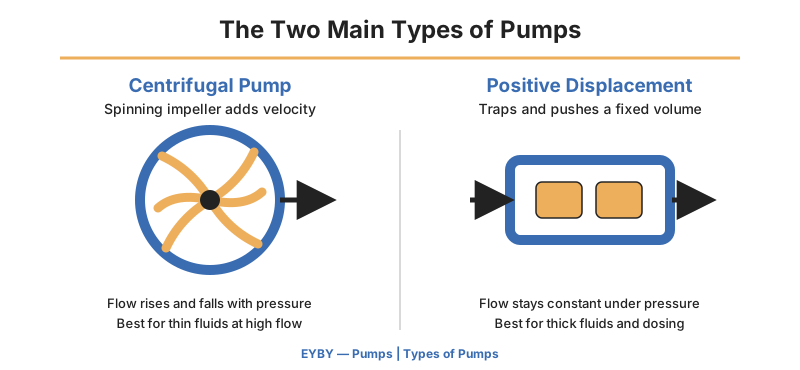
Most types of pumps belong to one of two broad families that cover nearly every job. Castle Pumps groups them into centrifugal pumps and positive displacement pumps, and that split is where selection begins.
Centrifugal pumps use a spinning impeller to add speed to the liquid. The impeller draws fluid in near its centre and flings it outward to the discharge, turning velocity into flow.
Positive displacement pumps instead trap a fixed volume of liquid and force it out to the discharge. This single difference explains how each family behaves. The impeller creates flow by adding pressure, while the trapped volume creates pressure by moving a set amount of flow.
How Centrifugal Pumps Behave
The flow from a centrifugal pump falls as system pressure rises, which is normal for this family. Centrifugal pumps are the most common types of pumps for thin liquids, and a centrifugal pump moves large volumes cheaply in these everyday jobs:
- Thin fluids like water, coolant, and light oil.
- High-flow jobs that move large volumes at modest pressure.
- Clean transfer in homes, farms, and light industry.
How Positive Displacement Pumps Behave
A positive displacement pump holds its flow almost constant even as pressure climbs. This steady output makes it the choice for high-pressure and metering work. These types of pumps also handle thick fluids that would stall a centrifugal design.
Because they run at low internal speed, they treat delicate fluids gently.
A positive displacement pump tends to be the better pick in these settings:
- Thick fluids such as heavy oil, paste, or slurry.
- Dosing where an exact, repeatable volume matters.
- Shear-sensitive products that must not be broken up.
Both families are worth a close look before you decide. Explore the range of submersible centrifugal pumps and chemical metering pumps to see these types of pumps side by side.
Matching Types of Pumps to Your Fluid and Flow
Fluid and flow are the two factors that decide the family before anything else.
Grundfos and other pump makers size every system around the liquid, the flow rate, and the head.
In practice, three fluid questions steer you toward the right family:
- Viscosity — thin fluids favor centrifugal, thick fluids favor positive displacement. - Example: water goes centrifugal, heavy oil goes positive displacement.
- Solids — grit and debris need an open impeller or a rugged rotary pump. - Example: sewage needs a non-clog submersible pump.
- Sensitivity — shear-sensitive fluids need the gentle, low-speed positive displacement family. - Example: food and adhesives should not be sheared.
The table below maps common fluids to the types of pumps that suit them best. Treat it as a quick starting point rather than a final answer for every case.
| Fluid or duty | Best family | Typical pump |
|---|---|---|
| Clean water, high flow | Centrifugal | End-suction or submersible |
| Thick oil or slurry | Positive displacement | Gear or progressive cavity |
| Exact chemical dosing | Positive displacement | Diaphragm or peristaltic |
| Deep well or borehole | Centrifugal | Multistage submersible |
Flow Rate and Head
Flow rate is how much liquid the pump moves in a set time. Head is the height and pressure the pump must overcome, and together they define the duty point.
A single-stage centrifugal pump gives high flow at modest head, while a multistage pump stacks impellers to reach a much higher head. That higher head suits tall buildings and deep wells. Match the duty point to the middle of the pump curve, because a pump far from that point wastes energy.
Viscosity and Solids
Thin fluids move easily through a fast centrifugal impeller, while thick fluids drag and cut the flow. Solids demand extra care too, since open or vortex impellers pass only small solids. Sewage and slurry often need a rugged non-clog design instead.
Types of Pumps by Application
Real systems rarely fit one neat label, yet clear patterns appear across common jobs. Certain types of pumps show up in the same applications again and again, which makes a shortlist easy to build:
- Sump and drainage jobs use submersible centrifugal pumps. - Reason: they sit in the water and move it out fast.
- Water boosting uses multistage centrifugal pumps. - Reason: they raise pressure for supply and irrigation.
- Chemical dosing uses diaphragm or peristaltic pumps. - Reason: they meter an exact volume every stroke.
Sump, Drainage, and Wastewater
Sump pumps remove unwanted water from basements and pits below ground level. Most are submersible units that switch on with a float as the water rises.
Wastewater needs a non-clog impeller that passes solids without jamming, so pick a rugged unit. You can compare these types of pumps in the sump and utility pumps range.
Water Supply, Boosting, and Wells
Booster pumps raise the pressure of a water supply for buildings and irrigation. Well and borehole pumps drop into deep, narrow shafts and rely on multistage centrifugal pumps for their high head. The submerged motor stays cool because the pumped water flows around it.
Fuel, Oil, and Chemical Transfer
Fuel and oil transfer often uses positive displacement pumps for steady, measured flow, and drum pumps move these fluids from barrels into tanks. Chemical dosing is a precise job that suits the diaphragm and peristaltic designs. These types of pumps deliver the same small volume on every stroke, which protects the process.
How to Choose Between Types of Pumps: A Step-by-Step Guide
A clear process removes the guesswork from pump selection and gives a repeatable result. The Hydraulic Institute uses a similar order, and the steps below follow the same simple logic.
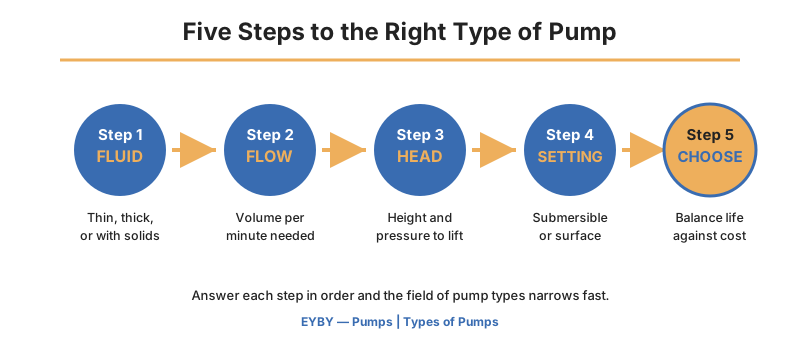
Work through the five steps in order, and let each answer narrow the field of pump types:
- Fluid — identify the liquid, its viscosity, and any solids. - Note whether it is thin, thick, or shear-sensitive.
- Flow — set the flow rate the system needs. - Measure it in gallons or litres per minute.
- Head — add up the height and pressure to overcome.
- Setting — decide submersible, surface, or inline mounting.
- Life and cost — balance the purchase price against running cost.
Confirm the Standards
Pump ratings follow shared industry rules so that products stay comparable across brands. The Hydraulic Institute sets the pump standards used widely across North America. ISO 9906 defines the test tolerances that grade how a pump curve is measured.
Sticking to standard ratings means you can compare two pumps fairly before you buy.
Check the Duty Point and NPSH
Every pump performs best within a narrow band around its best point. Running outside that band wastes energy and can trigger cavitation that pits the impeller.
Net positive suction head, or NPSH, is the pressure available at the pump inlet. Give the pump enough suction pressure and it will run smoothly, but starve it and the flow will break up. A generous inlet keeps the pump primed and protects it from damage.
Pump Materials, Priming, and Maintenance
The material of a pump shapes both its strength and the fluids it can safely handle. Common pump materials each suit a different duty:
- Cast iron suits water and general service at low cost.
- Stainless steel resists corrosion in food and marine work.
- Engineered plastics stand up to harsh acids and chemicals.
Priming and Suction Basics
A centrifugal pump cannot pump air, so it must be full of liquid to start, or a dry run will ruin the seals. Positive displacement pumps create their own suction, so these types of pumps can lift liquid from below the pump without extra help.
Simple Maintenance Habits
A few simple habits stretch pump life at very little cost, and they catch trouble while it is still cheap to fix:
- Listen for new noise, since a rattle often warns of cavitation or wear.
- Watch the pressure gauge for a sudden drop in performance.
- Check seals and couplings for leaks and heat on a regular round.
Frequently Asked Questions About Types of Pumps
What are the two main types of pumps?
The two main types of pumps are centrifugal pumps and positive displacement pumps. Centrifugal pumps use a spinning impeller for high flow, while positive displacement pumps trap and push a fixed volume.
Which types of pumps handle thick or viscous fluids?
Positive displacement pumps handle thick and viscous fluids best, because they trap and force a fixed volume instead of relying on a fast impeller.
How do I choose a pump for high flow?
For high flow at modest pressure, choose a centrifugal pump. Of all the types of pumps, its spinning impeller moves the largest volumes of thin liquid cheaply, which suits water and light fuels.
What types of pumps are used for chemical dosing?
Chemical dosing uses positive displacement pumps such as diaphragm and peristaltic designs. They deliver the same exact volume on every stroke, so the dose stays accurate. This precision is why dosing lines rarely use a centrifugal pump.
Do centrifugal pumps need priming?
Unlike some other types of pumps, centrifugal pumps usually need priming, which means filling them with liquid first.
Why do Hydraulic Institute and ISO standards matter?
Standards from the Hydraulic Institute and ISO fix how pumps are rated and tested. They let you compare two pumps fairly and swap parts across brands with confidence.
Conclusion: Selecting the Right Types of Pumps with Confidence
Choosing among the many types of pumps no longer feels like guesswork once you follow a set order. Start with the fluid, move on to the flow and head, then finish with the setting. Centrifugal pumps give high flow at low cost for thin liquids, while positive displacement pumps give steady pressure for thick or metered fluids.
Match the pump to the fluid and the demands of the system, and it will protect the whole process. When you are ready to compare, explore the full range of pumps built for every fluid and flow.
Related Posts

Welding Helmet Guide: How to Choose the Right One for Every Job
Torque Wrench Guide: How to Choose the Right One for Every Job
Test Instruments - Sound Meter