Sandblasting Sand: Why the Cheapest Abrasive Costs You the Most
By Mohamed Azam · 19 August 2026
Ask most people what goes in a blast pot and they will say sand. Ask a safety officer and you will get a very different answer.
Sandblasting sand is the original abrasive, and the one regulators have spent seventy years trying to push out. The reason is a lung disease called silicosis. The reason it lingers is price.
This guide explains what sandblasting sand does, why it is restricted, and which media beat it on both safety and cost.
What Sandblasting Sand Actually Is
Sandblasting sand is ordinary quartz sand, screened to a working grain size. Quartz is crystalline silica, and that single fact drives everything that follows.
Grain Size and Grading
Abrasive is sold by mesh number, the screen size the grain passes through. A higher mesh number means a finer grain and a smoother finish.
- Coarse grades: cut faster and leave a deeper anchor profile for coatings.
- Fine grades: clean more gently and leave an even surface. - Finer grains land more hits per second. - That is why fine media polishes while coarse media etches.
Why Sandblasting Sand Was Ever Used
Sand is cheap, easy to get, and works well enough on rust and scale. For a century that was reason enough. The trouble is what happens to the grain on impact.
- It shatters: the grain breaks into fine dust instead of bouncing off.
- It cannot be reused: most of the charge is destroyed in a single pass.
- It carries quartz: the dust it makes is crystalline silica.
The Silica Problem Behind Sandblasting Sand
Blasting turns a harmless-looking grain into an invisible hazard. That is the whole case against sandblasting sand.
How the Dust Causes Harm
Fine silica dust reaches deep lung tissue and scars it for good. Silicosis gets worse over time, has no cure, and can kill.
Silica dust is also known to cause lung cancer. Sandblasting sand throws it off by the shovel-load.
The Exposure Limits That Apply
OSHA sets a hard limit on silica dust, and blast work sits inside that rule.
| Rule | Limit | Basis |
|---|---|---|
| OSHA exposure limit | 50 µg/m³ | 8-hour mean |
| OSHA action level | 25 µg/m³ | 8-hour mean |
| NIOSH advised limit | 50 µg/m³ | up to 10-hour mean |
| NIOSH media swap trigger | above 1 percent free silica | any job |
- Action level: cross it and you owe air testing and health checks.
- Media swap: NIOSH puts this first, ahead of every other control. - Air flow and masks rank below a media swap. - They are what you use when you cannot remove the hazard.
Where Sandblasting Sand Is Already Restricted
The restrictions are far older than most buyers assume. This is not a new rule that crept in last year.
The European and British Position
Great Britain curbed silica sand as a blast abrasive in 1949. The European Economic Community followed in 1966. Both came long before modern dust rules.
The United States Position
American rules took another route and cap the dust instead of banning the sand. Since 1974 NIOSH has asked for a ban on any abrasive above one percent free silica.
- No federal ban: sandblasting sand remains legal in the United States.
- Heavy duty of care: the silica standard still applies in full. - Bosses must test the air and control it. - Many buyers switch media simply to escape that paperwork.
What This Means for a Global Buyer
If you ship work across borders, sandblasting sand is a legal risk waiting to surface. One silica-free media across the shop kills the question.
Better Media Than Sandblasting Sand
Every job that sandblasting sand can do, another abrasive can do better.
The Hard, Fast Options
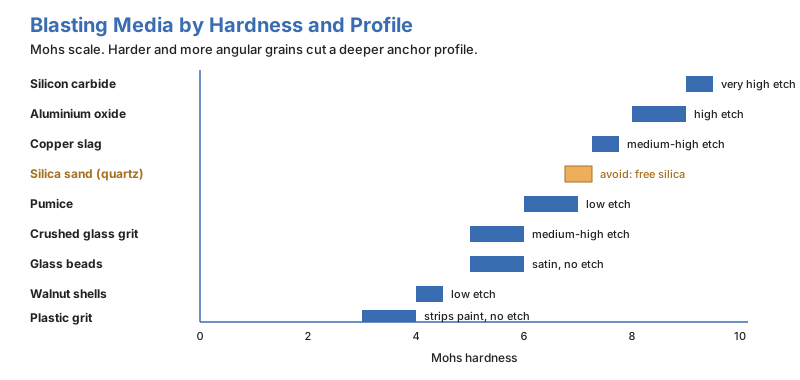
Hardness sets how hard a grain bites. Angular grains etch, while round grains peen and polish.
| Media | Hardness | Profile | Speed | Reuse |
|---|---|---|---|---|
| Silicon carbide | 9 to 9.5 | Very high etch | Very fast | High |
| Aluminium oxide | 8 to 9 | High etch | Fast | High |
| Copper slag | 7.5 | Medium-high etch | Fast | Low |
| Pumice | 6 to 7 | Low etch | Medium-slow | Low |
| Crushed glass grit | 5 to 6 | Medium-high etch | Fast | None |
| Glass beads | 5 to 6 | Satin, no etch | Medium-fast | High |
| Walnut shells | 4 to 4.5 | Low etch | Medium-slow | Low |
| Plastic grit | 3 to 4 | Strips paint, no etch | Medium | High |
The Gentle Options
Not every job wants a deep profile. Soft media strip coatings without touching the substrate underneath. Sandblasting sand is far too aggressive for that kind of work.
- Walnut shells: lift paint from timber and soft alloys.
- Corn cob: the slowest and gentlest of the common media.
- Plastic grit: the usual pick for composites and moulds.
Steel Shot and Steel Grit
Steel media sit in a class of their own, because they last so many cycles. Grit is angular and cuts a profile, shot is round and peens the surface.
- Steel grit: high etch, medium-fast, and reused many times.
- Steel shot: no etch, medium speed, and reused many times. - Both suit enclosed systems with media recovery. - Neither belongs on stainless, which picks up the iron.
The Hidden Cost of Cheap Sandblasting Sand
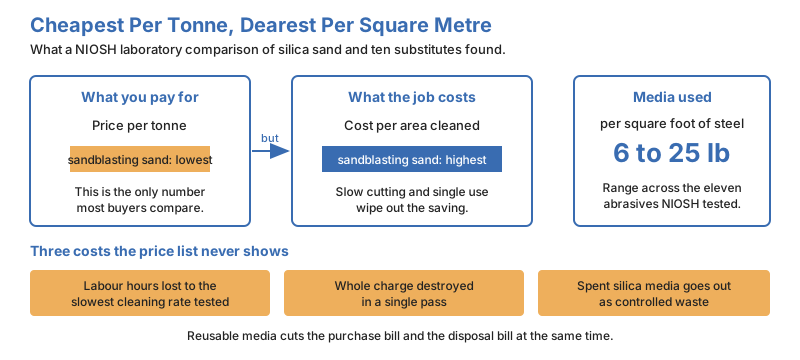
Price per tonne is the wrong number to shop on. Sandblasting sand proves that better than any other abrasive.
What NIOSH Measured
NIOSH ran silica sand against ten other abrasives in a test lab. Raw sandblasting sand had the slowest cleaning rate in the group. Copper slag was the fastest.
The headline finding is the one that matters to a buyer.
- Cheapest per tonne: sandblasting sand won on delivered price.
- Dearest per square foot: it lost badly on cost per area actually cleaned.
Consumption Tells the Story
Media use across the tested abrasives ran from 6 lb per square foot of steel up to 25 lb. That spread dwarfs any saving on the order.
- Slow cutting: more labour hours per square metre.
- Single use: no recovery, so the whole charge becomes waste.
- Disposal: spent silica media is a controlled waste. - Reusable media cuts the buy price and the dump bill. - Steel media can survive hundreds of cycles.
Matching Media to the Job
Pick the media from the substrate and the finish, never from the price list. Every option below beats sandblasting sand on both counts.
Structural Steel and Heavy Rust
Angular, hard media wins here because you want a deep anchor profile.
- Aluminium oxide: fast, reusable, and it leaves no iron behind.
- Steel grit: unbeatable in a recovery system.
- Copper slag: fast and cheap, though single use.
Aluminium, Stainless and Precision Parts
Softer or rounder media guards thin walls and leaves no iron.
- Glass beads: clean satin finish without etching.
- Plastic grit: strips paint off composites safely.
Cabinet and Enclosure Work
A cabinet only pays off when the media survives recovery.
- Reclaim rate: glass beads and aluminium oxide reuse well. - One-use grit forces constant top-ups. - Check the dust collector rating before you switch media.
- Visibility: low-dust media keeps the window clear for longer.
Sandblasting Sand FAQ
Is sandblasting sand illegal?
It depends on where you stand. Great Britain restricted it in 1949 and the European Economic Community in 1966, while the United States controls exposure instead of banning the material.
What can I use instead of sandblasting sand?
Garnet, aluminium oxide, crushed glass, steel grit and glass beads all work. NIOSH tested ten stand-ins and found several that clean faster than sand.
Does wetting the sand make it safe?
No, water knocks down some dust but the hazard stays. NIOSH still asks for a ban on any abrasive above one percent free silica. A media swap is the control that works.
How much media will a job consume?
Plan on somewhere between 6 lb and 25 lb per square foot of steel, depending on the abrasive. Recyclable media sits at the low end over a full campaign.
Which media gives the smoothest finish?
Glass beads produce a satin surface with no etch. Corn cob and walnut shell go gentler still, at the cost of speed. Sandblasting sand cannot match either for consistency.
Conclusion: Retire Sandblasting Sand for Good
Sandblasting sand is the cheapest bag on the shelf and the most expensive abrasive you can run. It cuts slowly, cannot be reused, and brings a known health hazard into your shop.
Switch the media, keep the gear, and the job gets faster and safer at once.
Browse silica-free options in the abrasive blasting media range on EYBY, pair them with the right blasting cabinets for recovery, and protect the operator with proper abrasive blasting hoods.
Related Posts
Types of Pliers: Jaw Shapes, Grip and What Each Pair Is For