Manual Pallet Jack Guide: How to Choose the Right Type for Every Job
By Ryan Bent · 21 July 2026
A manual pallet jack is the simplest way to move a loaded pallet without a forklift. It looks like a basic tool, but the wrong model can slow down a shift, damage a load, or hurt an operator. Picking the right manual pallet jack means matching capacity, fork size, wheel material, and frame design to the pallets you actually move.
This guide breaks down every common manual pallet jack type and the numbers that matter for capacity planning. The same core decisions apply whether you run a small stockroom or a multi-dock distribution center.
What Is a Manual Pallet Jack?
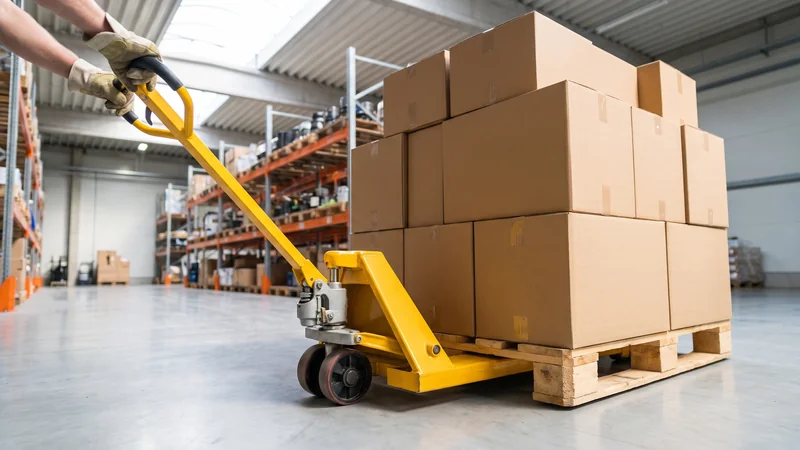
A manual pallet jack, also called a hand pallet truck, is a wheeled device with two forks that slide under a standard pallet. A hydraulic hand pump raises the forks a few inches off the floor. Once the load is lifted, an operator steers the unit by hand and pushes it to its destination.
How a Manual Pallet Jack Works
The hydraulic pump uses a simple lever action. Pumping the handle up and down builds pressure in a small cylinder, which raises the forks.
A release valve on the handle lowers the load smoothly. There is no motor and no battery on a manual pallet jack. The only power source is the operator.
Manual vs. Powered Pallet Jacks
Manual pallet jack:
- Typical capacity: 4,000 to 5,500 pounds.
- Lower purchase cost than a powered unit.
- Best for short runs, tight aisles, and lower load volumes.
- No battery to charge or maintain.
Powered pallet jack:
- Typical capacity: 4,500 to 6,000 pounds.
- Adds a battery and drive motor.
- Removes the physical effort of pushing a loaded pallet.
- Pays for itself in reduced operator fatigue on long runs or all-day use.
Types of Manual Pallet Jacks
Not every manual pallet jack is built the same way. The type you choose should match the pallet, the floor surface, and the environment where it will work every day.
Standard Pallet Jacks
The standard manual pallet jack is the default choice for most warehouses and retail stockrooms. It typically holds 3,000 to 5,500 pounds and fits a standard 48-inch by 40-inch pallet.
Low-Profile Pallet Jacks
Low-profile units use a thinner fork design for pallets with unusually low clearance, such as plastic display pallets or half-pallets.
Heavy-Duty Pallet Jacks
When a load exceeds what a standard model can safely carry, a heavy-duty pallet jack is the answer. Reinforced frames and larger hydraulic cylinders push capacity up to 15,000 pounds.
Weigh-Scale Pallet Jacks
A weigh-scale manual pallet jack has a built-in digital scale, letting an operator weigh a load while moving it. Capacity typically runs 4,400 to 5,500 pounds.
Rough-Terrain Pallet Jacks
Rough-terrain manual pallet jacks use larger, rugged tires and a reinforced frame for gravel, dirt, or uneven yard surfaces. The bigger tires trade off some load margin. Capacity is usually lower, around 2,200 to 4,400 pounds.
Stainless-Steel Pallet Jacks
Food processing, pharmaceutical, and chemical environments need equipment that resists corrosion and washes down easily. A stainless-steel manual pallet jack holds 4,400 to 5,500 pounds.
High-Lift Pallet Jacks
A high-lift manual pallet jack raises a load well above standard height for stacking or positioning work. Typical capacity drops to 2,200 to 3,300 pounds.
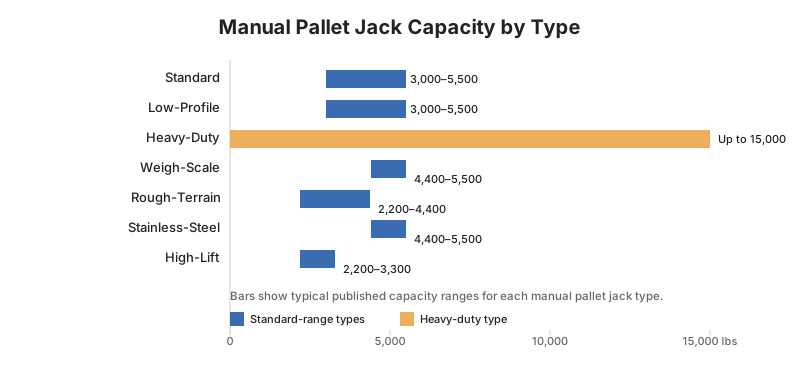
The table below summarizes capacity ranges.
| Manual Pallet Jack Type | Typical Capacity | Best Use Case |
|---|---|---|
| Standard | 3,000 to 5,500 lbs | General warehouse and retail use. |
| Low-Profile | 3,000 to 5,500 lbs | Low-clearance and display pallets. |
| Heavy-Duty | Up to 15,000 lbs | Oversized or dense industrial loads. |
| Weigh-Scale | 4,400 to 5,500 lbs | Shipping departments billing by weight. |
| Rough-Terrain | 2,200 to 4,400 lbs | Outdoor yards, gravel, uneven ground. |
| Stainless-Steel | 4,400 to 5,500 lbs | Food, pharma, and chemical environments. |
| High-Lift | 2,200 to 3,300 lbs | Stacking and working-height positioning. |
How to Choose the Right Load Capacity
Getting the capacity number right is the single most important decision in this guide. Undersizing a manual pallet jack creates a safety hazard and shortens its service life. Oversizing it wastes money on capability you will never use.
Match Capacity to Your Heaviest Load
Start by weighing your heaviest regular pallet, not your average one. A site that sometimes ships a 4,800-pound pallet needs equipment rated well above that figure, even if most loads are lighter. Warehouse safety guidance recommends a manual pallet jack rated above the maximum expected load, not one that just meets it.
Build In a Safety Margin
Industry guidance for warehouse equipment purchasing recommends choosing a capacity that exceeds your heaviest regular load by at least 20 percent. That margin protects against wear over time, since hydraulic components degrade gradually with use.
Capacity-planning checklist:
- Weigh the heaviest pallet you move on a normal week, not an average one.
- Add a 20 percent margin above that weight.
- Round up to the nearest standard capacity tier from the table above: - 3,000 to 5,500 lbs for standard and low-profile jacks. - 4,400 to 5,500 lbs for weigh-scale and stainless-steel jacks. - Up to 15,000 lbs for heavy-duty jacks.
- Recheck the number if load volumes are expected to grow within the next two years.
That margin also gives you room to grow if load volumes increase later, without needing to replace the equipment in a year or two.
Fork Size and Pallet Compatibility
Fork length and width matter as much as capacity. A manual pallet jack with the wrong fork dimensions will not fit under the pallets you use, no matter how strong the hydraulics are.
Standard Fork Dimensions
Most manual pallet jacks sold for general warehouse use are built for the standard 48-inch by 40-inch pallet footprint, with forks roughly 27 inches wide and 48 inches long. Confirm your pallet dimensions before ordering, since export pallets and Euro pallets use different sizes.
Common fork sizes:
- Standard fork width: around 27 inches, fits a 48-inch by 40-inch pallet.
- Euro pallet fork width: narrower, sized for a 1,200mm by 800mm footprint.
- Fork length: typically 48 inches, matched to the pallet's longer side.
Narrow and Wide Fork Options
Some operations run narrow-aisle racking or custom pallet sizes. Narrow-fork manual pallet jacks fit tighter spaces, while wide-fork versions handle oversized or non-standard pallets.
Before choosing a fork width:
- Measure your tightest aisle width, including any racking overhang.
- Measure your widest pallet or the most irregular load shape you handle.
- Confirm the fork spread clears the pallet's support blocks or runners.
Wheel and Roller Material
Wheel and roller material affects how a manual pallet jack rolls, how much noise it makes, and how long it lasts on your specific floor.
Polyurethane Wheels
Polyurethane wheels are the most common choice for indoor concrete floors. They roll quietly, resist most chemicals, and do not mark floors the way steel wheels can.
Nylon and Steel Wheels
Nylon wheels cost less and hold up well on rougher floors but roll louder than polyurethane. Steel wheels are the most durable option for heavy-duty and industrial applications, though they transmit more vibration and can damage soft flooring over time.
Quick wheel comparison:
- Polyurethane: quiet, chemical-resistant, floor-friendly. Best for indoor concrete. - Ideal for retail, food service, and general warehouse floors.
- Nylon: lower cost, holds up on rougher surfaces, louder in operation. - Ideal for budget-conscious industrial use.
- Steel: most durable, highest load tolerance, more vibration. - Ideal for heavy-duty and outdoor industrial applications.
Safe Operation and Maintenance
A manual pallet jack has few moving parts, but skipping basic maintenance and safe handling habits is the most common cause of equipment failure and workplace injury.
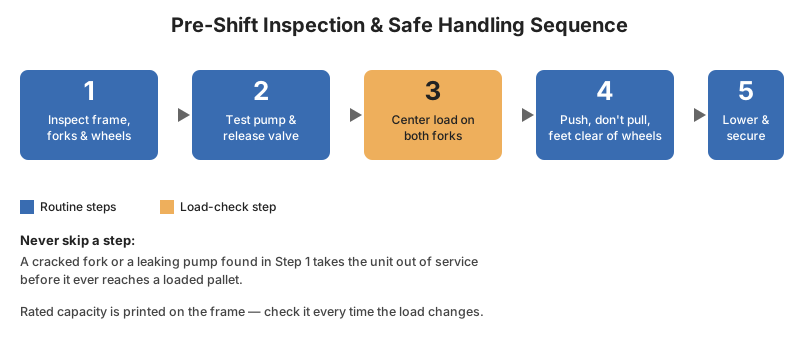
Daily Inspection Checklist
- Inspect the jack before each use for cracks, leaks, or bent forks.
- Check that the hydraulic pump raises and lowers smoothly.
- Confirm the wheels roll freely without wobbling.
- Look for hydraulic fluid on the floor beneath the unit.
- Verify the load capacity label is still legible.
- Test the release valve for a controlled, gradual lowering action.
Safe Handling Practices
- Never exceed the rated load capacity printed on the frame.
- Push the pallet jack rather than pulling it whenever possible.
- Keep feet clear of the wheels at all times during operation.
- Center the load evenly across both forks before lifting.
- Use two hands to control the handle when moving a full load.
- Lower the load fully before walking away from the unit.
FAQ
What weight can a manual pallet jack lift? A standard manual pallet jack typically lifts 3,000 to 5,500 pounds. Heavy-duty versions rated up to 15,000 pounds cover larger industrial loads.
How do I know what size manual pallet jack I need? Weigh your heaviest regular pallet, then choose a manual pallet jack rated at least 20 percent above that weight.
Is a manual pallet jack the same as a hand pallet truck? Yes. Both terms describe the same hydraulic, hand-pumped tool used to lift and move a loaded pallet.
Can a manual pallet jack be used outdoors? Standard units are built for smooth indoor floors. For gravel or uneven ground, a rough-terrain manual pallet jack is the safer choice.
How often should a manual pallet jack be serviced? Inspect it before every shift, and schedule a full hydraulic and wheel check quarterly, or sooner in high-use environments.
Conclusion
Choosing the right manual pallet jack comes down to four decisions: capacity, fork size, wheel material, and type. Match the capacity to your heaviest load plus a safety margin, confirm the forks fit your pallets and aisles, and pick wheels suited to your floor.
Get those choices right, and a manual pallet jack will serve reliably for years with minimal maintenance.
Related categories: Pallet Jacks | High-Lift Pallet Jacks & Container Tilters | Pallet Jack Accessories
Related Posts