Slushie Machine Guide: How It Works, What to Buy and How to Run It

By Brandon Richter · 13 September 2026
A slushie machine looks simple from the customer side of the counter. Behind the display sits a cooling system, a motor and a mix that has to be right. Get one of them wrong and the drink turns to water or locks into a solid block.
This guide covers how a slushie machine works, sizing, the mix and cleaning.
What a Slushie Machine Does
A slushie machine chills a flavoured liquid until ice crystals form. It then keeps the liquid moving so it never sets hard.
One Machine, Several Names
Buying guides treat slush, slushy and granita machine as interchangeable names. Granita often means a coarser, Italian-style crystal.
Where Concession Operators Use It
- Cinemas and stadiums sell slush as an impulse add-on.
- Convenience stores run self-serve stations.
- Fairs and events need high output from a small footprint.
- Bars run frozen cocktails in dedicated machines.
How a Slushie Machine Freezes Without Freezing Solid
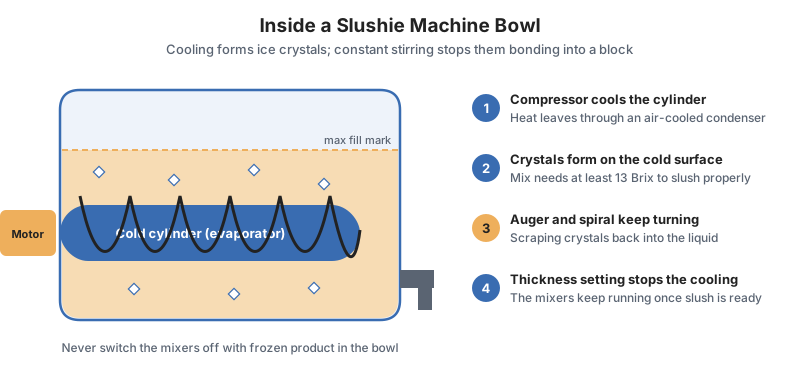
Every slushie machine balances cooling against constant stirring, which breaks up ice before it can bond into a block.
The Bowl and the Cold Cylinder
The clear bowl sits around a chilled metal cylinder called the evaporator. A compressor and an air-cooled condenser remove heat from it. Taylor's operator manual for its Granita freezers lists bowls of about 10 litres each.
The Auger and Spiral
Inside the bowl, an auger and an outer spiral scraper turn all the time. They sweep fresh crystals off the cold cylinder and fold them back into the liquid.
On the Taylor units, a magnetic coupling drives the mixers:
- It acts as a clutch when ice or an object jams the mixers.
- It warns you with an intermittent dull noise. - Unplug the unit straight away when you hear it. - Empty the bowl and clear the blockage before restarting.
Thickness Control
Taylor explains that cooling stops once the granita reaches the set thickness, while the mixers keep turning.
A small screw sets that thickness:
- Clockwise gives a thicker slush.
- Anticlockwise gives a thinner pour.
Choosing a Commercial Slushie Machine
Size the machine to your busiest hour, not your average day. Clearance and power supply are the two limits that are hardest to change later, so check them first.
Machine Types
Distributors usually separate three families:
- Granita machines make standard, alcohol-free slush.
- Cocktail machines use stronger cooling, because alcohol lowers the freezing point.
- Cold cream dispensers make a denser product close to soft serve.
Bowl Count and Capacity
| Configuration | Typical capacity | Hourly output, 12 oz cups | Best for |
|---|---|---|---|
| 1 bowl | 1½ to 6 gallons | 24 to 77 | Single-flavour kiosks |
| 2 bowls | 2½ to 6½ gallons total | 48 to 102 | Most concession stands |
| 3 bowls | 4¾ to 9½ gallons total | 72 to 128 | Stadiums and busy stores |
More bowls mean more flavours and more cups per hour. These figures come from a distributor's guide and vary by model.
Space, Power and Certification
Check the site before you order a slushie machine:
- Clearance: Taylor requires at least 15 cm (6 inches) of free air on all sides.
- Power: most countertop units use standard 115 to 120 V circuits, while large cocktail machines may need 208 to 230 V. - Taylor warns never to use extension cords. - Match the plug and circuit to the data plate.
- Heat: distributors suggest water-cooled models where the room runs above 80°F.
- Approvals: look for NSF food safety and ETL or UL electrical listings.
Getting the Slushie Machine Mix Right
Why Brix Matters
Brix measures sugar as a percentage of the liquid. Taylor states that Brix must be at least 13 for all granita products. A separate granita manual warns that a weaker mix may damage the augers and gear motors.
| Mix condition | What happens in the bowl | What to do |
|---|---|---|
| Below 13 Brix | Coarse ice and freeze-ups | Add sugar or use a granita base |
| 13 to 15 Brix | Smooth, stable slush | Run as normal |
| Well above 15 Brix | Slow freezing | Dilute to the maker's ratio |
| Soft drink mode | Chilled liquid, no slush | No minimum Brix |
Distributor guidance covers both ends of the range. Too little sugar gives coarse crystals and freeze-ups, while too much slows freezing. Measure with a refractometer rather than guessing by taste.
Natural Juices and Coffee
Fresh juice and sugar-free drinks rarely reach 13 Brix on their own. For these, Taylor says to dissolve 150 to 200 grams of sugar per litre. Strain fruit juice too, so pulp does not block the tap.
Glycerol and Selling to Children
Some slush syrups use glycerol (E422) to stop the drink freezing solid. Food Standards Scotland gives this advice for drinks that contain it:
- Children under 7 should not drink them.
- Children aged 7 to 10 should have no more than one 350 ml drink a day.
- Free refill offers should not be made to under-10s. - Industry guidelines call for a written warning at the point of sale. - Check the syrup label for glycerol, glycerine or E422.
The Food Safety Authority of Ireland goes further. It advises that children aged ten and under avoid these drinks.
Running a Slushie Machine Through a Shift
Filling and Refilling
Fill each bowl to the maximum mark and no higher. When you dilute a syrup, Taylor says to pour the water in first and the product second. Keep the bowl covers on at all times to protect the product.
Taylor's refill rules are simple:
- Pre-chill the mix to shorten recovery time.
- Top up once the level falls below half of the cold cylinder.
- Refill at the start of each day.
First Freeze Time
Taylor lists room temperature, mix temperature, Brix and the thickness setting as the factors behind freeze time. Distributor guidance puts a typical first freeze at 45 minutes to 2 hours.
Overnight Rules
Taylor is strict about overnight running:
- Best practice: run the slushie machine overnight in soft drink mode.
- If switching off: set soft drink mode at least one hour before power-down.
- Never stop the mixers while frozen product is in the bowl. - An unstirred bowl can freeze into a solid block. - Restarting against that block can damage the mixers and motor.
Cleaning and Maintaining a Slushie Machine
A slushie machine holds sugary liquid for hours, so cleaning has to follow a fixed routine.
The Cleaning Sequence
Taylor notes that the unit does not arrive sanitised from the factory. Clean it before the first batch, and always unplug the power first.
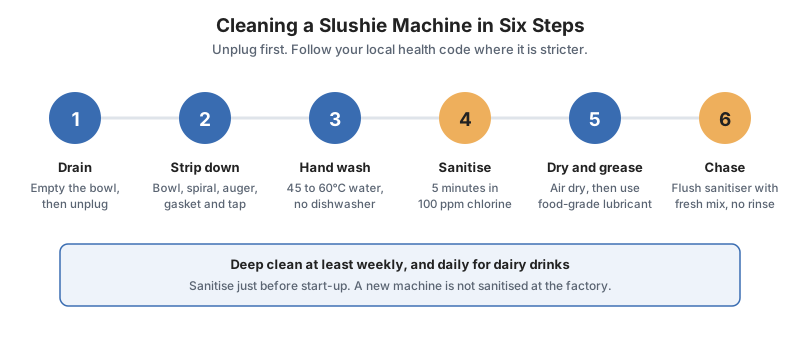
Follow Taylor's sequence each time:
- Drain the product and unplug the machine.
- Take out the bowl, spiral, auger, gasket and tap parts.
- Hand wash them in 45 to 60°C water with mild detergent, never in a dishwasher.
- Soak them for five minutes in 100 ppm chlorine sanitiser, or per local health code.
- Let the parts air dry, then grease them with food-grade lubricant.
- Reassemble and chase leftover sanitiser with fresh mix, without rinsing.
Maintenance Schedule
| Task | Frequency | Source |
|---|---|---|
| Inspect seals and gaskets for leaks | Daily | Taylor |
| Deep clean and sanitise | At least weekly | Distributor guide |
| Dust the condenser filter | Monthly | Taylor |
| Replace tap O-rings | Every 3 months | Taylor |
| Replace the spiral scraper blade | Every 6 months at minimum | Taylor |
Dairy drinks are the exception. They need a full clean at the end of every day, not weekly.
Frequently Asked Questions About Slushie Machines
Is a slushie machine the same as a granita machine?
Usually yes. Granita tends to mean a coarser, Italian-style crystal.
What Brix level does a slushie machine need?
Aim for 13 to 15 Brix, with 13 as the minimum.
How long does a slushie machine take to freeze?
Typically 45 minutes to 2 hours for the first batch. Pre-chilled mix helps.
Can I put alcohol in a standard slushie machine?
Only low-strength mixes. Alcohol lowers the freezing point, so cocktails need a cocktail machine.
How often should I clean it?
Deep clean and sanitise at least weekly, and daily for dairy drinks.
Is glycerol slush safe for children?
Not for young children. Food Standards Scotland advises that children under 7 should not drink slush containing glycerol.
Conclusion: A Slushie Machine Rewards Routine
A slushie machine adds an eye-catching drink to a concession menu, but it punishes shortcuts.
Size the machine to your peak hour, keep the mix at 13 Brix or above and follow the maker's cleaning sequence. Label glycerol drinks clearly wherever children buy them.
Compare frozen slushy machines, popcorn makers and the wider concession equipment range to build a stand around your slushie machine.
Related Posts