Mop Head Replacement: How Often to Swap, Launder and Retire a Mop Head
By Lu Chan · 3 August 2026
A mop head is the cheapest item in a floor care programme and the likeliest to undo it.
Mop head replacement gets deferred because a tired head still looks like it works. It does not, and the floor gets dirtier every shift.
Why Mop Head Replacement Is a Hygiene Decision
Mop head replacement sits closer to infection control than to housekeeping. The CDC guidance on environmental infection control in health care facilities treats it that way.
What the bucket does to a mop head
Bucket solutions become contaminated almost immediately. Continued use carries rising numbers of microorganisms onto every surface that follows.
That guidance names the cloth and the mop head as contamination sources. A head left soaking in dirty solution stops being a tool. It becomes a reservoir.
Failures that force mop head replacement
- Worn fibre — a head past its wash limit sheds instead of trapping soil.
- Damp storage — a head put away wet multiplies the load it holds. - Racks and airflow fix this cheaply.
- Finish loading — a head full of floor polish smears rather than lifts.
Each one is a mop head replacement trigger. A glance down the corridor catches none.
What the guidance asks for
Two rules run through the CDC recommendations. Launder heads after use, then dry them fully before reuse. Fit a clean head whenever the bucket is refilled.
Mop Head Types and What Replacement Costs
The mop head replacement bill turns on wash life rather than unit price. A cheap head bought twenty times is not cheap.
Cotton and blended string heads
Cotton string heads cost little and live briefly. Vendors quote around 55 washings, though UC Davis Medical Center reached 200.
They also carry a lot of water, which helps on concrete and punishes the person holding the handle.
Microfiber flat mop pads
Microfiber pads cost roughly three times more each and stretch mop head replacement intervals sharply.
The fibres run about one sixteenth the thickness of a human hair and hold six times their weight in water, says the EPA case study on hospital microfiber mopping. Split microfiber carries far more surface area than cotton.
Reading the two economies side by side
| Attribute | Cotton string head | Microfiber flat pad |
|---|---|---|
| Laundering life | 55 to 200 washes | 300 to 1,000 washes |
| Rooms per wash | up to 22 | 1 |
| Water per 100 rooms | 105 gallons (397 litres) | 5 gallons (19 litres) |
| Weight in use | about 10 lb (4.5 kg) | about 2 lb (0.9 kg) |
| Solution change | every 3 rooms | none required |
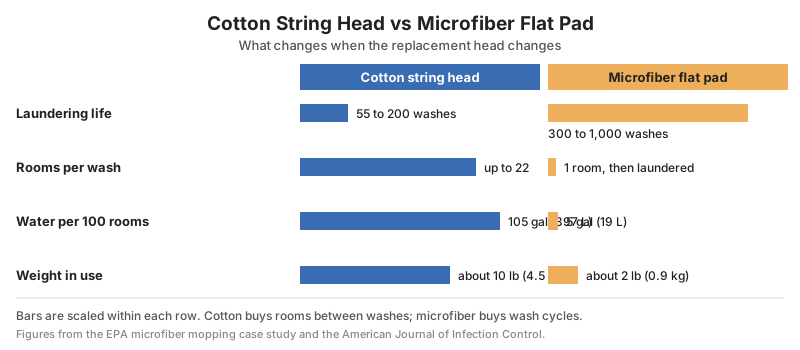
One cotton head covers many rooms between washes. A microfiber pad covers one, then goes to the laundry bag. That is the trade the table hides.
Microfiber moves cost into the number of heads you own. Plan mop head replacement stock around that, not the shelf price.
How Often to Replace a Mop Head
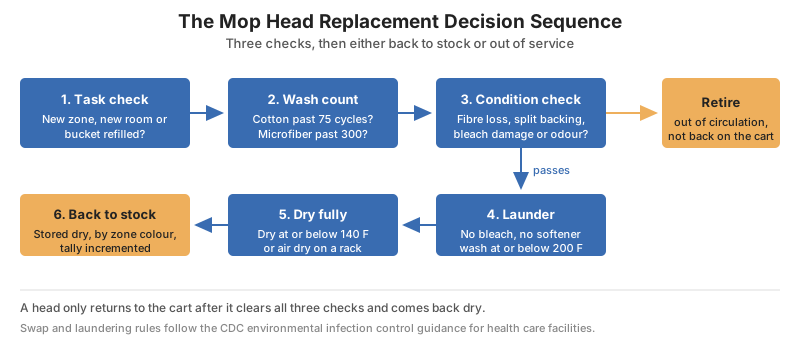
Three clocks govern mop head replacement, and the shortest one always wins.
The task clock
This clock runs fastest in clinical, laboratory and food handling work.
- Between rooms — change it between patient rooms or isolation areas.
- Between zones — change it moving from soiled zones to clean. - Washrooms, kitchens and waste rooms each count separately.
- On every solution change — change it when the bucket is refilled.
The laundering clock
The second clock counts wash cycles rather than shifts. It is the one most operations forget to track.
Research in the American Journal of Infection Control puts microfiber at roughly 300 laundry cycles and cotton string at 75. A head past its count is spent even when it looks intact. Mop head replacement therefore runs off a tally.
The condition clock
The last clock is the one supervisors actually use. That is exactly why it needs written triggers.
- Fibre loss — retire a head that has lost a quarter of its yarn.
- Backing damage — retire a head with a split or peeling backing. - Loose stitching on a headband fails mid-shift.
- Chemical damage — retire a head that met bleach by mistake.
- Odour — retire a head that smells after a full launder.
Laundering Rules That Set How Long a Head Lasts
Poor laundering shortens mop head replacement intervals more than heavy use does.
Heat is the usual culprit
Industrial washers and dryers often run hotter than microfiber tolerates. UC Davis moved its laundering to a machine with controlled heat settings for that reason.
- Wash temperature — at or below the label limit, often 200 F or 93 C.
- Drying temperature — lower still, commonly 140 F or 60 C.
- Air drying — cannot overheat the fibre.
Chemicals to keep out of the load
- Chlorine bleach — degrades microfiber and shortens pad life sharply.
- Fabric softener — coats the fibre and kills its electrostatic grab. - The coating also leaves a film on polished floors.
- Mixed loads — other fabrics shed lint the pads then collect.
Drying matters as much as washing
Microorganisms are trapped inside the microfiber weave rather than killed. Effective laundering removes them. A head returning to the frame damp has not finished the cycle.
Dry storage is the cheapest mop head replacement insurance.
Choosing the Right Replacement Mop Head
A correct mop head replacement matches the frame, the floor and the task. Miss any of the three and the order is wasted.
Match the attachment first
- Screw or clamp band — fits conventional string mop handles.
- Hook-and-loop pad — fits microfiber flat mop frames. - Check frame width first, since pads are cut to size.
- Pocket or envelope pad — slides over the frame ends, no fastener.
Match the head to the floor
Looped-end heads resist unravelling and cover more area, suiting open floors. Cut-end heads cost less and suit spill work where the head is discarded.
Rough concrete chews soft yarn. Sealed vinyl rewards a finer nap, and mop head replacement intervals stretch accordingly.
Match the weight to the crew
The EPA case study found microfiber mops weighed about five pounds less than the wet loop mops they replaced. Lighter heads finished rooms faster.
Building a Mop Head Replacement Schedule
A schedule turns mop head replacement from a reactive purchase into a predictable line item.
Step one: count heads, not mops
Work out how many rooms one head covers, then multiply by the shifts before the next laundry return. Turnaround is the real constraint.
- Coverage — rooms or square metres one head handles.
- Cycle count — the wash tally at which heads retire.
- Buffer — spare heads covering turnaround plus a shift.
The slower the turnaround, the deeper the mop head replacement stock must be.
Step two: colour code by zone
- One colour per zone — assign it once and never let heads cross.
- Store by colour — selection becomes a glance, not a decision.
- Quarantine failures — pull retired heads out immediately.
Step three: buy the parts as a system
Stock the string mop heads matching the handles on your carts.
For flat mop systems, order microfiber flat mop pads in your frame width. Pair either with the right mop bucket and wringer combination, since the wringer sets how much solution the head carries.
Frequently Asked Questions About Mop Head Replacement
How often should a mop head be replaced?
Swap the head between zones and whenever the solution changes. Retire it once it passes its wash cycle count, roughly 75 for cotton string and 300 for microfiber.
Can a microfiber mop head be washed with bleach?
No, and this is the most common mop head replacement mistake. Chlorine bleach degrades microfiber and cuts the pad life that justified buying it.
Is a microfiber head worth the higher unit price?
Usually yes, once mop head replacement is costed over a year. The EPA case study recorded a 60 percent lifetime saving on mops and a 95 percent cut in chemical costs.
Does the head type change cleaning performance?
It does, and the gap is wide. Testing in the American Journal of Infection Control found a microfiber system removed 95 percent of surface microbes using plain detergent. A cotton string mop removed 68 percent.
What is the simplest mop head replacement rule to enforce?
Change the head whenever the water changes. It needs no training, no tally sheet and no judgement call.
Conclusion: Budget for Heads, Not Just Mops
Mop head replacement is where floor cleaning either works or quietly stops working.
- Write the triggers — task, wash count and condition.
- Count the cycles — a running tally per head or laundry batch.
- Hold the buffer — enough clean heads to cover turnaround.
Do that and mop head replacement becomes a stock decision. Skip it, and the mop spends its day redistributing what it collected yesterday.
Related Posts
Drywall Anchor Guide: Types, Load Ratings and Safe Fixing