How to Choose the Right Paper Shredder for Your Office: A Complete Buyer's Guide
By Angela Siniscalo · 22 July 2026
A cheap paper shredder can leave a business exposed. It jams on staples, gets hot fast, and cuts strips a snoop can piece back together. The right paper shredder does none of that.
It matches your paper volume, meets a real security standard, and runs long after a bargain model needs to cool down.
This guide covers cut types, DIN 66399 security levels, and the capacity specs that decide whether a machine survives daily use, plus the rules that make shredding a legal duty.
Why the Right Paper Shredder Matters More Than the Price Tag
Every office makes paper that should never leave the building whole. Invoices carry bank details, HR files carry ID numbers, and client contracts carry terms a rival would love to see.
A paper shredder is the last line of defense before that paper hits the bin. Skip it, and sensitive paper sits in a box until someone finds it.
A paper shredder earns its keep when it:
- Destroys documents beyond repair, not just into strips.
- Handles staples, clips, and the odd CD without jamming.
- Runs long enough to clear a full day's shredding.
- Meets the security level your policy requires.
Buying on price alone usually means buying twice.
Strip-Cut, Cross-Cut, and Micro-Cut: The Three Cut Types
Every paper shredder uses one of three cut patterns. The pattern sets the shred size and how easy the paper is to piece back together.
Cut type at a glance:
- Strip-cut: long, thin strips; fast and cheap; the lowest security.
- Cross-cut: confetti-sized pieces; the standard pick for office use.
- Micro-cut: fine, rice-grain bits; slower to feed; the highest security.
Strip-Cut Shredders
A strip-cut paper shredder slices paper into long strips. It shreds fast and handles a lot of paper per pass.
Best for:
- Plain internal paperwork.
- High-volume recycling prep with low security needs.
Those strips can be pieced back together with enough patience, so strip-cut is a poor fit for anything private.
Cross-Cut Shredders
A cross-cut paper shredder cuts paper down and across. The result looks like confetti instead of long strips.
Best for:
- General office letters and invoices.
- Most day-to-day shredding needs.
Cross-cut is the most common paper shredder sold for office use, and for most businesses, it is the right default.
Micro-Cut Shredders
A micro-cut paper shredder makes particles so small that piecing them back together is nearly impossible. The tradeoff is a slower feed and a lower sheet count per pass.
Best for:
- Financial records and legal papers.
- Personal ID data and medical files.
Pick micro-cut when a rebuilt document would cost far more than the extra shredding time.
DIN 66399 Security Levels Explained (P-1 to P-7)
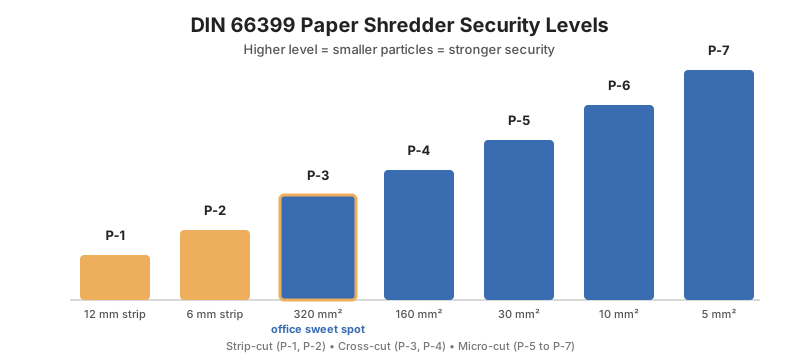
Every paper shredder carries a rating from DIN 66399, the German standard for secure paper destruction. It sets seven levels, P-1 through P-7, each with a maximum particle size. A higher number means smaller particles and stronger security.
| DIN Level | Cut Type | Max Particle Size | Typical Use |
|---|---|---|---|
| P-1 | Strip-cut | 12 mm strip width | Non-sensitive internal paper |
| P-2 | Strip-cut | 6 mm strip width | Low-risk general documents |
| P-3 | Cross-cut | 320 mm² | Routine office records |
| P-4 | Cross-cut/micro-cut | 160 mm² | Confidential HR and financial data |
| P-5 | Micro-cut | 30 mm² | Highly sensitive personal data |
| P-6 | Micro-cut | 10 mm² | Secret and classified material |
| P-7 | Micro-cut | 5 mm² | Top-secret government data |
P-1 and P-2: Entry-Level Strip-Cut Security
These two levels cover strip-cut shredders only. They suit paper with no real privacy risk, such as internal drafts or old flyers.
P-3 and P-4: The Office Sweet Spot
P-3 is widely seen as the sweet spot for daily office shredding. It balances strong security, shredding speed, and a shred size that recycling plants can still process.
Match the level to the document:
- P-3 covers routine invoices, memos, and general letters.
- P-4 or P-5 suits records with real personal or money risk, including: - Client contracts and signed agreements. - Payroll data and payment card numbers.
Sensitive-data offices should default to P-4 rather than P-3.
P-5 Through P-7: High-Security and Classified Material
These levels shred paper into pieces smaller than a grain of rice. Most offices never need to go this far, but government contractors and defense-linked firms often do.
Confirm your policy calls for P-5 or above before paying the premium for a high-security paper shredder.
Matching Capacity to How Your Office Actually Shreds
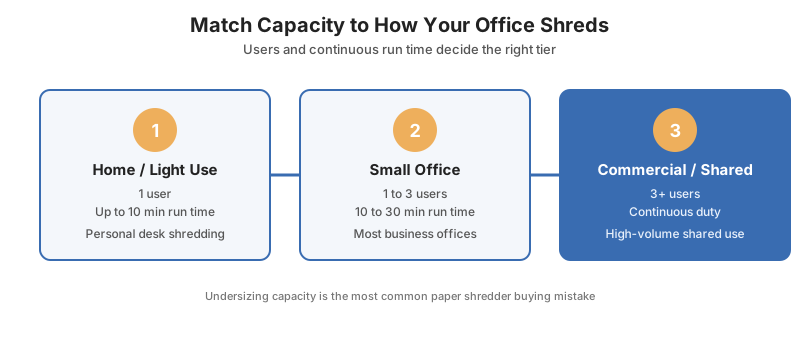
Security level answers "how small." Capacity answers "how much and how often." Getting capacity wrong is the most common paper shredder buying mistake.
| Use Tier | Typical Users | Continuous Run Time | Best Fit |
|---|---|---|---|
| Home or light use | 1 user | Up to 10 minutes | Personal desk shredding |
| Small office | 1 to 3 users | 10 to 30 minutes | Most business offices |
| Commercial or shared | 3+ users | Continuous duty | High-volume shared use |
Home and Light Use
A light-duty model works fine for one person shredding a few pages a day. These machines cool down after short bursts and are not built for a shared workspace.
Small Office Use
Most business buyers land here. A small office paper shredder should offer a higher sheet count per pass, a bigger bin, and enough run time to clear a batch in one go.
This tier covers most standard paper shredders, from small desk units to bigger shared machines.
Commercial and Shared Use
Teams with three or more regular users need a continuous-duty motor that skips the cooldown period. These machines also shred staples, clips, and sometimes cards or CDs.
An industrial paper shredder is built for exactly this kind of sustained, shared use.
Eight Specs to Compare Before You Buy
Security level and capacity narrow the field. A few practical specs decide whether daily use feels smooth.
Compare these specs before you buy:
- Sheet capacity: sheets fed per pass.
- Run time: minutes before it needs to cool down.
- Bin capacity: how often it needs emptying.
- Shred speed: feet or sheets per minute.
- Jam prevention: auto-reverse on blockages.
- Safety features: - Hand-sensors near the feed slot. - Auto shutoff when the bin is full.
- Noise level: a factor near desks.
- Energy saving mode: standby power draw.
A shredder that scores well on security but fails on run time or bin size becomes a bottleneck fast.
Compliance Rules for Regulated Offices
Shredding is not just a security habit. In several places, it is a legal duty.
The FTC Disposal Rule (FACTA)
In the United States, the FTC Disposal Rule requires reasonable steps when disposing of sensitive consumer report information. The rule has been in force since June 2005, and shredding is how most businesses meet it.
Sector Rules: HIPAA and GLBA
Healthcare offices face added disposal rules under HIPAA. Financial firms face similar duties under the Gramm-Leach-Bliley Act. Both point back to the same core rule: destroy sensitive paper so it cannot be read.
When to Outsource: NAID AAA Certification
Some offices use an outside shredding service instead of buying a machine. NAID AAA Certification, run by i-SIGMA, is the trusted third-party mark for that choice, with more than 950 certified sites worldwide.
Regulated offices should also:
- Set a written policy on which documents need which DIN level.
- Keep shred logs for proof of destruction. - Date, document type, and method used are usually enough.
- Train staff to separate sensitive paper from general recycling.
- Confirm NAID AAA status before signing an outside vendor.
Frequently Asked Questions
What DIN security level is best for a general office? P-3, since it balances security, speed, and output that can still be recycled.
What is the difference between cross-cut and micro-cut shredders? Cross-cut makes confetti-sized pieces for most office needs. Micro-cut makes much finer particles for higher security, at a slower feed rate.
How often should a business shred documents? Most offices do best shredding daily or a few times a week rather than letting paper pile up.
Do small businesses have to follow the FTC Disposal Rule? Yes, regardless of size, if the business uses consumer report information.
Is it better to buy a shredder or outsource to a service? High-volume or heavily regulated offices often outsource to a NAID AAA Certified vendor. Most small and mid-sized offices are well served by an in-house paper shredder sized to their daily volume.
Conclusion
Choosing a paper shredder comes down to three decisions, made in order.
Pick the DIN 66399 security level the documents actually need. Size the capacity to how many people will use it and how often. Then confirm the rules that apply to your industry.
Get those three right, and a paper shredder stops being an afterthought and becomes a reliable part of how the office protects its data.
Related categories: Paper Shredders and Shredder Bags | Standard Paper Shredders | High-Security Paper Shredders
Related Posts

What Bathroom Partitions Have to Survive
Pipe Fittings Explained: Types, Materials and How to Choose
Box Stapler Guide: Types, Staple Sizes and How to Choose One