Bathroom Tile Guide: How to Choose Tile That Performs When Wet
By Troy Hasslinger · 5 August 2026
Most bathroom tile is chosen from a photograph, and most tile complaints arrive later.
The finish that looked right in a showroom turns slippery underfoot. Or the grout stains, or the floor never quite dries. Each of those outcomes was written into test data that nobody read.
What Makes Bathroom Tile Different From Any Other Tile
A bathroom is the only room where the floor is wetted on purpose, walked on barefoot, and left to dry itself.
That mix is hard on materials. It is also why the tile industry publishes separate performance classes for wet rooms.
The floor is doing the hard job
Water changes the grip between a foot and a surface, so the industry measures that grip rather than trusting how a tile looks. Daltile, setting out its version of the American rules, describes the measure as the force needed to keep a surface already moving as it slides over another. It is meant to resemble what a person feels while walking.
The walls have an easier brief
A wall is never walked on, so slip resistance drops out of the brief. Wall choice turns on water exposure, weight and how the tile behaves at a cut edge.
That is why a finish banned from a shower floor is often fine on the wall above it.
- Floors are chosen on measured grip first.
- Walls are chosen on water absorption and format first.
- Shower floors sit in the strictest class of all. - Bare feet and constant water together raise the bar.
- Ceilings and niches follow the wall rules, with weight added.
Slip Resistance Is the First Bathroom Tile Specification
Slip performance is the one bathroom tile property nobody can judge by looking.
The standards that govern bathroom tile
Four documents do most of the work, and any decent supplier will know all four by name.
- ANSI A137.1 is the ceramic tile standard that sets the wet grip rule.
- ANSI A326.3 is the test method the wet figure is measured to.
- ASTM C373 is the American water absorption test.
- ISO 10545-3 is the international water absorption test. - The two absorption tests do not always agree.
What the published number means
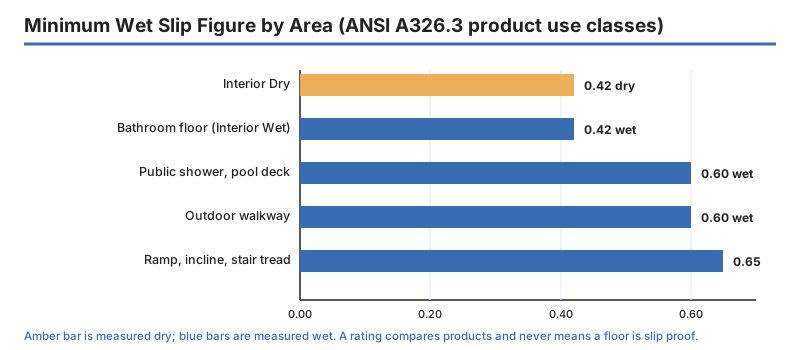
The North American ceramic tile standard requires floor tile to reach a wet grip figure of at least zero point four two where the maker recommends it for a level indoor space that will be walked on wet. The measurement follows a separate ANSI method written for hard flooring of every kind.
Daltile is careful about what the number is not. It compares products under set conditions, and it is not a sign of whether a slip will happen.
The published thresholds
| Where the bathroom tile goes | Class | Wet requirement |
|---|---|---|
| Dry level interior, away from splash | Interior Dry | 0.42 measured dry |
| Bathroom floor, toilet areas | Interior Wet | 0.42 wet |
| Public shower, steam room, pool deck | Interior Wet Plus | 0.60 wet |
| Outdoor level walkway or patio | Exterior Wet | 0.60 wet |
| Ramp, incline, stair tread | Ramps and Inclines | 0.65 wet |
No bathroom tile is slip proof
Daltile states plainly that no bathroom tile is slip proof, and the point belongs in every tiling conversation. A rating is a comparison, not a promise.
- Polished and part-polished faces are ruled out anywhere water, oil or grease appears.
- Cleaning products can leave a film that makes a compliant floor slippery.
- Footwear and drainage change real performance more than a decimal place does. - A well-fallen floor beats a slightly better rating.
Water Absorption Separates Porcelain From Ceramic
The second bathroom tile property is the one the word porcelain is meant to convey.
The half a percent line
The Tile Council of North America defines porcelain by how the tile performs, not by its recipe. Its laboratory engineer sets out the industry definition as any ceramic tile that is impervious, whatever it is made from, so long as the fired tile takes up less than half a percent of its weight in water.
Porcelain can even be extruded, and it can be made from red clay, as long as it clears that line.
Two tests, two answers
- The American test uses five broken pieces from separate tiles. - A five-hour boil, then a soak lasting a full day.
- The international test uses ten whole tiles instead. - A two-hour boil followed by a four-hour soak.
- The American method is the tougher of the two.
- The shorter method can under-report the open pores in a tile.
TCNA reports that borderline tiles have failed the American test while passing the international one. When a bathroom tile sits near the limit, the method decides the label on the box.
Why the paperwork matters
The word porcelain does not appear in the international product standard at all, which is how loose marketing claims took hold. The Porcelain Tile Certification Agency was set up by the Ceramic Tile Distributors Association with TCNA to test and certify tiles against the absorption limit.
Ask which test the figure came from. A supplier who can answer is quoting a tested product rather than a brochure.
Size and Format Change How Bathroom Tile Behaves
Bathroom tile format gets treated as a styling call and behaves as a technical one.
Smaller tiles drain better
Daltile notes that smaller sizes allow more drainage through a greater number of grout joints, and that they make sloping easier. That is the whole argument for mosaic bathroom tile on a shower floor.
More joints also mean more grout to clean. The trade is real, and it is worth making on purpose.
Large formats need a flatter base
Waviness across a large tile raises the chance of standing water, and with it the risk of a foot skating away. A large bathroom tile is not wrong, but it asks for a floor that was prepared properly. Check the base before the order goes in, not after.
- Check the base for flatness before choosing a large format.
- Keep large formats off the shower floor where falls are steepest.
- Use large formats on walls where drainage does not matter. - Fewer joints on a wall means less grout to keep clean.
Walls are the free choice
Because a wall is never walked on, bathroom tile format, finish and gloss are all open. Glass, polished porcelain and metal become available above the splash line.
Choosing Bathroom Tile Area by Area
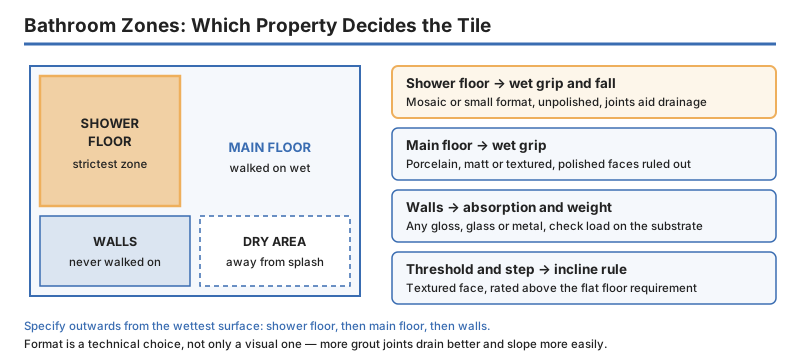
Work outwards from the wettest surface in the room.
| Area | Sensible bathroom tile | The property that decides it |
|---|---|---|
| Shower floor | Mosaic or small format, unpolished | Wet grip and falls |
| Bathroom floor | Porcelain, matt or textured | Wet grip |
| Shower walls | Porcelain or ceramic, any gloss | Absorption and weight |
| Bathroom walls | Ceramic, glass or decorative | Appearance and weight |
| Threshold and step | Textured, higher rated | Incline rule |
Shower floors first
Start here, because this area carries the strictest rule and the smallest bathroom tile. Browse shower floor tile before anything else is agreed, since the rest of the room can follow it.
Then the main floor
The main floor is an Interior Wet area rather than an Interior Wet Plus one, so the rule eases. Choose bathroom floor tile that is matt or lightly textured, and save the polished pieces for the walls.
Walls last
With slip resistance out of the picture, bathroom wall tile becomes the place to spend the design budget. Check the weight per square metre against whatever the wall is built from.
Ordering Bathroom Tile Without Regrets
A good bathroom tile order names the test, not just the look.
Ask for the test data
- Ask for the wet grip figure and the standard it was measured to.
- Ask for water absorption as a percentage, with the test named.
- Ask for the surface finish in the maker's own words. - Matt, textured, honed and polished are not the same thing.
Give the area, not the product
Tell the supplier the surface is a shower floor or a dry wall, because the class sets the rule. An order written that way survives a substitution, and substitutions happen on almost every job.
Specify in both unit systems
- Give bathroom tile sizes in millimetres and inches together.
- Give coverage in both square metres and square feet.
- Give the joint width you intend to use.
Frequently Asked Questions About Bathroom Tile
What slip rating does bathroom tile need on a floor?
The North American ceramic tile standard sets a wet grip figure of at least zero point four two for level indoor floors that will be walked on wet. A public shower or a pool deck moves up to zero point six.
Is porcelain always the better bathroom tile?
Not always, though it is more forgiving. Porcelain is simply ceramic tile that takes up less than half a percent of its weight in water, which matters most on floors and in showers rather than on a dry wall.
Can I use large format bathroom tile in a shower?
On the walls, comfortably. On the shower floor it is a poor choice, because small formats give more grout joints for drainage and make the fall easier to build.
Does a high slip rating mean the floor is safe?
No. The industry is explicit that no floor tile is slip proof, and that a rating compares products rather than predicting a fall. Drainage, footwear and cleaning routine all still apply.
Conclusion: Specify the Area, Then the Bathroom Tile
Nobody can choose bathroom tile from a mood board alone.
Name the surface, name how wet it gets, and name the test you want the figures measured to. Those three lines turn a shopping list into a specification. They take about a minute to write.
- Name the area so the right class applies.
- Name the figures so the supplier quotes tested product.
- Name the units so nothing arrives in the wrong size.
Do that and the bathroom tile behaves for decades. Skip it, and the floor teaches the lesson on the first wet morning.
Related Posts

Dent Puller Guide: How to Choose the Right Dent Puller