Lithium Battery Guide: How to Choose the Right Type for Every Application
By Sam Buhler · 14 July 2026
"Lithium battery" sounds like one product. It is not.
A coin cell in a wall clock, a pack in a cordless drill, and a bank in a solar backup system all carry that same label. Each lithium battery uses a different chemistry, built for a different job.
Picking the wrong lithium battery costs more than money. A pack sized for the wrong voltage or cycle life fails early. A battery shipped without the right paperwork can get a whole shipment held at a carrier's dock.
This guide compares the three lithium battery types buyers choose between, then covers the shipping rules that apply once a battery leaves the building. Match the chemistry first, and the rest of the decision gets much simpler.
What Makes a Battery "Lithium"
Every lithium battery stores power by moving lithium ions between two plates inside the cell. The material at those plates is what sets one lithium battery apart from another. Three types cover almost every lithium battery on the market:
- Standard lithium-ion (NMC or LCO chemistry) powers most consumer electronics and power tools.
- LiFePO4 (lithium iron phosphate) gives up some energy density for safety and a much longer service life.
- Primary lithium cells are single-use, not rechargeable, and built for low-drain, long-shelf-life devices.
Rechargeable vs Primary Lithium Batteries
Lithium-ion and LiFePO4 are both rechargeable. A primary lithium cell is not; once it runs flat, it gets replaced, not recharged.
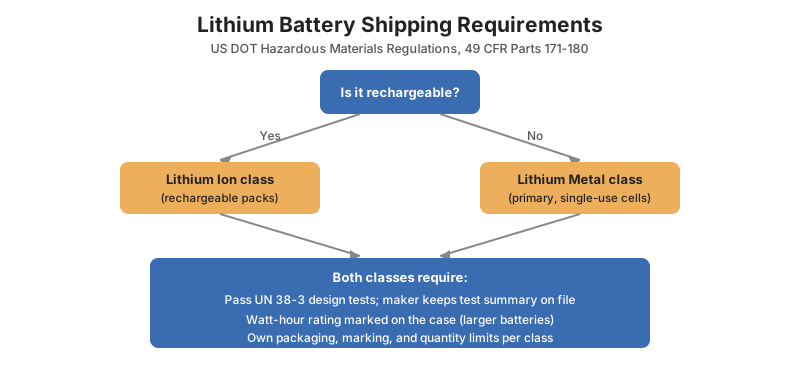
Shippers even split lithium batteries into two legal classes on this basis. "Lithium ion" covers rechargeable packs, and "lithium metal" covers most primary, single-use cells. That split matters later in this guide, since it changes which shipping rules apply.
Why Chemistry Sets the Limits
The material at a lithium-ion cell's positive plate decides its energy density, voltage, and heat behavior. Standard lithium-ion cells use a cobalt- or nickel-based plate, packing more energy into a smaller, lighter cell.
LiFePO4 cells use an iron phosphate plate instead. That structure runs cooler under stress, which is why it trades some energy density for a much lower fire risk.
Lithium-Ion vs LiFePO4: The Two Rechargeable Types
Buyers choosing between the two rechargeable lithium battery types are really weighing energy density against long life. Neither chemistry wins on both counts:
- Standard lithium-ion favors light weight and high energy density, at roughly 150 to 250 Wh/kg.
- LiFePO4 favors safety and cycle life, at a lower 90 to 160 Wh/kg.
- Both chemistries need a charger matched to their voltage curve, so packs are rarely swappable across types.
Safety and Heat Stability
LiFePO4's iron phosphate plate is more stable than the plates in standard lithium-ion cells. It runs cooler and resists overheating, which is why it shows up in industrial and safety-critical gear.
Standard lithium-ion is safe under normal use. Damage, overcharging, or a bad charger raises the fire risk, though, so the two chemistries are not equally forgiving of misuse.
Lifespan and Cycle Count
A lithium battery built on LiFePO4 is rated for 4,000 or more charge cycles, and can run over 10 years under daily use. Standard lithium-ion typically delivers 2,000 to 3,000 cycles, or roughly 2 to 5 years of daily service. That longer life is why solar and backup power systems increasingly specify LiFePO4 over standard lithium-ion.
Voltage, Energy Density, and Temperature Compared
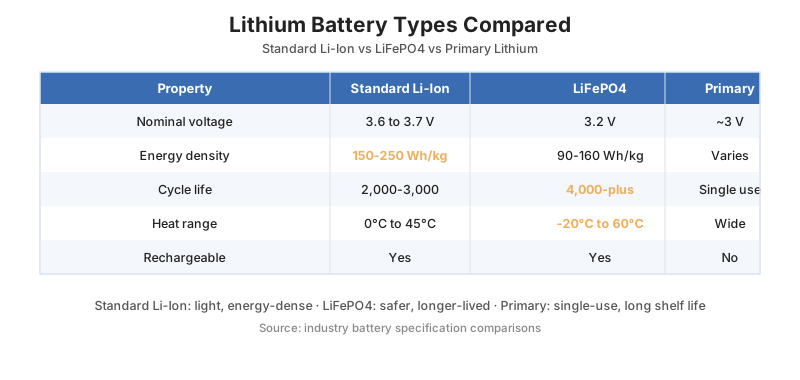
| Property | Standard Li-Ion | LiFePO4 | Primary Lithium |
|---|---|---|---|
| Nominal cell voltage | 3.6 to 3.7 V | 3.2 V | About 3 V |
| Energy density | 150 to 250 Wh/kg | 90 to 160 Wh/kg | Varies by format |
| Rechargeable | Yes | Yes | No |
| Typical cycle life | 2,000 to 3,000 cycles | 4,000-plus cycles | Single use |
| Heat range in use | About 0°C to 45°C | -20°C to 60°C | Wide, format-dependent |
Reading a Lithium Battery's Spec Sheet
Nominal voltage and the Wh rating drive most lithium battery buying decisions, so check both before comparing price.
- A higher Wh rating stores more energy, but only if the voltage also fits the device or charger.
- A mismatched voltage can undercharge a pack or damage the device it powers.
Matching a Lithium Battery to Your Application
Consumer Electronics and Portable Tools
Laptops, phones, and cordless power tools favor standard lithium-ion for its light weight and higher energy density.
- More watt-hours per kilogram means more runtime without added bulk.
- Faster discharge rates suit tools that draw heavy current in short bursts.
Solar, Backup Power, and Industrial Gear
LiFePO4 fits equipment that runs daily for years and cannot afford a thermal incident.
- A longer cycle life lowers the total cost over a 10-year system life.
- A wider heat range suits outdoor enclosures and unheated spaces.
Coin Cells and Primary Lithium Devices
Primary lithium cells suit low-drain devices that need years of shelf life between swaps.
- Smoke detectors, watches, and meters draw very little power and rarely get opened.
- No charger or charge cycle to track simplifies upkeep on remote or hard-to-reach devices.
Shipping Rules for Lithium Batteries
UN 38-3 Testing and Watt-Hour Marking
Every lithium battery offered for transport must pass the design tests in the UN Manual of Tests and Criteria, Section 38, part 3. The maker must have a test summary on file and share it on request, a rule in effect since January 2022. Larger lithium-ion batteries must also carry their Wh rating marked right on the case.
Lithium-Ion vs Lithium-Metal Shipping Classes
US DOT hazmat rules (49 CFR Parts 171 to 180) apply to any lithium battery shipped by air, road, rail, or water. Shippers must treat "lithium ion" and "lithium metal" batteries as separate classes, since each carries its own packaging, marking, and quantity limits. A damaged, defective, or recalled lithium battery carries extra shipping limits on top of the standard rules.
Common Lithium Battery Mistakes to Avoid
- Assuming every lithium battery ships under one rule. - Fix: confirm whether a battery is lithium-ion or lithium-metal before it ships.
- Choosing standard lithium-ion for round-the-clock industrial duty. - Fix: specify LiFePO4 where cycle life and heat tolerance matter most.
- Ignoring the Wh rating when comparing packs. - Fix: match both voltage and Wh rating to the device or system.
- Mixing old and new cells in the same battery pack. - Fix: replace cells as a matched set, not one at a time.
- Shipping a battery with no UN 38-3 test summary on file. - Fix: request the summary from the maker before the first shipment.
- Storing a rechargeable lithium battery fully charged for months. - Fix: store it at a partial charge when it sits idle.
Frequently Asked Questions
Is LiFePO4 a type of lithium-ion battery?
Yes, in the broad sense that both move lithium ions between plates to store power. LiFePO4 just uses a different, more stable plate chemistry than standard lithium-ion.
Can I swap a LiFePO4 battery for a standard lithium-ion pack?
Only if the nominal voltage and physical fit match, since LiFePO4 runs at a noticeably lower voltage per cell than standard lithium-ion (see the voltage row in the table above). Check the device's charging circuit first, either way.
Why do some lithium batteries need a Wh rating on the case?
DOT hazmat rules require it on larger lithium-ion batteries, so shippers and handlers can see the energy content at a glance. That rating also sets which shipping quantity limits apply.
Do primary lithium batteries need UN 38-3 testing too?
Yes. The UN 38-3 test rule applies to lithium batteries broadly, covering both rechargeable lithium-ion packs and single-use lithium-metal cells.
Why does LiFePO4 cost more than standard lithium-ion at the same capacity?
Its lower energy density means a LiFePO4 pack needs more material to store the same power, which raises size, weight, and price. Buyers usually recover that cost through a much longer service life.
Conclusion
Choosing a lithium battery comes down to matching chemistry to duty cycle. Standard lithium-ion suits light, high-energy loads, while LiFePO4 suits long-life, safety-critical systems. Primary lithium suits low-drain devices that need years between swaps.
A few habits keep the decision simple:
- Match nominal voltage and Wh rating to the device before comparing price.
- Choose LiFePO4 wherever cycle life and heat safety matter most.
- Confirm UN 38-3 and Wh marking rules before any battery ships.
Get the chemistry right once, and the lithium battery stops being the part that limits the system.
Related categories: Rechargeable Batteries & Chargers · Sealed Lead Acid & Lithium Batteries · Disposable Coin & Button Batteries
Related Posts

Drywall Anchors: How to Choose the Right Type for Every Wall

Sandpaper Grit Guide: How to Choose the Right Grit for Any Job

Gutter Guards: How to Choose the Right Type for Every Roof