How to Choose the Right Pressure Washer for Any Job
By Neomi Barriga · 22 July 2026
A high PSI number looks impressive on the box. It is not the whole story. The right pressure washer balances pressure, water flow, power source, and grade to match the actual job.
Get that balance wrong, and a buyer either overpays for power they never use or burns out a machine that cannot keep up.
This guide covers the specs that matter, electric vs. gas, buying grades, nozzle tips, and the safety rules every operator should know.
Why PSI Alone Doesn't Tell You Enough
Shoppers often compare pressure washers by PSI number alone. That single figure hides half the story. A pressure washer with high PSI but low water flow can still clean slower than a lower-PSI unit with more flow.
Speed and pressure both matter, and neither one works alone.
A pressure washer earns its keep when it:
- Clears the job in a reasonable amount of time, not just with raw force.
- Matches the surface, since too much pressure damages wood, siding, and paint.
- Runs long enough for the job without overheating or stalling.
- Fits the power source available on site, electric outlet or none.
Buying on PSI alone is the most common pressure washer mistake.
PSI, GPM, and Cleaning Units: The Numbers That Matter
Three numbers decide how a pressure washer actually performs. Each one measures something different.
The three specs at a glance:
- PSI: water pressure, or how much force breaks a stain loose.
- GPM: water flow, or how much surface area gets rinsed per minute.
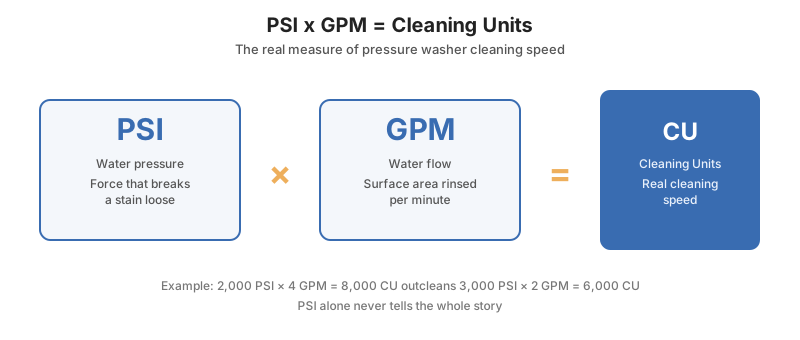
- Cleaning Units (CU): PSI multiplied by GPM, the real measure of cleaning speed.
PSI: Pounds Per Square Inch
PSI measures how hard the water hits the surface. A stronger chemical bond, like baked-on grease, needs more pressure to break.
GPM: Gallons Per Minute
GPM measures water flow. A washer rated at 4 GPM rinses roughly twice as fast as one rated at 2 GPM, at the same pressure.
Cleaning Units: The Real Performance Number
Cleaning Units multiply PSI by GPM. Two machines with the same PSI can still clean at very different speeds if their GPM differs. This number is the closest single figure to real cleaning speed.
Quick example:
- 3,000 PSI x 2 GPM = 6,000 CU.
- 2,000 PSI x 4 GPM = 8,000 CU, and cleans faster despite lower pressure.
A buyer chasing PSI alone can end up with a slower machine than the CU math would suggest.
Electric vs. Gas Pressure Washers
Power source is the next major decision, and it depends on the site and the job.
Quick comparison:
- Electric: lighter, quieter, no engine maintenance, needs a power outlet, shorter lifespan.
- Gas: more powerful, fully portable, repairable part by part, needs fuel and more upkeep.
Electric Pressure Washers
An electric pressure washer suits light, occasional work near a power source. It stores easily and runs quiet enough for residential areas.
Two electric motor types:
- Universal (brush) motors: lowest cost, shortest lifespan. - Common on small hand-carry units.
- Induction (brushless) motors: higher cost, much longer lifespan. - Common on larger, more powerful electric units.
Gas Pressure Washers
A gas pressure washer runs anywhere, with no outlet needed. It delivers more power at every tier and can be repaired part by part instead of replaced whole.
Most semi-pro and commercial-grade units are gas-powered for exactly this reason.
Matching the Grade to the Job
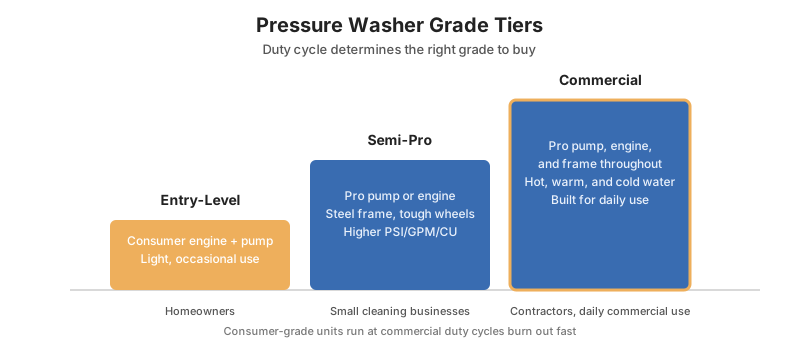
Beyond power source, pressure washers come in three buyer grades. Each one is built for a different duty cycle.
| Grade | Built For | Typical Buyer |
|---|---|---|
| Entry-level | Light, occasional use | Homeowners, weekly car washing |
| Semi-pro | Pro-grade pump or engine, steel frame | Small pressure-washing businesses |
| Commercial | Pro-grade pump, engine, and frame throughout | Contractors, daily commercial use |
Entry-Level Pressure Washers
These units pair a consumer-grade engine and pump. They suit light periodic jobs like driveways, siding, or a weekly car wash, not everyday use.
Semi-Pro Pressure Washers
A semi-pro pressure washer usually pairs a professional pump with a consumer engine, or the reverse. Frames use pro-grade steel, and wheels use never-flat materials. This tier bridges home and commercial use.
It is the right starting point for a small cleaning business.
Commercial Pressure Washers
A commercial pressure washer uses professional-grade parts throughout: pump, engine, and frame. Running a consumer-grade unit at commercial duty cycles burns out its pump far faster than its rated life. Some commercial units also add hot and warm water, not just cold.
Nozzle Tips: Matching Spray Angle to the Surface
The spray tip changes how a pressure washer behaves as much as PSI or GPM does. Each tip is color-coded by spray angle.
| Tip Color | Angle | Typical Use |
|---|---|---|
| Red | 0° | Metal and concrete only; most aggressive |
| Yellow | 15° | Paint and mildew removal on hard surfaces |
| Green | 25° | General cleaning: vehicles, decks, patios, fences |
| White | 40° | Vehicles, windows, soft wood, siding |
| Black | 65° | Low-pressure soap application only |
Nozzle habits worth building:
- Start wide, such as a 40° white tip, before trying anything narrower.
- Save the 0° red tip for metal and concrete alone.
- Reserve black tips for applying detergent, not rinsing.
Choosing the wrong nozzle for the surface is a fast way to gouge wood or strip paint that should have stayed put.
Safety and Compliance Rules Every Operator Should Know
A pressure washer is a tool that can genuinely hurt someone. That risk is documented, not theoretical.
High-Pressure Injection Injury
Peer-reviewed medical literature has documented high-pressure injection injuries, where spray forces its way under the skin. These wounds can look minor at first, then develop a serious infection if left untreated.
Common injuries include:
- Skin lacerations and punctures.
- Bruising from close-range spray contact.
- Eye injuries from ricochet or direct spray.
Reading the manual before first use covers operation, emergency shutoff, and cord safety for electric units.
OSHA Noise and Electrical Rules
OSHA has no rule written specifically for pressure washers, but the General Duty Clause still applies. Two existing standards cover most of the real risk.
Rules that apply on the job:
- 29 CFR 1910.95 covers noise, since units often run 85 to 100 decibels. - Hearing protection is required above 85 dBA over an 8-hour shift.
- 29 CFR 1910.303 through 308 covers electrical safety for electric units, including grounding and GFCI protection.
UL 60335-2-79 is the specific industry safety standard for pressure washing equipment.
Frequently Asked Questions
What is more important, PSI or GPM? Neither wins alone. Cleaning Units, PSI multiplied by GPM, is the better measure of real cleaning speed.
Should I buy an electric or gas pressure washer? Electric suits light jobs near a power outlet. Gas suits heavier, more frequent, or off-outlet jobs.
What PSI is safe for a car or siding? A wider nozzle angle, like green or white, at moderate PSI protects paint and siding better than a narrow red tip.
Do I need a commercial-grade pressure washer for a small business? Not always. A semi-pro pressure washer is often the right starting point before scaling up to commercial-grade equipment.
Is a pressure washer dangerous? Yes, if used carelessly. High-pressure injection injuries are documented in medical literature, so proper nozzle choice and PPE matter.
Conclusion
Choosing a pressure washer comes down to matching four things to the job: PSI and GPM together, power source, buyer grade, and nozzle choice.
Get those four right, and a pressure washer becomes a fast, safe tool instead of an expensive way to strip paint or hurt someone.
Related categories: Electric Pressure Washers | Gas-Powered Pressure Washers | Nozzles for Pressure Washers
Related Posts